
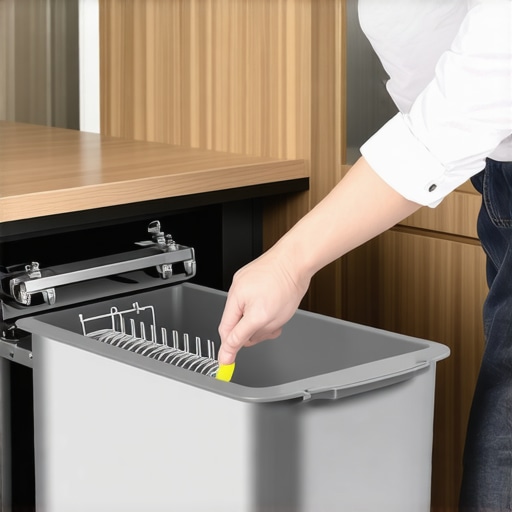
How to Adjust the Tension on a Pull-Out Trash Bin
The pull-out trash bin is the most frequently cycled piece of hardware in any high-end kitchen, yet it is almost always the most neglected. A bin that slams shut or requires a Herculean effort to open isn’t just a nuisance; it represents a fundamental failure of kinetic management. After years of diagnosing luxury kitchen failures, I can tell you that tension is rarely about the weight of the waste. It is about the resistance of the slides. High-end systems like those from Rev-A-Shelf or Blum rely on fine-tuned spring and hydraulic balances. Get this wrong, and you risk shearing the mounting screws right out of your custom cabinetry. The result? Avoidable failure.
The Physics of Soft-Close Resistance
Most modern pull-out systems utilize a combination of heavy-duty ball-bearing slides and a secondary soft-close piston. Tension adjustment usually happens at the rear of the slide or through a dedicated tension wheel. If your bin feels sluggish, the culprit is often a misaligned track rather than the spring itself. You need to feel the click when the drawer engages the catch. If that engagement is soft, your tension is too low. Conversely, if the bin rebounds after closing, the piston is fighting against the drawer’s momentum. This often happens because why your cabinet doors wont close flush and how to adjust them is a related issue of frame alignment that impacts how the bin sits in the aperture. According to the Builders Hardware Manufacturers Association (BHMA), cycle-testing high-load slides requires precise leveling to prevent premature bearing wear. Use a 4mm hex key. Turn the rear adjustment screw clockwise to increase the return force. Half-turns only. Small adjustments prevent spring fatigue.
Hardware Alignment Realities
Before you mess with the springs, check the vertical pitch. If the front panel is heavy—common in luxury kitchens with thick wood faces—the center of gravity shifts forward. This puts immense strain on the upper bearings. You might need to how to install soft-close drawer slides on older cabinets style retrofits to handle the extra torque. Smell that? That faint metallic scent is friction. It means your slides are dry or the tension is causing the metal to grind. Wipe the tracks with a lint-free cloth. Apply a dry PTFE lubricant. Avoid grease; it attracts coffee grounds and dust, creating a grinding paste that destroys the soft-close mechanism within months. It is a messy reality that most homeowners ignore until the slide seized up entirely.
The Engineering Risk of Overloading
The biggest operational risk in a pull-out system is the ‘trash-compactor’ habit. Homeowners push down on the trash to save a trip to the curb. This creates a massive downward force on the cantilevered slides. Most luxury slides are rated for 100 to 150 pounds, but that rating is for static loads, not the dynamic force of someone leaning into the bin. If the bin starts to sag, adjusting the tension won’t save it. You are likely seeing the early stages of the kitchen cabinet hardware that will make your kitchen look dated and mechanically compromised. When the frame bends, the tension becomes inconsistent. The bin might open easily for the first three inches, then stick. This ‘stutter’ is the sound of a failing slide. If you hear a sharp crack when opening, the plastic housing of the soft-close piston has likely shattered under pressure.
Market Shifts in Cabinet Automation
We are moving toward a world where manual tension is becoming a legacy concern. Servo-drive systems—electric push-to-open modules—are replacing traditional spring-loaded slides. These units detect a ‘kick’ or a light touch and use a motor to drive the bin out. Within 24 months, we expect these systems to become the standard in luxury builds. This shift is driven by the desire for handle-less designs and the ergonomic reality that bending over to pull a heavy bin is bad for long-term health. However, even these high-tech units require a baseline of mechanical alignment. If your why your pull out pantry shelves are hard to open and how to adjust them, you’ll understand the frustration of a motor fighting against a crooked track. Proper installation remains the foundation of all kitchen tech.
The Professional Verdict
Stop tolerating a bin that doesn’t behave. If your pull-out trash system requires more than three pounds of force to initiate movement, it is out of spec. Start by cleaning the tracks and checking for obstructions. If the resistance remains, locate the tension screw—usually at the back of the sliding rail—and increase the force in small increments. If the bin is more than five years old and the soft-close has failed, do not try to repair the piston. Replace the entire slide set with a heavy-duty grade-1 set. The investment is minimal compared to the cost of repairing a blown-out cabinet floor. If you are designing a new space, insist on bottom-mount slides with at least a 135-pound load rating. Anything less is a compromise you will regret every time you throw away a coffee filter.
Expert Guidance FAQ
Why does my bin close halfway and then stop?
This is usually caused by ‘racking.’ The bin is slightly tilted, causing the slides to bind. Check the mounting screws for tightness and ensure the cabinet is perfectly level. Even a 2-degree tilt can halt a soft-close mechanism.
Can I add soft-close to an old pull-out bin?
Yes, but you usually need to replace the entire slide assembly. Add-on pistons are notoriously unreliable and often pop off under the weight of a full trash can.
Why is the door of my trash bin crooked?
Most high-end systems have door-mount brackets with six-way adjustment. Look for the screws on the inside of the door panel. These allow you to tilt, raise, or shift the door to align perfectly with surrounding drawers.
How often should I lubricate the slides?
In a high-use kitchen, every six months. Use a dry silicone or PTFE spray. Never use WD-40, as it is a solvent, not a long-term lubricant, and will actually strip the factory grease away.