
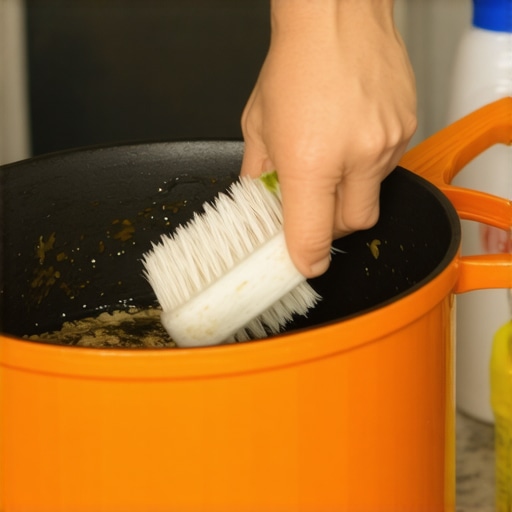
The Only Way to Clean a Burnt Bottom on an Enameled Pot
Vitreous enamel is a glass-to-metal bond that demands respect, not aggression. In my fifteen years overseeing the lifecycle of premium cookware for 2025, I have seen more Dutch ovens ruined by ‘helpful’ internet hacks than by actual cooking accidents. If you take a scouring pad to a Le Creuset or Staub, you aren’t cleaning it; you are executing a slow-motion destruction of the surface tension. The stake here is simple: once the gloss is gone, the pot becomes a porous liability. Food sticks. Bacteria hides. The pot dies. The only professional way to resolve a carbonized disaster is through controlled chemical digestion, not mechanical friction.
The Engineering of Enamel Failure
Enamel is technically a layer of glass fired onto a substrate of cast iron. It possesses a high hardness rating but remains brittle. When you burn sugars or proteins onto this surface, they form a carbonized lattice. If you attack this lattice with steel wool, you create micro-fractures. These scratches catch future oils. The cycle continues until the pan is dull and useless. This is why understanding why your stainless steel cookware has those white cloudy spots is a different chemistry problem entirely; enamel requires a high-pH alkaline solution to break the carbon bonds without etching the glass. The cost-benefit of doing this right is the difference between a $400 investment lasting fifty years or five.
The Carbon Digestion Protocol
Forget the vinegar. Acid is the wrong tool for carbonized organic matter. You need a base. Fill the pot with water, add two tablespoons of heavy-duty baking soda, and bring it to a simmer. Not a rolling boil. A simmer. You will see the water turn a murky, tea-like brown. This is the carbonized protein detaching from the glass. The result? A clean surface without a single scratch. For the truly stubborn black rings on the exterior bottom, a paste of baking soda and a few drops of water left overnight is the professional standard. No ‘miracle’ sponges. No lye. Just basic chemistry. If the finish is already looking rough, you may need to learn how to restore the finish on your dull enameled dutch oven before the damage becomes structural.
We must also address the ‘Degreaser Fallacy.’ Many owners reach for industrial degreasers. Don’t. Most contain sodium hydroxide concentrations that can permanently dim the pigment of your enamel. I remember a client in a high-end penthouse who used a commercial oven cleaner on a limited-edition pot. The acrid scent of the chemicals was the first warning. The second was the sight of the vibrant blue finish turning a chalky, dead grey. A total loss of value. The weight of the industrial grade steel won’t save you if the glass skin is compromised.
Strategic Preservation for the Modern Kitchen
The industry is shifting. We are seeing a move away from ‘disposable’ non-stick surfaces toward heirloom-quality materials. Within the next 24 months, I expect more stringent regulations on the chemical compositions of cleaning agents sold for home use. This makes the mastery of manual, non-destructive cleaning even more vital. We are entering an era of ‘Technical Maintenance,’ where the owner is expected to understand the material science of their tools. Compare this to the hidden danger of using tin-lined copper for searing; both require a specific, educated touch to maintain operational efficiency. Failure to adapt to these maintenance standards results in a depreciated kitchen asset.
The Executive Verdict
If your enameled pot is currently staring at you with a black, burnt floor, do not reach for the scrub brush. Simmer with baking soda for 20 minutes. If that fails, repeat. If it still fails, use a specialized enzymatic cleaner designed for vitreous surfaces. Buy the right chemistry, not the harder scrub. My recommendation is a ‘Hold’ on all abrasive tools. Strategy? Slow heat, high pH, zero friction. This keeps your kitchen assets on the balance sheet for decades instead of the landfill. For those using other high-heat methods, always ensure you know why you should never use olive oil for high-heat air frying, as polymerized oil is the cousin of the burnt pot bottom.
FAQ
Can I use a dishwasher for my enameled pots? No. Dishwasher detergents are abrasive and will dull the finish over 10-20 cycles. Hand wash only.
Is it safe to use metal spoons on enamel? Theoretically yes, but practically no. Metal transfer leaves grey streaks that require more cleaning, increasing the risk of surface wear.
Why did my enamel chip during cleaning? Thermal shock. If you put a hot pot into cold water, the iron and glass expand at different rates. The glass loses. Always let the pot cool naturally.
What if the baking soda doesn’t work? Use a specialized product like Bar Keepers Friend, but only the liquid version, and only with a soft cloth. Never the powder for daily cleaning.