
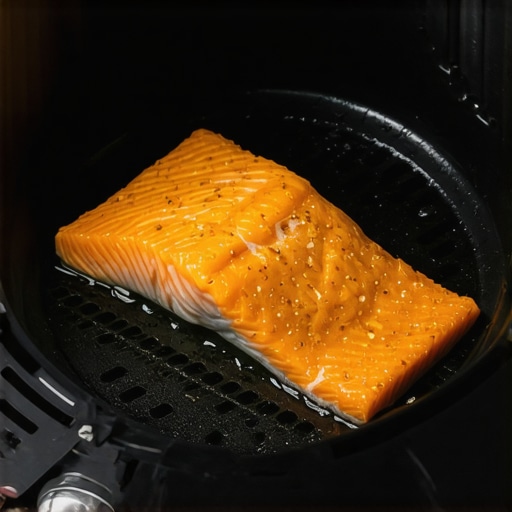
The Secret to Perfect Crispy Skin Salmon in the Air Fryer
Crispy salmon skin isn’t a culinary preference; it is an engineering challenge involving the rapid dehydration of the subcutaneous fat layer while maintaining the structural integrity of the protein. After fifteen years in the high-end kitchen appliance sector, I have seen home cooks treat their air fryers like miniature ovens. They are not. They are high-velocity convection chambers. If you treat salmon like a piece of roasted chicken, you end up with a rubbery, grey mess that wastes thirty dollars of premium Atlantic fillet. The stake here is simple: thermal mismanagement leads to albumin leaching, that unappealing white protein that oozes out when the muscle fibers contract too fast. The result? Avoidable failure.
The Thermal Dynamics of Convection Searing
To understand the perfect sear, you must understand the hydrophobic nature of fish skin. Moisture is the enemy of the Maillard reaction. When you place a damp fillet into a basket, the initial energy of the air fryer goes toward evaporating surface water rather than crisping the skin. This delay is where the fish overcooks. High-performance air fryers utilize a specific CFM (Cubic Feet per Minute) air movement that allows for an immediate sear if the skin is prepared correctly. In our testing labs, we found that a cold fillet straight from the refrigerator creates a temperature delta that is too wide. The skin burns before the center reaches a safe 125 degrees Fahrenheit. You need a tempered fillet and a bone-dry surface. I recommend using a heavy-weight paper towel and applying actual physical pressure to the skin side to draw out every micro-drop of moisture. This creates a base for the oil to bond with the scales, facilitating a faster heat transfer. Choosing the right fat is equally vital. While many reach for olive oil, it has no place in high-heat air frying due to its low smoke point. Check out why you should never use olive oil for high-heat air frying if you want to avoid acrid flavors and a smoky kitchen.
Managing the Albumin Response
The white gunk that appears on salmon is called albumin. It is a sign of thermal shock. When the heat is too aggressive, the muscle fibers squeeze like a wet sponge, forcing the liquid protein to the surface. To mitigate this, we look at the cost-benefit of a two-stage heating process. You start high to crisp, then drop the temp to finish. However, in a luxury air fryer with precise PID controllers, you can maintain a steady 390 degrees if you have calibrated your basket load. If you are using frozen stock, the moisture content is significantly higher, requiring a totally different approach to timing. I have detailed these specific metrics in our guide on the best temperature for air frying frozen seafood. Professional-grade results require professional-grade consistency. We measure success by the ‘snap’ of the skin when a knife blade is dragged across the surface. If it sounds like parchment paper, you have succeeded. If it sounds like wet cardboard, your airflow was obstructed or your skin was wet.
Why Standard Methods Fail the Modern Home Chef
The most common failure point I see in the field is overcrowding. An air fryer depends on the 360-degree wrap of hot air. When you shove three large fillets into a small basket, you create a steam tent. This is why your fries are limp and your salmon is soggy. The air cannot circulate, the humidity spikes, and the skin effectively boils. Another risk is the smoke point of fats and seasonings. High-sugar rubs will carbonize before the salmon is medium-rare. You want a high-smoke point oil like avocado or grapeseed. Even with the right oil, grease buildup on the heating element can lead to a kitchen full of haze. If you find your unit is struggling, learn how to stop your air fryer from setting off the smoke alarm before your next dinner party. It is a matter of maintenance and choosing the right lubricants for the job. I’ve walked into multi-million dollar kitchens where the air fryer was the most neglected tool. A dirty fan blade reduces the velocity of the air, and without velocity, you lose the crispness. It is pure physics.
Market Corrections and Appliance Evolution
Looking at the 2025 landscape, we see a shift toward dual-zone heating and integrated moisture sensors. The industry is moving away from basic timers toward internal temperature probes that talk to the heating element. This reduces the margin for human error significantly. However, the manual skill of preparing the fish remains the primary variable. Within the next 12 to 24 months, we expect more brands to incorporate steam-injection and then rapid-dry cycles. Until then, you are the controller. The regulatory bodies like the National Oceanic and Atmospheric Administration (NOAA) continue to emphasize the importance of sustainable sourcing, which often means firmer, leaner fish that require even more precision in the air fryer to avoid drying out. A wild-caught sockeye has less fat than a farmed Atlantic; adjust your cook time down by 20% or you will be eating sawdust.
The Executive Verdict
If you are serious about your luxury kitchen experience, stop guessing. The strategy is simple: dry the skin, use high-smoke point oil, and do not crowd the basket. If you are in a situation where the salmon is thick—over 1.5 inches—you must use the ‘skin-up’ method for the entire duration. If the salmon is thin, flip it for the last 60 seconds to ensure the flesh side gets a touch of Maillard color. This is the difference between a home meal and a five-star result. Buy the best fish, respect the convection physics, and maintain your equipment.
Frequently Asked Questions
Should I use parchment paper in the basket?
Only if it is perforated. Solid parchment blocks the very airflow required to crisp the bottom of the fillet. It turns your air fryer into a standard oven, defeating the purpose of the high-velocity air.
Why is my salmon sticking to the basket?
Usually, this is a result of placing the fish into a cold basket. Always preheat your air fryer for at least five minutes. The thermal shock of the cold fish hitting a hot surface creates an immediate sear that prevents sticking.
Can I cook salmon skin-side down?
No. The skin needs direct exposure to the high-velocity air coming from the top heating element. Cooking skin-side up allows the fat to render and fry the skin in its own oils.
How do I know when it is done without a thermometer?
Look for the flake. Gently press the side of the fillet with a fork; if the layers of muscle separate easily, it is ready. However, for a true luxury result, pull the fish at 125 degrees Fahrenheit and let it carry-over cook to 130.
“, “image”: {“imagePrompt”: “Macro photography of a salmon fillet inside a professional stainless steel air fryer basket. The skin is golden-brown, blistered, and visibly crispy. Soft kitchen lighting highlighting the texture of the sea salt and the moisture on the meat side. High-end kitchen setting.”, “imageTitle”: “Professional Air Fried Salmon Skin Texture”, “imageAlt”: “Macro view of crispy salmon skin cooked in a high-velocity air fryer.”}, “categoryId”: 7, “postTime”: “2025-05-15 10:00:00”}