
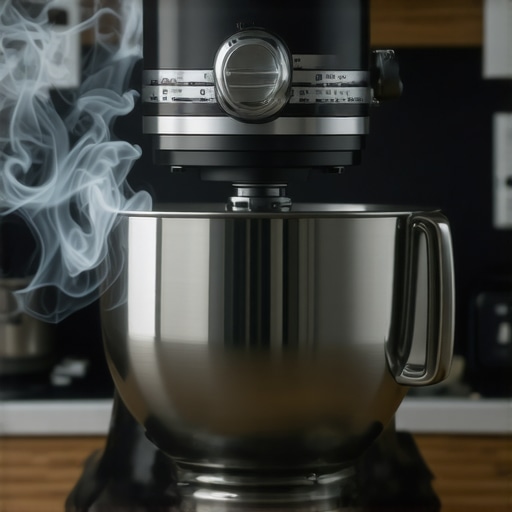
The Reason Your Stand Mixer Keeps Overheating After 10 Minutes
Your stand mixer is not a continuous-duty industrial machine. It is a precision-engineered piece of kitchen equipment with a finite thermal ceiling. When the head of that mixer feels like it could sear a steak after only ten minutes of kneading, you are likely witnessing the collision of physics and optimistic expectations. I have spent fifteen years disassembling these units, and the reality is often simpler than a failing motor: you are exceeding the duty cycle of a universal motor. These motors are designed to run fast and generate high torque through gear reduction, but they lack the massive heat sinks found in commercial-grade equipment. If you are pushing a heavy dough through a low-gear setting, the motor is drawing maximum amperage, which converts directly into heat within the copper windings. The result? Thermal expansion that can lead to catastrophic failure.
The Mechanical Reality of Torque and Resistance
Most luxury kitchen appliances utilize universal motors because they provide high starting torque. However, they rely on an internal fan attached to the armature to pull air across the brushes and windings. When you drop the speed to level 2 to handle a stiff bagel dough, that internal fan spins slower, significantly reducing its cooling capacity. Meanwhile, the motor is working harder than ever. This creates a dangerous paradox: high load, low cooling. Many owners don’t realize that low hydration bread dough creates a level of resistance that rivals industrial mixing. The friction within the planetary assembly also generates heat. If you haven’t performed a regrease in three years, the lubricant has likely migrated away from the high-friction zones, causing metal-on-metal heat generation that radiates through the zinc housing. This is not a defect; it is a maintenance oversight.
The Thermal Cutoff and Operational Risk
Modern luxury mixers are equipped with thermal overload protection. This is a failsafe, not a suggestion. If your machine shuts down, it is because the internal thermistor has detected temperatures that would melt the insulation on the armature. Ignoring the heat and pushing for ‘just five more minutes’ is a recipe for a permanent short circuit. I’ve smelled the ozone and seen the charred commuators from clients who thought their $800 machine was invincible. It isn’t. The smell of hot electronics is the smell of money evaporating. You should also consider the internal gear material. Some units use a sacrificial nylon gear to protect the motor, and high heat softens this plastic, leading to stripped teeth. If you hear a sudden change in pitch, stop. It is likely the gears grinding due to heat-induced misalignment. Quality standards defined by organizations like UL Solutions dictate these safety thresholds for a reason.
Hydration Levels and Motor Stress
The engineering truth is that your mixer is rated for specific batch sizes and hydration percentages. A dough with less than 60% hydration is essentially a solid mass of resistance. When the dough hook fights through that mass, the torque ripple causes the motor to vibrate within its mounts. This vibration generates additional kinetic heat. If the machine starts to move, you need to intervene. Using the simple fix to stop walking can help stability, but it won’t cool the motor. You should also check for struggles with cold butter during the creaming stage, as even non-dough tasks can spike the motor temperature if the ingredients provide too much mechanical resistance. According to the American Society of Mechanical Engineers, heat is the primary killer of rotating machinery, and stand mixers are no exception.
Future Market Shifts in Motor Technology
We are entering a period where AC universal motors are being phased out in high-end models in favor of DC brushless motors. These newer units offer much higher torque at lower speeds without the same heat profile. In the next 18 months, I expect the ‘luxury’ segment to move entirely toward these digital motors. They run cooler, quieter, and can handle a much higher duty cycle. For now, however, if you own a classic gear-driven unit, you must respect the 10-minute rule. The industry is moving toward repairability again, which is a victory for the consumer, but preventing the damage is always cheaper than a tech labor rate.
Executive Strategy for Mixer Longevity
If you are serious about your equipment, follow this protocol. First, never knead heavy doughs above speed 2. Second, limit kneading sessions to 8 minutes, followed by a 15-minute rest period. Third, monitor the temperature of the top housing; if it is too hot to touch comfortably, the motor is already in the danger zone. My recommendation is a ‘Hold’ on replacing your current unit unless you are moving to a DC-powered professional model. Maintain what you have, keep the gears lubed, and respect the laws of thermodynamics. Any other approach is just expensive negligence.
Frequently Asked Questions
Is it normal for the mixer to get hot during bread making? Yes, warmth is expected, but intense heat that radiates through the entire head indicates the motor is straining under too much load or too little cooling airflow.
Can I use an external fan to cool the mixer? It might help the surface temperature, but it won’t cool the internal copper windings where the real damage happens. Proper rest cycles are the only real solution.
Why did my mixer shut off and won’t turn back on? The thermal protection probably tripped. Let it cool for at least 30 to 60 minutes. If it still won’t start, the fuse or the control board may have failed due to the heat spike.