
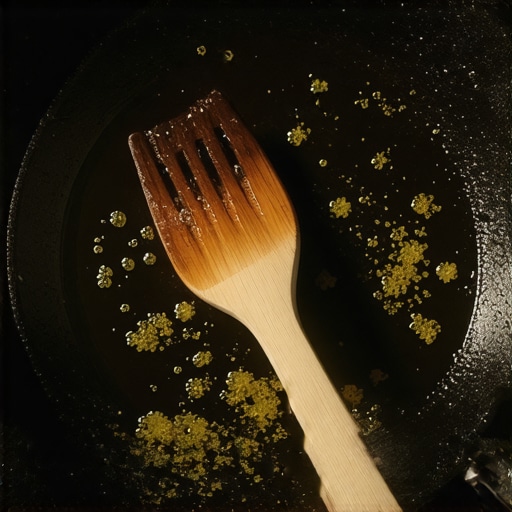
How to Properly Season a New Cast Iron Pan Without the Smoke
Most home chefs treat seasoning like a mystic ritual. It is not. It is applied chemistry. After fifteen years of diagnosing failed kitchen hardware, I can tell you that a smoky kitchen is a sign of technical failure, not progress. You are aiming for polymerization, a process where liquid fats transform into a hard, plastic-like solid bonded to the iron. When you exceed the smoke point of your oil, you are not seasoning; you are incinerating. The result? A sticky, carbonized mess that flakes off into your food and triggers every alarm in the house. Precision matters.
The Science of Surface Tension
Cast iron is porous. Under a microscope, that heavy skillet looks like a mountain range. To create a non-stick surface, we fill those valleys with fat and heat it until the carbon chains link up. The mistake is volume. You think more oil equals more protection. Wrong. Excessive oil pools in the valleys, remains liquid in the center, and becomes a gummy resin. You need a micro-layer. I advise my clients to apply oil and then try to wipe it all off with a clean lint-free cloth. You want the pan to look dry before it hits the oven. This ensures the durable kitchen workspace you are building stays functional rather than decorative.
Why Standard Oils Fail
Flaxseed oil was the darling of the industry for a decade. It was a mistake. While it has a high omega-3 content that polymerizes quickly, it is brittle. It flakes. For a truly resilient surface that mimics the performance of high-heat searing tools, you need an oil with a high smoke point and a stable molecular structure. Grapeseed oil is the technical gold standard here. It handles 420°F without breaking down into acrolein, the noxious gas that creates that blue haze in your kitchen. If you smell smoke, your oven is too hot or your oil choice is poor. According to the American Chemical Society, the thermal degradation of lipids is a precise threshold; crossing it ruins the finish. Control the temperature, control the outcome.
Thermal Gradient Risks
Iron expands. If you throw a cold pan into a 500°F oven, you risk microscopic stress fractures. Start low. Heat the pan to 200°F first to drive out moisture. This opens the pores. Apply your grapeseed oil, buff it until it appears gone, then crank the heat to 400°F. This gradual ramp-up prevents the warping often seen in multi-clad stainless steel pans. You are building layers, not a single thick coat. Repeat this three times. The pan should emerge with a bronze hue, not jet black. Black comes with time and use. Bronze is the sign of a perfect initial polymer bond.
The Engineering Reality
The industry is shifting toward pre-seasoned iron, but these factory coatings are often irregular. They are applied via electrostatic spray and flashed quickly. They lack the depth of a hand-applied finish. In the next 24 months, we expect to see more boutique foundries using vacuum-impregnated seasoning, but for now, the manual method remains superior. If you ignore proper ventilation standards during this process, even a low-smoke method will saturate your air with fine particulate matter. Always run your hood at maximum CFM.
The Executive Verdict
Stop overthinking the fat. Buy grapeseed oil. Apply it so thinly you think you wiped it all off. Bake at 400°F for one hour. If you see streaks, you used too much oil. If you see smoke, lower the heat. This is a buy-once-cry-once tool. Treat the metallurgy with respect and the iron will outlive your kitchen. High-end culinary execution requires high-end maintenance logic.
Strategic Maintenance FAQ
Can I use soap after seasoning? Yes. Modern dish soap is a detergent, not lye. It will not break a polymerized carbon bond. It only removes surface grease. Use it sparingly. Why is my pan still sticky? Too much oil and insufficient heat. You created a resin, not a polymer. Strip it with steel wool and start over. How often should I re-season? Never, if you cook correctly. Every time you sear meat, you are adding a micro-layer of fat. Seasoning is a continuous cycle, not a one-time event.