
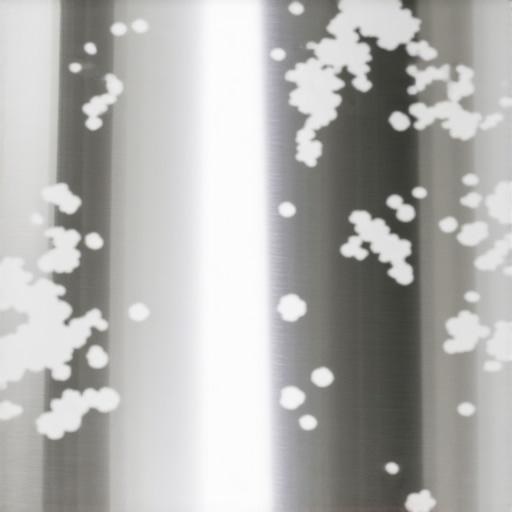
Why Your Stainless Steel Cookware Has Those White Cloudy Spots
Those white, hazy clouds on your high-end stainless steel are not a manufacturing defect; they are a geochemical fingerprint of your local water supply and culinary technique. If you ignore them, you’re not just dealing with aesthetics—you’re looking at the precursors to irreversible surface degradation. After managing luxury kitchen inventory for over a decade, I’ve seen $500 pans ruined because owners treated these clouds as mere stains rather than chemical deposits. The reality? It is calcium carbonate. It is the ghost of your tap water. It is a sign of a fundamental misunderstanding of metallurgy in the kitchen. When you heat hard water, the solubility of minerals like calcium decreases. They precipitate. They bond. The result? A dull, milky residue that mocks your investment in 5-ply construction.
The Mineral Precipitation Reality
Let’s talk about the science of the pan surface. High-grade 304 or 316 stainless steel is prized for its passive layer of chromium oxide. This layer makes it corrosion-resistant. However, it is not a force field against mineral bonding. When you boil water for pasta or even just simmer a sauce, the H2O molecules vanish into steam, leaving behind concentrated salts and minerals. This is technically known as lime scale. In many regions, the municipal water is dense with bicarbonate. Heat acts as a catalyst. The chemical reaction transforms soluble calcium bicarbonate into insoluble calcium carbonate. This isn’t just sitting on the surface; it’s practically anchored to the chromium oxide layer. If you’ve noticed other oddities with your pans, like a shift in color, you might want to understand why your stainless pans turn blue as it often happens concurrently with mineral scaling.
The Salt Pitting Risk
There is a darker cousin to the cloudy spot: the pit. Many home chefs toss salt into a cold pot of water. This is a technical error of the highest order. Undissolved salt crystals sink to the bottom. They sit. They create a localized high-concentration chloride environment. This can break through that protective chromium oxide layer I mentioned. Once that layer is breached, the iron in the steel starts to oxidize. You get a tiny, permanent hole. Unlike a cloudy spot, a pit cannot be polished away. It is a structural failure. I have walked into professional kitchens and seen industrial-grade stockpots riddled with these scars. It’s avoidable. The solution? Wait for the rolling boil. The turbulence ensures the salt dissolves instantly, keeping the chloride ions in suspension rather than in direct, stationary contact with the metal. For those already seeing these tiny marks, understanding the reason your stainless steel pan has white pitting marks is the first step toward salvaging your set.
[image_placeholder]
The Chemistry of Restoration
Fixing cloudy spots requires an acidic intervention. Soap is basic; it does nothing to calcium carbonate. You need to drop the pH. A simple splash of white vinegar or a sprinkle of citric acid breaks the chemical bond between the mineral and the metal. I often tell clients: stop scrubbing. You are just scratching the finish. Instead, let the chemistry do the work. The smell of the vinegar reacting with the minerals is the scent of a clean pan. If you are serious about maintaining a luxury kitchen upgrade, you must view maintenance as a chemical process, not a physical struggle. Use a soft cloth. Apply the acid. Watch the cloud vanish. It’s that fast. Rinse with distilled water if your tap water is particularly aggressive, and dry immediately to prevent new spots from forming.
Market Shifts in High-End Metallurgy
Looking at the next 24 months, we are seeing a shift in consumer demand toward 316Ti stainless steel. This alloy includes titanium. It’s more resistant to the very pitting and scaling issues we’re discussing. However, it comes at a premium. As raw material costs fluctuate, the “buy once, cry once” philosophy is becoming the standard for the high-end market. We are moving away from disposable cookware. People want heirloom quality, but they often lack the technical knowledge to preserve it. The secondary market for used premium cookware is actually growing, specifically for those who know how to restore these mineral-clouded pieces to showroom condition. It’s a value play. Knowledge of metallurgy is becoming a form of equity in the modern home.
The Executive Verdict
If you see white clouds, do not reach for the steel wool. Reach for the vinegar. If you are buying new, invest in the highest grade of steel you can afford, but realize that no price tag exempts you from the laws of chemistry. My recommendation? Treat your cookware like the precision instrument it is. Salt only boiling water. Dry your pans by hand immediately after washing. Avoid the dishwasher, as the high heat and harsh detergents can accelerate mineral bonding and surface dulling.
Frequently Asked Questions
Is the white cloudy residue toxic?
No. It is primarily calcium and magnesium, the same minerals found in mineral water and supplements. It is an aesthetic and performance issue, not a health hazard.
Can I use baking soda to remove the spots?
Baking soda is a mild abrasive and is alkaline. While it can help with burnt-on food, it is less effective than an acid like vinegar for removing mineral-based white clouds.
Why do the spots return every time I cook?
This is a direct result of your local water hardness. If you have extremely hard water, you will see these spots after every use unless you use filtered or distilled water for cooking.
Will these spots affect how the pan heats up?
In extreme cases of heavy buildup, the scale can act as a minor insulator, but for most “cloudy” spots, the impact on thermal conductivity is negligible. The real risk is the underlying corrosion if salt is involved.