
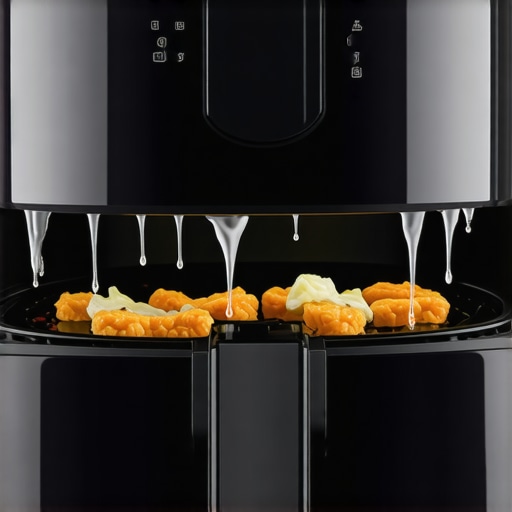
Why You Should Never Buy an Air Fryer with a Plastic Interior
Buying an air fryer with a plastic interior is a fundamental engineering compromise that undermines the very health benefits these machines promise. After fifteen years of tearing down high-end espresso machines and testing thermal stability in luxury kitchen appliances, I have identified a critical failure point in consumer-grade convection units. Most manufacturers prioritize weight reduction and manufacturing margins over material integrity. The result? A kitchen tool that degrades under the exact conditions it was designed to withstand. If you are investing in a premium culinary environment, a plastic-lined unit is a structural liability. You aren’t just buying a cooker; you are introducing a chemical factory into your countertop workflow.
The Thermal Degradation Reality
Polymer fatigue is not a theory; it is a physical certainty when subjecting low-grade plastics to rapid thermal cycling. Standard air fryers operate by circulating high-velocity air at temperatures exceeding 400 degrees Fahrenheit. At these levels, even high-heat plastics begin the process of outgassing. You might recognize this as that acrid, chemical odor during the first few uses. It isn’t ‘new machine smell.’ It is the scent of volatile organic compounds escaping the plastic matrix. Technical purists know that stainless steel or ceramic-coated metal is the only acceptable substrate for high-speed convection. Metal reflects heat, whereas plastic absorbs it, often leading to why most air fryers dont reach their advertised temperature due to thermal soak and inefficient insulation.
Engineering Failure and Structural Fatigue
The mechanics of a plastic interior are doomed from the first heating cycle. When the fan hits 2,500 RPM, the vibration combined with heat causes microscopic expansion and contraction in the plastic housing. Over time, this leads to the warping of the basket rails and the degradation of the safety interlocks. I’ve seen countless units where the basket no longer seats flush because the internal frame has literally shifted. This creates air leaks, reducing the static pressure required for that crisp texture we demand from modern air fryers. Metal interiors maintain their tolerances. They provide a rigid chassis for the heating element and the fan assembly, ensuring that the ‘crunch’ is consistent across five hundred cycles, not just the first fifty.
The Hidden Cost of Peeling Liners
Many plastic-interior machines utilize a secondary non-stick coating applied over a composite base. This is a recipe for catastrophic failure. The bond between a polymer-based coating and a plastic substrate is inherently weaker than the bond to a sandblasted stainless steel surface. This is why your air fryer basket coating is peeling already. Once that barrier is breached, the underlying plastic is exposed to direct heat and food acids, accelerating the breakdown. In a professional setting, we look for ‘inertness.’ Stainless steel is non-reactive. It doesn’t hold onto old grease or rancid oils that eventually turn into a tacky, brown film that is impossible to remove without damaging the unit further.
Technical standards from organizations like the American Society for Testing and Materials (ASTM) highlight the importance of thermal stability in food-contact materials. When you use metal, you are adhering to a higher standard of durability. When you choose plastic, you are accepting a ticking clock on the appliance’s lifespan. The smell of fresh adhesive and hot polycarbonate should never be a seasoning in your kitchen. If the interior feels light and ‘clicky’ rather than heavy and cold to the touch, walk away.
Market Corrections and the Shift to Metal
The industry is currently undergoing a massive shift as consumers realize that cheap builds lead to expensive replacements. Within the next 24 months, I predict a regulatory tightening on PFAS and plastic additives in high-heat kitchenware. We are seeing a ‘flight to quality’ where savvy buyers are opting for all-metal interiors, even at a 40% price premium. It’s a better ROI. A stainless steel air fryer is a ten-year appliance; a plastic one is a disposable toy. We see the same trend in premium espresso machines, where brass and steel have replaced the nylon tubing and plastic boilers of the early 2000s.
The Executive Verdict
My recommendation is absolute: Buy metal or don’t buy at all. If your current unit emits a chemical scent, it is already failing. You can read more about why your air fryer smells like burnt plastic to diagnose the severity. Moving forward, prioritize units with 304-grade stainless steel interiors. The weight of the machine will be your first clue to its quality. Real engineering has mass. It has thermal inertia. It doesn’t rattle when the fan kicks in. If you are building a luxury kitchen, don’t let a $100 plastic box be the weak link in your culinary chain.
Industry FAQ
Are ‘BPA-Free’ plastic interiors safe?
BPA-free is a marketing shield. Many manufacturers simply swap BPA for BPS or other plasticizers that still suffer from thermal degradation at high temperatures. The only way to win the game is to stop playing with polymers in the heat zone.
Why is metal better for crisping food?
Metal interiors reflect infrared heat back toward the food, creating a more intense cooking environment. Plastic absorbs that energy, meaning the fan has to work harder and run longer to achieve the same results.
How can I tell if an interior is truly metal?
Use the tap test. Plastic has a dull thud; metal has a high-pitched ‘ting.’ Additionally, check the weight specs in the manual. A quality metal-lined air fryer will typically weigh 30-50% more than its plastic counterparts.