
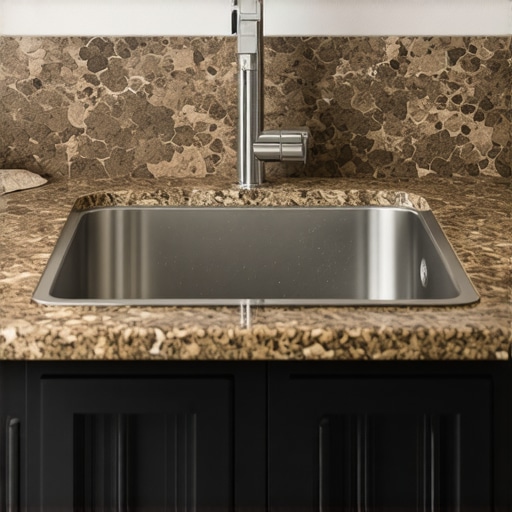
An under-mount sink is not merely a basin; it is a structural liability that demands precise synchronization with your countertop geometry. After fifteen years in the field, I have witnessed countless luxury kitchen installations fail not because of the stone’s quality, but because the rim geometry and mounting system were fundamentally mismatched. If you ignore the physics of weight distribution and flange width, you are essentially waiting for a catastrophic structural failure that will crack your granite slab. The stakes are absolute. A single hairline fracture in a premium piece of stone can cost five figures to remediate. [IMAGE_PLACEHOLDER_1]
How to Choose the Right Under-Mount Sink for Granite
Choosing the correct vessel begins with understanding the 16-gauge mandate. Most homeowners gravitate toward aesthetics, yet the structural integrity of the sink flange is what determines the lifespan of the installation. A 16-gauge stainless steel sink provides the necessary rigidity to resist the torque generated by high-torque garbage disposals. Thinner 18-gauge alternatives often vibrate excessively, eventually breaking the bond of the silicone sealant. This vibration leads to ‘sink sag,’ a phenomenon where the basin physically separates from the stone. When choosing materials, ensure the stone can handle the load. Reviewing the best countertop material for heavy kitchen appliances clarifies how different stone densities respond to localized stress points. A fireclay sink, while visually striking, requires an internal wooden cradle because its weight exceeds what granite clips can safely support.
The Flange Geometry Reality
The flange is the flat rim of the sink that contacts the underside of the granite. It must be perfectly flat. Cheap, stamped sinks often have a slight warp that installers try to ‘pull out’ using clips. This is a fatal error. Forcing a warped flange against stone creates constant tension. Over time, that tension resolves itself by cracking the stone at the weakest point—usually the narrow strip in front of the sink. I demand a minimum flange width of one inch. This surface area ensures an adequate bed for the silicone and even distribution of weight. Without this, you risk water infiltration. Water behind the sealant eventually rots the cabinet sub-base and can lead to biological growth. Proper drainage is equally vital; if the sink doesn’t clear effectively, you face standing water issues. If you encounter these, look for the simple fix for a slow draining luxury kitchen sink to avoid long-term moisture damage to the stone interface.
Mechanical Fasteners Versus Chemical Bonds
Never rely solely on adhesive. Silicone is a sealant, not a structural glue. High-end installations utilize a hybrid approach: mechanical clips drilled into the stone or a rail-based support system. The rail system is superior. It transfers the weight of a full basin of water—which can exceed 100 pounds—directly to the cabinet walls rather than hanging it from the stone’s epoxy inserts. This protects the granite from tensile stress, a force it is naturally weak against. According to standards from the Natural Stone Institute, the primary support must be mechanical. When planning your layout, consider the best material for a durable kitchen workspace to ensure the cabinetry and stone work in tandem to support these loads.
The Reveal Strategy
The reveal—the amount of sink rim visible—is a technical decision, not just a stylistic one. A ‘positive reveal’ shows a fraction of the sink rim, creating a ledge. This is the easiest for the fabricator but creates a ‘dirt ledge’ that collects organic matter. A ‘zero reveal’ is flush with the sink walls. This requires surgical precision in the stone shop. Any misalignment shows. A ‘negative reveal’ overhangs the sink. While this looks sleek, it makes the stone edge vulnerable to chipping from heavy pots. If you opt for specialized materials like copper, the maintenance of the edge is even more intense. Learning the proper way to polish a copper sink without ruining the patina is necessary if the reveal exposes the rim to frequent cleaning chemicals. The result? Longevity and structural stability.
Market Shifts and Technical Oversight
The industry is moving toward thinner, 2cm stone slabs backed by plywood. This shift complicates under-mount installations. These thinner slabs have less structural depth for clip inserts. In these cases, a perimeter harness system is the only acceptable method. Over the next 24 months, I expect more failures in the mid-market segment as builders cut corners on mounting hardware to save on labor costs. Regulatory oversight regarding indoor air quality and the sealants used in these installations is also tightening. Ensure your installer uses low-VOC, neutral-cure silicone to avoid ‘bleeding’ into porous light-colored granites.
Executive Recommendation
If you are installing granite, buy a 16-gauge stainless or a cast iron under-mount sink. Insist on a rail support system. Avoid epoxy-only mounting. For those in high-moisture environments, ensure the reveal is ‘positive’ to allow for easier cleaning and better sealant inspection. If your contractor suggests ‘gluing it and bracing it with a 2×4 overnight,’ find a new contractor. The physics simply don’t support that method for the long term.
Frequently Asked Questions
Will a heavy fireclay sink crack my granite? Only if it is poorly supported. Fireclay must be supported by the cabinetry, not hung from the stone. What gauge stainless steel is best? 16-gauge is the professional standard. 14-gauge is better but more expensive. Avoid 18-gauge for large basins. Does the reveal type affect the stone’s durability? Yes, a negative reveal increases the risk of edge-chipping on the granite from heavy cookware impact.