
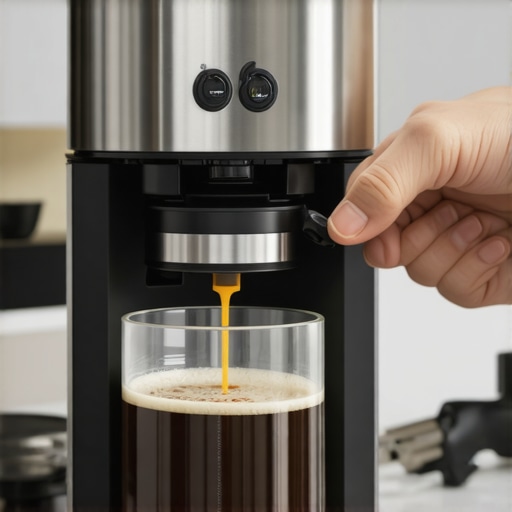
How to Fix a Leaking Water Tank on Your Coffee Maker
A leaking water tank is rarely a catastrophic failure of the vessel itself. It is a failure of the interface. In my fifteen years of servicing high-pressure beverage systems, I have seen owners discard expensive machines because they misdiagnosed a two dollar gasket failure as a cracked chassis. The stake? Internal corrosion. Water seeping from the tank does not just pool on your counter; it tracks along the internal wiring loom via capillary action. The result? Avoidable failure. If you own one of the many premium espresso machines on the market, understanding the hydrostatic seal is your first line of defense against a dead motherboard.
The Engineering of the Poppet Valve
The mechanics are simple yet unforgiving. Most high-end reservoirs utilize a spring-loaded poppet valve at the base. When the tank sits, a pin in the machine base physically displaces the valve to allow flow. If the gasket has lost its durometer—its hardness rating—the seal fails under the weight of the water column. This is not about ‘wear and tear’ in a vague sense. It is about the loss of elasticity in the elastomer. Mineral deposits, specifically calcium carbonate, act like sandpaper every time you remove the tank for refilling. Over months, this friction creates micro-channels in the rubber. You might notice a slow drip before a full-scale flood. This is often related to the same issues that cause people to need a fix for a clogged steam tip; the minerals are the enemy of all precision tolerances.
The Reality of Material Fatigue
I remember a client with a custom dual-boiler setup that was ‘sweating’ from the rear. They assumed it was local humidity. It was not. It was a hairline fracture in the polycarbonate tank caused by using a caustic descaling agent not rated for food-grade plastics. The smell of scorched insulation eventually filled the room. When the tank material undergoes chemical stress, it becomes brittle. You can feel the change in the plastic. It loses that slight give and becomes glass-like. If your machine has a complex internal system, you should also be aware of how to fix the steam pressure on a dual boiler machine as these systems are often interconnected in their cooling and intake cycles. A leak in the tank can lead to pump cavitation—where the pump draws air instead of water—leading to a high-pitched whine and eventual motor burnout. The sound of a cavitating pump is a metallic, rhythmic scratching that signals the end of your morning routine.
Strategic Foresight: The 2025 Market Shift
The industry is moving toward BPA-free Tritan resins for all water-contact surfaces. While safer for health, these materials have different thermal expansion coefficients than the old-school polycarbonates. In the next 12 to 24 months, we expect more ‘snap-fit’ failures at the seams. Regulatory changes from the National Sanitation Foundation (NSF) are pushing manufacturers to simplify these valves to reduce bacterial biofilm growth. This means future tanks will likely be more modular, but the initial ‘luxury’ models of 2025 might suffer from first-generation design flaws. Keep your eye on the O-ring. The Specialty Coffee Association (SCA) technical reports suggest that 80% of ‘leaking’ complaints are resolved by simple lubrication with food-grade silicone grease rather than part replacement.
The Executive Verdict
My recommendation? Hold off on buying a replacement tank until you have inspected the interface. Perform a ‘dry-bench test.’ Fill the tank, hold it over a sink, and manually depress the bottom valve. If it snaps back and seals instantly, the tank is fine; the issue lies in the receiver pin or the machine’s internal intake hose. If the leak persists during the bench test, replace the O-ring. Always source OEM gaskets. Using a generic plumbing ring from a big-box store is a recipe for chemical leaching. If your machine is also showing signs of age in other areas, such as a grind retention problem in your coffee mill, it is time for a full system audit. Fix the seal. Save the electronics.
Frequently Asked Questions
Can I use plumbers tape to stop a tank leak?
No. Plumbers tape is for static threaded joints. The water tank valve is a dynamic seal. Tape will shred, enter your pump, and destroy the internals.
Why does my tank only leak when it is full?
Hydrostatic pressure. A full tank exerts more downward force on the valve. A weak spring or a flattened gasket might hold back two inches of water but fail under the weight of a full liter.
Is it safe to use a machine that has a slow leak?
No. Water follows the path of least resistance. On many modern machines, the water tank is positioned directly above or adjacent to the power entry module. One stray drop can cause a short circuit or an electrical fire.