
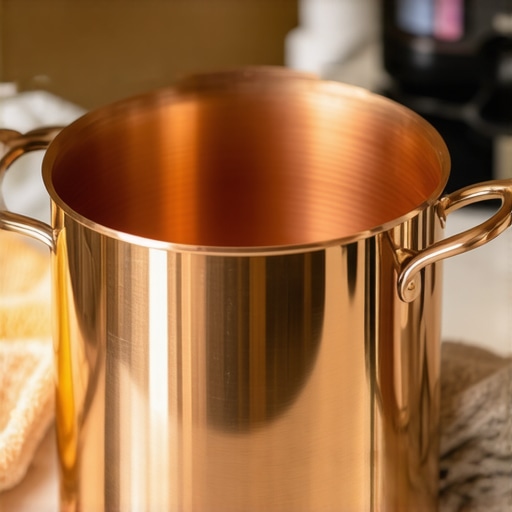
How to Restore the Luster of a Dull Copper Stockpot
Copper is temperamental. While a stainless steel pan might survive a scrub with a heavy-duty pad, your professional-grade copper stockpot demands a specific chemical equilibrium to return to its showroom state. Pure science, really. After managing premium cookware inventories for nearly two decades, I have seen enthusiasts ruin thousand-dollar Ruffoni sets by treating them like cheap aluminum. The stake is not just pride; it is the thermal efficiency of the vessel. Dullness is a sign of cupric oxide buildup, a layer that effectively acts as an insulator, resisting the very heat you want to conduct. The result? Avoidable failure in the kitchen.
The Molecular Reality of Surface Degradation
Copper reacts with oxygen. This is an absolute. When you see that brownish-gray haze, you are looking at a oxidation layer that has reached a thickness where light no longer reflects with a high refractive index. To reverse this, we do not need brute force. We need a low-pH catalyst. Common household acids like citric or acetic acid work, but the secret lies in the carrier medium. A paste that holds the acid against the vertical walls of a stockpot is the only way to ensure uniform restoration. If you apply a liquid, it runs. The uneven contact time creates ‘leopard spots’—darker patches where the acid worked less efficiently. It is the same principle I discuss when explaining the secret to a perfect sear on scallops using copper pans. Consistency in surface contact defines the outcome.
According to standards from the Copper Development Association (CDA), maintaining the integrity of the metal requires avoiding high-alkali detergents which accelerate tarnishing. Think of the cost-benefit here. A thirty-minute restoration session protects a legacy investment that will outlast your luxury kitchen upgrades by decades. High-grade 2.5mm copper is a lifetime tool, provided you understand the metallurgy.
The Failure of Industrial Abrasives
I have witnessed the ‘Brillo pad massacre’ far too often. Using steel wool on copper is a cardinal sin. It creates micro-scratches that increase the surface area available for future oxidation. You are literally making the pot get duller faster. Use a soft cotton cloth. The scent of the reaction—that metallic, sharp copper smell—tells you the oxide is breaking down. It is visceral. If you have ever dealt with why your stainless pans turn blue and how to brighten them, you know that heat tint is a different beast entirely, but copper’s dullness is strictly atmospheric. Some people prefer the patina. I do not. In a professional environment, a bright pot reflects a clean, disciplined station.
Implementation risk is high when using commercial polishes that contain petroleum distillates. They leave a film. When that film hits the high BTUs of a professional range, it can polymerize, creating a sticky, yellow residue that is harder to remove than the original oxidation. Salt and lemon? It works, but the salt must be fine-grain. Large kosher salt crystals will scratch the soft metal. You want a slurry, not a scrub. This same attention to detail applies when you decide to polish a copper sink without ruining the patina; the tool must match the metal’s hardness.
Heritage Metals in the 2025 Market
We are seeing a shift. The next 24 months will likely bring a resurgence of ‘honest’ materials. People are tired of disposable air fryers and plastic-heavy espresso machines. They want mass. They want the weight of industrial-grade copper. However, this comes with a maintenance debt. Local kitchen retailers often fail to explain that why your premium cookware is sticking often traces back to poor surface maintenance affecting heat distribution. Regulation-wise, we expect stricter labeling on ‘copper-clad’ products which often mislead consumers with thin electroplated layers that cannot be restored once they wear through. Real stockpots are investments; the market is correcting toward durability over convenience.
The Strategy for Professional Maintenance
The executive verdict is simple: Buy solid copper, but only if you commit to the chemistry. If you are a high-volume cook who lacks the time for monthly polishing, stick to high-end 5-ply stainless. But if you demand the absolute pinnacle of temperature control, copper is the only path. My recommendation? Create a de-oxidation kit. One gallon of white vinegar, a container of fine table salt, and unbleached flour. Mix to the consistency of heavy cream. Apply. Wait ten minutes. Rinse with lukewarm water. Dry immediately. Never air dry. Air drying is the fastest way to invite water spots and immediate re-oxidation.
Technical FAQ
Can I use a dishwasher for my copper stockpot?
Never. The harsh detergents and high heat will strip the tin lining and cause immediate, deep-seated oxidation on the exterior copper. Hand wash only.
How do I know if my pot is solid copper or just plated?
Check the weight and the rivets. Solid copper stockpots are exceptionally heavy. If you can dent it with a finger or it feels light like aluminum, it is likely a thin plating that will not survive a deep restoration.
What if the inside of the pot is also dull?
Most copper pots are lined with tin or stainless steel. If it is tin, it will naturally darken. Do not polish the tin; you will rub it off. If it is stainless, you can use a standard non-abrasive cleaner.
How often should I restore the luster?
For a frequently used pot, once every three months is the professional standard. This prevents the oxide from becoming thick enough to require aggressive mechanical polishing.