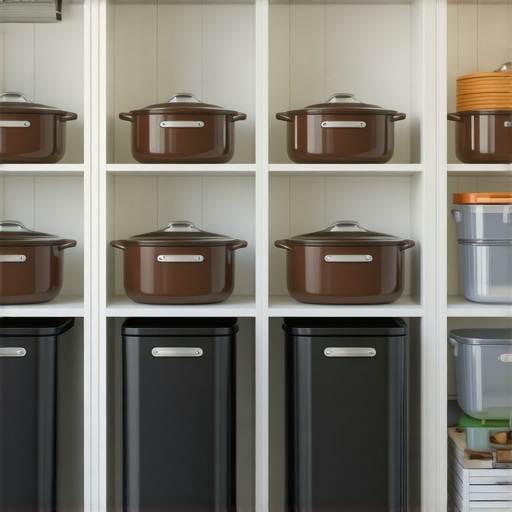
Storing heavy cast iron is a matter of structural physics, not aesthetics. If you treat a fifteen-pound Le Creuset like a stack of plastic bowls, you are begging for a structural failure or a ruined finish. Most standard pantry shelves are designed for cereal boxes and light canned goods, not the concentrated point load of a premium cookware collection. After fifteen years in high-end kitchen architecture, I have seen enough bowed MDF and sheared shelf pins to know that organization requires a strategy rooted in load distribution. The result? Avoidable failure. Avoid it.
The Best Way to Organize Heavy Dutch Ovens in a Pantry
The core problem with Dutch ovens is their vitreous enamel. It is a glass layer fused to metal. When you stack these pots, the weight concentrates on the rim of the bottom vessel, leading to microscopic fractures that eventually flake off into your food. The engineering reality dictates that each piece must have its own footprint. Low-level pull-out shelves equipped with 100-pound rated full-extension ball-bearing slides are the only professional solution. This prevents the back-straining reach and the inevitable clatter of iron against iron. Poor storage often leads to physical misalignments; for instance, understanding why your Dutch oven lid doesn’t sit flush is often a byproduct of physical warping or rim damage from improper stacking.
Load Distribution and Shelf Integrity
Standard 3/4-inch particle board is insufficient. It creeps under static load. Within eighteen months, the deflection becomes visible. You need 3/4-inch hardwood plywood or reinforced steel brackets anchored directly into the wall studs. When designing the base of your pantry, consider the best countertop material for heavy kitchen appliances to ensure the staging area handles the impact of a pot being set down roughly. I always specify a maximum shelf span of 24 inches for cast iron storage. Anything wider requires a center vertical support to maintain the structural integrity mandated by ASTM International standards for residential cabinetry. If you ignore these weight limits, the shelf pins will eventually fail. The sound is unmistakable—a sharp crack followed by the heavy thud of four thousand dollars worth of cookware hitting the floor.
The Lid Management Protocol
Lids are the primary cause of pantry clutter and chipped rims. Do not store them on the pots. This traps moisture and leads to the ‘smell of stale iron’ even in a climate-controlled luxury kitchen. Use vertical dividers. Integrating the best drawer organizers for custom luxury cabinetry helps mitigate the lateral movement of heavy lids during drawer operation. Each lid should slide into a felt-lined or silicone-tipped slot. This prevents metal-on-metal contact and keeps the handles accessible. It is a technical necessity, not a luxury. Without these dividers, lids become projectiles whenever a drawer is opened with force.
Market Shifts in High-End Storage
The industry is moving away from the ‘display pantry’ toward functional industrial-grade zones. We are seeing a surge in 2025 for walk-in sculleries that utilize open-front reinforced drawers. These allow for immediate visual inventory without moving five pots to find the 7-quart round. Strategic foresight suggests that home values are increasingly tied to these ‘hard-working’ secondary spaces. A pantry that can support 500 pounds of specialized cookware is a major selling point for the modern home chef. Regulatory changes in residential building codes are also starting to reflect higher safety margins for built-in shelving, mirroring the standards set by the National Kitchen & Bath Association (NKBA).
Executive Strategy
If your pantry has wire shelving, rip it out today. It is a liability for heavy cast iron. For those with existing wooden shelves, retrofitting with pull-out glides is the only logical move. Invest in heavy-duty hardware—specifically 13/16-inch over-travel slides—so you can lift the pots vertically without hitting the shelf above. The cost of the hardware is negligible compared to the cost of replacing a shattered 9-quart oval cocotte. Protect your investment with engineering, not just tidiness.
Frequently Asked Questions
Can I use shelf liners to protect my Dutch ovens?
Yes, but avoid thin plastic. Use heavy-duty silicone mats or thick felt. These provide a high coefficient of friction to prevent sliding and cushion the impact of the heavy iron base against the shelf surface.
Is it safe to store Dutch ovens on the floor of the pantry?
Only if the floor is a stable material like tile or stone. However, it is ergonomically poor. Lifting a 20-pound pot from floor level puts unnecessary torque on the lower back. Aim for the ‘power zone’ between mid-thigh and chest height.
Should I store my pots with the lids inverted?
Only if you use a protector between the lid and the rim. Storing them inverted without a buffer still risks enamel-to-enamel friction. The best practice remains separate vertical storage for lids.
What is the maximum weight a standard pantry shelf can hold?
Most builder-grade shelves are rated for 15-20 pounds per linear foot. A single large Dutch oven can exceed this limit instantly. Always verify the bracket rating and ensure they are screwed into studs, not just drywall anchors.