
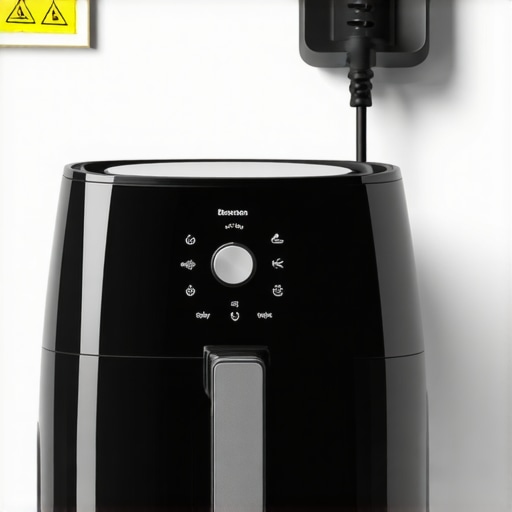
How to Stop Your Air Fryer from Blowing a Fuse
A tripped circuit breaker is more than an inconvenience; it is a loud, mechanical protest against a lack of electrical foresight. In the world of high-end culinary environments, the installation of high-wattage appliances like air fryers and espresso machines often outpaces the infrastructure behind the backsplash. After two decades of diagnosing electrical failures in premium residences, I have identified a recurring truth: people treat luxury kitchen outlets as infinite power sources rather than the end-points of a rigid, finite distribution system. If your air fryer shuts down your entire counter mid-cycle, you are likely violating the 80% rule of continuous load management. The result? Avoidable failure.
The Engineering Reality of Current Draw
Most standard air fryers operate between 1500 and 1800 watts. On a standard 120-volt residential circuit, an 1800-watt appliance pulls exactly 15 amps. Here is the problem: most older homes or poorly planned modern renovations use 15-amp breakers for general lighting and appliance circuits. According to the National Electrical Code (NEC), you should only load a circuit to 80% of its capacity for continuous use. This means a 15-amp circuit is effectively maxed out at 12 amps. When you plug in one of the top models that redefine healthy cooking in 2025, you are already redlining the copper. Add a single light bulb or a smartphone charger to that same line, and the thermal strip in your breaker will eventually expand, killing the power. This is why your air fryer stopped heating up halfway through—it is not the machine; it is the infrastructure.
The Hidden Risk of Shared Circuits
The smell of ozone or the sight of a slightly yellowed outlet plate is a warning of high resistance. In many luxury kitchen designs, the aesthetic hides the fact that the electrician daisy-chained the outlets for the stand mixers, the premium cookware prep area, and the refrigerator. This is a strategic error. High-wattage heating elements in air fryers use Nichrome wire that creates immense heat rapidly, demanding a sudden and sustained draw of current. If the wire gauge is 14 AWG (common in 15-amp circuits) instead of the thicker 12 AWG required for 20-amp service, the wire itself heats up. This heat increases resistance, which drops voltage and causes the appliance to pull even more amperage to compensate. This cycle is often the reason why most air fryers dont reach their advertised temperature before the breaker finally gives up. When designing for heavy kitchen appliances, anything less than 20-amp dedicated circuits is a compromise on safety and performance.
Strategic Foresight for the 2025 Kitchen
We are entering an era of total kitchen electrification. Within the next 12 to 24 months, we expect to see smart electrical panels become the standard in high-end renovations. These panels allow for real-time monitoring of amperage draw per outlet. If you are planning a renovation now, the directive is clear: install at least two dedicated 20-amp Small Appliance Branch Circuits (SABC) for your countertop. This prevents the scenario where an espresso machine and an air fryer competing for current results in a dark kitchen. Regulatory changes are already leaning toward mandatory AFCI (Arc-Fault Circuit Interrupter) protection for all kitchen circuits, which are even more sensitive to the heat signatures of overloaded wires. Failure to upgrade now will lead to compatibility issues with the next generation of induction-ready premium cookware and high-speed ovens.
The Executive Verdict
If you are currently facing frequent trips, do not simply replace the fuse or reset the breaker and continue. This weakens the breaker’s internal spring and increases the risk of a fire. My recommendation is a ‘Hard Split.’ If your home allows it, have an electrician pull a new 12/2 Romex line specifically for your air fryer and espresso machine station. If that is not an option, you must practice load shedding—never run your air fryer while the toaster or coffee grinder is active on the same side of the kitchen. The bottom line: physics does not care about your kitchen’s marble finish. If the math of the amperage doesn’t work, the system will fail.
FAQ
Q: Why does my air fryer trip the GFCI but not the main breaker?
A: GFCIs detect current leakage. If your air fryer has a slight moisture buildup on the heating element or a failing fan motor, it creates a ground fault that the GFCI catches before the main breaker even feels the heat.
Q: Can I use a surge protector to stop the blowing?
A: No. Surge protectors do not increase capacity. In fact, most cheap power strips are rated for less than the air fryer itself, creating a significant fire hazard.
Q: Is a clicking sound before the trip normal?
A: That is the sound of the thermal element in the breaker bending or an arc within the outlet. It is a sign of immediate failure and needs professional inspection.