
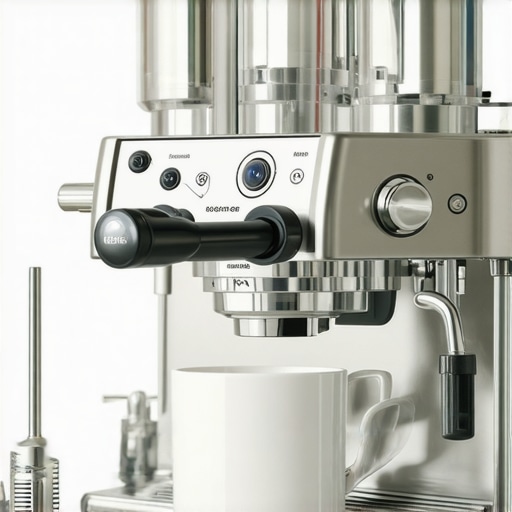
How to Adjust the Water Temperature on Your Prosumer Espresso Machine
Precision is not an option in the luxury kitchen; it is the baseline. After fifteen years of diagnosing thermal instabilities in high-end machinery, I can tell you that a deviation of just two degrees Fahrenheit is the difference between a syrupy, balanced ristretto and a thin, acrid mess. Most owners of prosumer equipment treat their PID (Proportional-Integral-Derivative) controllers like a kitchen timer—set and forget. This is a technical failure. The physics of extraction dictate that as your coffee beans age, or as you switch from a chocolatey medium roast to a floral light roast, your thermal variables must shift. If you are not actively managing your boiler temperature, you are wasting the potential of your five-figure investment.
The Engineering Reality
To master temperature, you must understand the distinction between boiler temperature and group head temperature. In many E61 group machines, a thermosyphon loop circulates water to maintain heat. However, the display on your PID often shows the temperature inside the boiler, not at the puck. This discrepancy is known as the ‘offset.’ A prosumer machine might show 218°F on the display to achieve a 200°F brew temperature. Understanding the difference between E61 and saturated group heads is vital here, as saturated groups reduce this delta, offering immediate thermal feedback. When you adjust the PID, you are essentially recalibrating a complex thermodynamic equation. The algorithm calculates the pulse-width modulation of the heating element to prevent ‘overshoot’—that moment where the heater stays on too long and spikes the temperature beyond your target. The result? Thermal consistency that older, pressurestat-driven machines could never dream of achieving. For a deeper look at why this technology matters, see why espresso machines with PID controllers result in better-tasting coffee.
The Thermal Offset Trap
The messiest reality of high-end espresso? Scale. Even if you use filtered water, mineral accumulation on the temperature probe acts as an insulator. I’ve seen prosumer machines where the sensor reads a perfect 200°F, but the actual water hitting the coffee is a lukewarm 185°F because the probe is ‘blinded’ by calcium. The smell of scorched rubber or a metallic tang often signals a machine running too hot. Conversely, if your shots taste sour or salty, your temperature is likely too low. This is particularly common when users try to dial in a light roast espresso without the sour aftertaste, as light roasts require much higher temperatures (203°F–205°F) to break down the dense cellulose structure of the bean. To keep your sensors accurate, you must know how to properly descale a high-end dual-boiler espresso machine without damaging the sensitive electronics. I remember a client in a coastal zip code whose machine drifted 8 degrees in six months due to local water hardness. The shot quality didn’t just dip; it evaporated.
Market Corrections Ahead
The industry is moving toward ‘Induction Heating’ and ‘Instant-Flash’ boilers. Within the next 18 months, I anticipate a move away from large, energy-inefficient copper boilers toward smaller, high-response thermoblocks controlled by AI-driven PID loops. Regulatory changes regarding energy consumption in home appliances are forcing manufacturers to rethink the ‘always-on’ nature of prosumer gear. We are seeing a shift where the machine predicts your usage patterns to pre-heat only the necessary components. This is not just about saving electricity; it is about reducing the time-to-temp, allowing a machine to move from 195°F for a dark roast to 205°F for a light roast in seconds rather than minutes. Owners who resist these technological shifts will find themselves with beautiful, albeit slow and inefficient, museum pieces.
Executive Verdict
If your machine has a PID, use it. If it doesn’t, sell it. For those with adjustable machines, my recommendation is a ‘Buy’ on the concept of temperature surfing for specific roasts. If you find your shots are consistently lacking body, raise your temperature by 1-degree increments. If you are experiencing harsh, bitter finishes, drop it. The Actionable Strategy: Perform a ‘scace’ test or a flush-temperature check once a quarter to ensure your PID offset matches the reality of the water in the portafilter. Precision is a habit, not a feature. According to the Specialty Coffee Association (SCA), the standard for brewing water temperature is 90-96°C (194-205°F), and staying within this range requires constant vigilance over your machine’s internals. Technical standards from organizations like the IEEE highlight that PID logic is only as good as the sensor data it receives. Keep your probes clean, keep your offset calibrated, and your luxury kitchen will produce world-class results every morning.
Frequently Asked Questions
Can I change the temperature while the machine is pulling a shot?
No. Most PID controllers lock out during the brew cycle to prevent electrical interference and erratic heating pulses. Always adjust while the machine is at idle.
Why does my temperature drop mid-shot?
This usually indicates a boiler capacity issue or a failing heating element. In heat exchanger machines, it might mean your cooling flush was too long.
Is 200°F a universal setting for all espresso?
Absolutely not. It is a starting point. Darker roasts usually shine at 195°F–198°F, while lighter, acidic roasts often need 202°F–205°F to achieve sweetness.