
Why Your Espresso Tastes Like Grass and the Simple Fix
Chlorophyll belongs in a lawn, not a demitasse. If your morning shot carries the distinct, sharp, and vegetal profile of fresh-cut grass or hay, you are not tasting the ‘terroir’ of a high-end bean. You are tasting a failure of thermodynamics and particle physics. After fifteen years of diagnosing high-end extraction systems, I can tell you that a grassy profile is almost always a symptom of under-development—either in the roast or, more likely, in your extraction parameters. This isn’t just a minor annoyance. It is an expensive waste of premium raw materials. When you spend eighty dollars on a bag of Geisha beans, getting a hay-like finish is a technical insult.
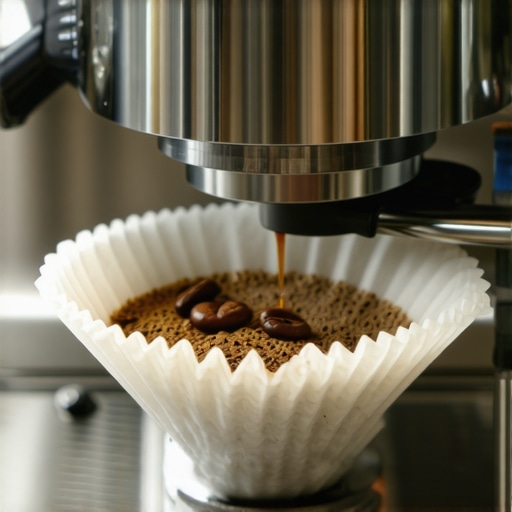
The root cause is straightforward: under-extraction. Specifically, the hot water has failed to dissolve the sugars and oils necessary to balance the organic acids and plant-based compounds inherent in the coffee seed. When the extraction is too low, you are left with the ‘fast-dissolving’ elements only. These are the acids and the vegetal precursors. The result? A sour, thin, and green flavor that ruins the experience. [image_placeholder_1]
The Engineering Reality
To fix this, we must look at the variables that govern solubility. The first is temperature. If your group head isn’t hitting a consistent 200°F (93.3°C), you are fighting a losing battle. This is why espresso machines with PID controllers result in better tasting coffee because they eliminate the thermal surfing that plagues cheaper hardware. Without precise control, the water simply doesn’t have the kinetic energy to pull the heavier, sweeter compounds out of the cellulose structure of the bean.
Second, we have the grind geometry. If your grind is too coarse, the water rushes through the puck too fast. It doesn’t spend enough time in contact with the coffee surfaces to perform the necessary chemical work. You need to choke the flow slightly. We are looking for a syrupy, viscous stream, not a watery torrent. You must also ensure your equipment is clean; old oils can mask these issues. Learning the proper way to clean a burr grinder without ruining the calibration ensures that your particle distribution remains consistent. Fines and boulders in your grind will lead to uneven extraction, where part of the puck is over-extracted and bitter, while the rest remains under-extracted and grassy.
Operational Risks and the Messy Reality
I’ve seen this play out in countless luxury kitchens. A client buys a five-thousand-dollar machine but pairs it with a ‘prosumer’ grinder that produces a mountain of static and inconsistent particles. They pull a shot, it tastes like lawn clippings, and they blame the machine. The reality? Their thermal offset is wrong. I once spent four hours at a site in the hills where the water was too soft—it lacked the minerals (magnesium and calcium) to actually grab the coffee solids. The espresso was perpetually thin. We had to remineralize the water just to get the profile back to chocolate and stone fruit.
If you are working with very light roasts, the grassy risk increases exponentially. These beans are dense and stubborn. You might need to dial in a light roast espresso without the sour aftertaste by pushing your yield out to a 1:2.5 or even a 1:3 ratio. This provides more solvent (water) to work through the tough cellular walls of the bean. If you stick to a traditional 1:2 ratio with a Nordic roast, you will get grass every single time.
Market Corrections and Strategic Foresight
Looking at the next 12 to 24 months, we are seeing a massive shift toward ‘Precision Brewing’ in the home sector. Consumers are moving away from the ‘press a button’ mentality and toward flow profiling. This allows you to manipulate the pressure during the shot to rescue under-developed beans. Regulatory changes regarding energy efficiency in appliances are also forcing manufacturers to rethink boiler designs. We are seeing a move toward smaller, high-efficiency thermoblocks that can hit target temperatures in under two minutes, though they often lack the thermal mass of traditional E61 group heads. According to the Specialty Coffee Association (SCA) brewing standards, maintaining a stable temperature within 1 degree Celsius is the benchmark for professional-grade results. If your machine can’t do that, you are at the mercy of the elements.
The Executive Verdict
If your espresso tastes like grass, do not buy new beans yet. First, increase your brew temperature by 2 degrees. Second, refine your grind one notch finer. Third, check your water hardness. If those three steps don’t move the needle, your roast is likely under-developed, or your machine’s pressure gauge is lying to you. Stop settling for subpar extractions. The equipment exists to pull a perfect shot; you just need to stop cutting corners on the physics. If you want a result that justifies the investment, focus on the thermal stability and the grind uniformity above all else.
Frequently Asked Questions
Q: Can I fix grassy espresso by just adding more coffee?
A: No. Increasing the dose usually makes the problem worse by creating more resistance, which can lead to channeling. Focus on temperature and grind size first.
Q: Is my water the reason it tastes like hay?
A: It’s possible. Distilled or Reverse Osmosis water lacks the mineral content to extract the sweet compounds, leaving you with only the acidic and vegetal notes.
Q: Why does this happen more with expensive beans?
A: Expensive, high-altitude beans are often roasted lighter to preserve delicate floral notes. These light roasts are much harder to extract properly than darker, oilier supermarket beans.