
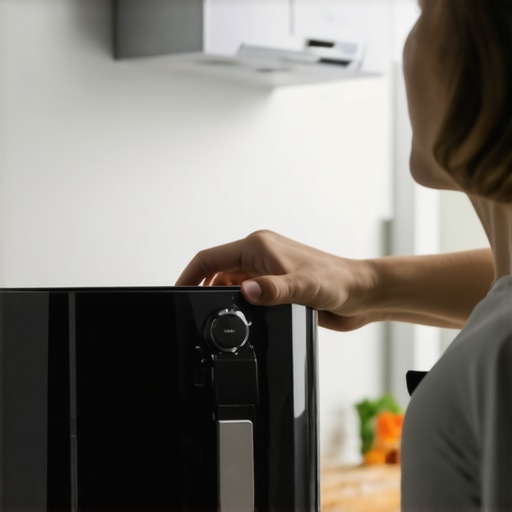
A shrill, piercing alarm at 7:00 PM is the quickest way to ruin a perfectly cooked ribeye. You aren’t burning the house down. You are merely a victim of high-velocity convection and the physics of particulate matter. In my twenty years of designing high-end culinary spaces, I have seen professional-grade air fryers turned into expensive paperweights because owners couldn’t manage the literal fallout of high-heat cooking. The problem isn’t the machine. The problem is the invisible chemistry of aerosolized lipids. If your kitchen sounds like a fire drill every time you crisp up wings, you are likely failing to account for the smoke point of your fats or the accumulation of carbonized debris on the internal heating elements.
How to Stop Your Air Fryer from Setting Off Your Smoke Detector
The engineering of an air fryer is deceptively simple: a heating coil and a high-speed fan. This combination creates a miniature wind tunnel of intense heat. When you introduce fats with low thermal stability, such as butter or unrefined olive oil, they reach their breaking point instantly. The fan then picks up these microscopic droplets and hurls them against the 400-degree heating element. The result? Instant combustion. Most homeowners overlook the specific prevention steps necessary to mitigate this reaction. You must choose oils with smoke points exceeding 450 degrees Fahrenheit. Avocado oil or Ghee are not luxuries in this context; they are operational requirements for smoke-free operation.
The Physics of Optical Smoke Sensors
Modern luxury homes often utilize photoelectric smoke detectors. These sensors work by aiming a light source into a sensing chamber. When smoke particles enter, they scatter the light onto a sensor, triggering the alarm. Air fryers are notorious for creating a fine mist of grease that mimics the density of wood smoke. The detector cannot distinguish between a grease fire and a dense cloud of aerosolized bacon fat. It simply reacts to the interference. This is why placement matters. If your air fryer sits directly under a detector or in a kitchen with poor cross-ventilation, you are inviting a false positive. You should examine the NFPA standards for kitchen device placement to ensure your layout isn’t working against you.
The Thermal Dynamics of Oil Selection
Not all oils are created equal. This is a technical truth that many home cooks ignore at their peril. Refined oils undergo processes that remove impurities, effectively raising the temperature at which they smoke. If you use extra virgin olive oil at 400 degrees, it will degrade into acrid smoke within seconds. According to the USDA Food Safety and Inspection Service, the chemical breakdown of fats at high heat produces volatile compounds. These compounds are the primary trigger for your alarm. I recommend a strict adherence to refined oils for any air-fried dish exceeding 375 degrees. It keeps the kitchen quiet and the food tasting like food, not carbon.
Hidden Carbon Accumulation Risks
There is a darker side to air fryer maintenance that most manuals gloss over. Over months of use, a fine layer of grease coats the protective screen and the heating element itself. This is often the hidden reason for an air fryer that smells like burnt material even when cooking lean vegetables. Every time the machine cycles on, that old grease is re-burned. The cumulative effect is a steady stream of blue smoke. You need to perform a deep clean of the interior cavity every few weeks, not just the basket. The effort is minimal compared to the headache of a siren mid-dinner. Use a non-abrasive degreaser and a soft brush to clear the coils once they are completely cool. Taking the time to deep clean the interior heating element is the single most effective way to extend the life of the unit and maintain air quality.
Strategic Ventilation Solutions
A high-end kitchen is a system, not a collection of boxes. If your air fryer is setting off alarms, your ventilation system is likely undersized or improperly used. Don’t rely on the air fryer’s internal fan to manage the effluent. Position the unit directly under your range hood. Turn the hood to its highest setting before you even start the machine. This creates a low-pressure zone that captures the grease mist before it can migrate to the ceiling where detectors live. If you are using one of the silent air fryers, it is easy to forget they are even running, but the thermal output remains the same. Vigilance with airflow is the only way to bypass the limitations of small-space cooking.
Operational Failure Points
Overcrowding the basket is a cardinal sin of air frying. When you pack wings or fries too tightly, you restrict the airflow. The machine has to work harder, and the steam trapped between the food carries more fat particles into the air. This dense, humid air is a prime trigger for ionization smoke detectors. The result? Uneven cooking and a screaming alarm. Give the food space to breathe. Use a parchment liner specifically designed with holes for air fryers to keep the base clean while allowing the vortex to function. If you notice the PFOA-free coatings starting to peel or discolor, the surface may be trapping more carbon than it should, further contributing to smoke issues.
Market Trends and Future Sensors
We are seeing a shift in the industry toward smarter appliances that communicate with home automation systems. In the next 18 months, I expect to see high-end air fryers equipped with built-in VOC (Volatile Organic Compound) sensors. These units will automatically throttle the heating element or alert the user before smoke becomes visible. Until then, we rely on manual intervention and proper technique. The local market is moving toward integrated sculleries where these high-heat tasks are performed away from the primary living space, mitigating the risk of nuisance alarms in open-concept homes.
Executive Verdict
If your air fryer is triggering your smoke detector, do not blame the detector. It is doing its job. You are likely using the wrong oil or neglecting the heating element. My professional recommendation is a three-pronged strategy: Switch to avocado oil for high-heat tasks, clean the internal heating coils monthly, and always operate the unit under a powered exhaust hood. If you follow these steps and still experience issues, the unit may have a failing thermal fuse or a short-circuiting fan motor. In that case, replacement is the only safe option.
Frequently Asked Questions
Can I use water to stop my air fryer from smoking?
Adding a tablespoon of water to the bottom of the drawer (under the basket) can help catch grease drippings before they hit the hot metal, preventing them from smoking. However, do not use too much, or you will steam your food instead of frying it.
Why does my air fryer only smoke when I cook bacon?
Bacon has a high fat content and low density. The fan can actually lift the bacon or the grease droplets and throw them against the heating element. Using a heavy rack to weigh the bacon down can reduce this.
Is the smoke from an air fryer toxic?
Smoke from burnt food contains carbon monoxide and acrolein. While small amounts aren’t immediately lethal, regular exposure in a poorly ventilated kitchen is a respiratory irritant and should be avoided.
Does the age of the air fryer affect how much it smokes?
Yes. Older units accumulate carbonized grease inside the chassis and on the fan blades that is nearly impossible to clean. If a deep clean doesn’t fix the smoke, it’s likely time for an upgrade.