
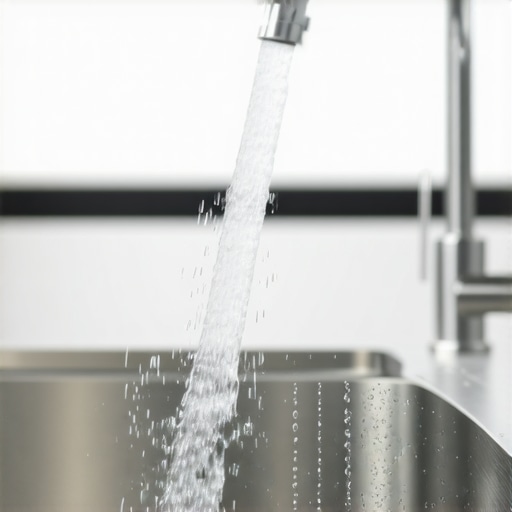
Why Your Kitchen Sink Spray Is Losing Pressure Over Time
Your high-end kitchen faucet is an engineering marvel, or at least it should be. When that $1,200 pull-down sprayer begins to provide a pathetic trickle instead of a concentrated jet, the frustration is immediate. Most homeowners assume the pump or the municipality is at fault. They are usually wrong. After two decades in the luxury kitchen space, I have seen that pressure loss is rarely a systemic failure. It is an internal battle against physics and chemistry. If you ignore the early signs of hydraulic resistance, you are not just losing convenience; you are risking the internal seals of your fixture.
The mechanics of a modern spray head rely on a delicate balance of volumetric flow and velocity. Inside that wand, several components must cooperate. The primary culprit is often the aerator or the flow restrictor. These tiny mesh screens are designed to mix air with water to create a soft, splash-free stream. However, they act as the ultimate trap for sediment and mineral bypass. This is a common issue in homes where how water hardness quietly destroys your espresso flavor, as the same calcium and magnesium that ruins a shot of crema will solidify inside your faucet nozzles. The result? A gradual, suffocating reduction in force.
The Engineering Reality
Beyond the aerator, we have the diverter valve. In a pull-down sprayer, this component manages the transition between the aerated stream and the powerful spray mode. These valves are often spring-loaded or rely on pressure-sensitive diaphragms. Over time, the lubricant on these seals degrades. Debris from the water line—often bits of solder or plastic from the supply pipes—lodges in the diverter housing. This prevents the valve from seating correctly. When the diverter fails to engage fully, water bypasses the intended path, splitting the pressure between two outlets and weakening both. It is a mechanical stalemate that no amount of external cleaning will resolve. You need to understand how to choose the right size undermount sink for your prep needs to appreciate how much a failing faucet impacts daily workflow.
[IMAGE_PLACEHOLDER]
Market Corrections Ahead
The industry is moving toward more complex, electronically controlled faucets. While these offer touchless convenience, they introduce a new failure point: the solenoid valve. In many modern luxury setups, the solenoid acts as the gatekeeper. If the battery is low or the internal filter is clogged, the valve only opens partially. We are seeing a trend where smart home integration complicates basic plumbing. According to the American Society of Plumbing Engineers (ASPE), the shift toward low-flow compliance—often driven by EPA WaterSense standards—means faucets are designed with tighter tolerances. These tighter tolerances are less forgiving. A single grain of sand can now cripple a high-end fixture that would have passed it easily twenty years ago. This is why why your kitchen island needs a dedicated prep sink; it provides redundancy when your primary fixture fails.
Operational Risk and Implementation Failure
The mess begins when a homeowner tries to ‘force’ pressure by removing restrictors. This voids warranties and can cause back-pressure issues that lead to hose leaks. I remember a client in a high-rise who experienced a total hose failure because a clogged spray head caused the pressure to build up at the connection point rather than the nozzle. The sound of a burst hose inside a cabinet is unmistakable—a sharp, wet snap followed by a relentless hiss. It is an avoidable catastrophe. Proper maintenance involves more than wiping the chrome finish. It requires a periodic vinegar soak of the wand and a check of the supply line filters. If you are running high-end appliances, you likely already know that the best luxury dishwashers for an open concept quiet kitchen require clean water lines to function; your faucet is no different.
The Executive Verdict
If your pressure is dropping, do not call a plumber first. First, unscrew the spray head and check the flow from the open hose. If the hose pressure is strong, the problem is the wand. If the hose pressure is weak, the issue lies in the cartridge or the supply stops. My recommendation is a ‘Buy’ on high-quality filtration and a ‘Hold’ on replacing the entire fixture until you have inspected the diverter. If you live in an area with high mineral content, a whole-house softener is the only way to protect these precision instruments. Do not let a $20 aerator clog turn into a $1,500 replacement job. Maintenance is the only hedge against engineering obsolescence.
FAQ
Q: Can I clean my spray head without taking it apart?
A: You can attempt to soak the nozzle in a 50/50 water and vinegar solution using a plastic bag tied around the head, but this only addresses surface-level calcification. Deep clogs usually require disassembly.
Q: Why does my pressure return to normal for a second then drop again?
A: This is a classic sign of a failing diverter valve or a loose internal washer that is being pushed into the flow path once the water velocity increases.
Q: Is it safe to remove the flow restrictor?
A: While it will increase pressure, it often violates local plumbing codes and can cause the spray pattern to become erratic or aggressive, leading to excessive splashing.
Q: How often should I replace the internal cartridge?
A: In a luxury kitchen with heavy use, expect a lifespan of 5 to 7 years. If you notice the handle becoming stiff, the cartridge is already on its way out.