
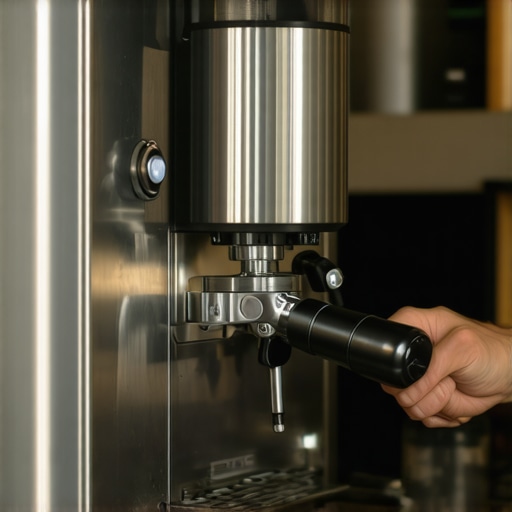
How to Properly Descale a High-End Dual Boiler Espresso Machine
Treating a dual boiler machine like a standard kitchen appliance is a recipe for catastrophic hardware failure. Most home baristas assume that pouring a descaling solution into the reservoir is enough. They are wrong. After fifteen years of tearing down E61 group heads and scouring copper boilers, I have seen more machines destroyed by improper cleaning than by simple neglect. The technical truth? Descaling a dual boiler machine without understanding its hydraulic layout often traps acidic solution in the brew boiler, leading to pitted metal and ruined solenoid valves. The stakes are high; we are talking about a $3,000 to $8,000 investment. If you get the chemistry or the sequence wrong, you might as well throw the machine in the trash. It is a calculated risk, one that requires a technician’s precision rather than a casual user’s hope. This is about thermal stability and fluid dynamics, not just aesthetics.
The Engineering Reality of Dual Boiler Systems
A dual boiler machine operates with two distinct environments. The steam boiler runs at a higher temperature and pressure to produce dry steam, while the brew boiler is tuned for a precise 200°F extraction. When scale—calcium and magnesium carbonate—precipitates out of the water, it clings to the heating elements. This creates an insulating layer. The result? The element has to work harder, eventually burning out. Understanding is a dual boiler espresso machine really necessary for home use depends on your willingness to maintain these complex internals. Unlike a heat exchanger machine, you cannot simply flush the whole system at once. The brew boiler is often a dead-end for water, meaning the only way to get the descaling agent out is through the group head. If scale particles break loose during this process, they will inevitably clog the tiny 0.6mm gicleur or the solenoid valve. This is why many manufacturers recommend never descaling at home. They want you to use soft water from the start. According to the Specialty Coffee Association, water hardness should be kept between 35 and 85 ppm to avoid these issues entirely.
The Risk of Flash Boiling and Acid Traps
The messy reality of descaling involves a phenomenon known as flash boiling. When you introduce an acidic solution into a hot boiler, the reaction can be violent. I remember a client in Chicago who tried to descale his La Marzocco using a heavy concentration of citric acid. He didn’t turn off the heating elements. The result? A pressurized geyser of blue-tinted acid that stripped the chrome off his kitchen fixtures. The smell of hot, reactive acid is something you never forget. It is sharp and biting. You must drain the boilers manually if your machine allows it. Draining via the hot water tap only empties the steam boiler, leaving the brew boiler untouched. You must ensure you are using a non-aggressive agent. Harsh chemicals will eat the copper and brass, leading to “green water” syndrome. This is why learning how to de-scale your espresso machine without damaging seals is the difference between a ten-year lifespan and a two-year lifespan. If the machine uses PID controllers, the thermal sensors might give false readings during the process, leading to overheating.
Market Shifts and Technical Longevity
The industry is moving toward integrated filtration. In the next 12 to 24 months, I expect more high-end manufacturers to bake water-quality sensors directly into the logic boards. We are seeing a shift where machines will simply refuse to operate if the mineral content exceeds safe thresholds. This is a response to the massive volume of warranty claims caused by scale. Local water tables are also changing. Urban sprawl often leads to higher mineral content in municipal supplies as deeper, older aquifers are tapped. This means the filtration you used five years ago might be inadequate today. Regulatory changes regarding lead-free brass in espresso equipment also mean that the alloys are softer and more susceptible to acid damage. You are no longer just maintaining a coffee maker; you are managing a small-scale chemical plant in your kitchen. This requires a shift in mindset from the user. Precision is the only path forward.
The Executive Verdict
My recommendation is clear: Buy a high-quality BWT or Mavea filtration system before you even plug the machine in. If you find yourself in a situation where scale has already built up, do not rush. Use a lactic-acid-based descaler instead of citric acid to protect your gaskets. Turn off the heating elements before introducing the solution. Let the chemistry work slowly. If you hear a high-pitched whistling from your boiler, that is the sound of scale-induced hot spots—stop immediately and call a professional. Strategy wins over speed every time in the luxury kitchen. Avoid the temptation of vinegar; the acetic acid will linger in the boiler for months, ruining every shot of espresso you pull.
Frequently Asked Questions
How often should I descale my dual boiler? If you use properly filtered or remineralized water, you should only need to descale once every two to three years. Over-descaling is more dangerous than light scale buildup. Can I use vinegar to descale? No. Vinegar is too weak to remove heavy scale and too difficult to rinse out. It will leave a permanent foul taste in the porous metal of the boilers. What is the best water for a dual boiler? Aim for water with a total hardness of about 50 ppm and a buffer (alkalinity) of 40 ppm. This prevents scale while allowing the coffee to taste vibrant. Why does my machine leak after descaling? The scale was likely acting as a temporary plug for a worn gasket. When the acid removed the scale, the leak was exposed. You will need to replace the group head gasket or the O-rings.