
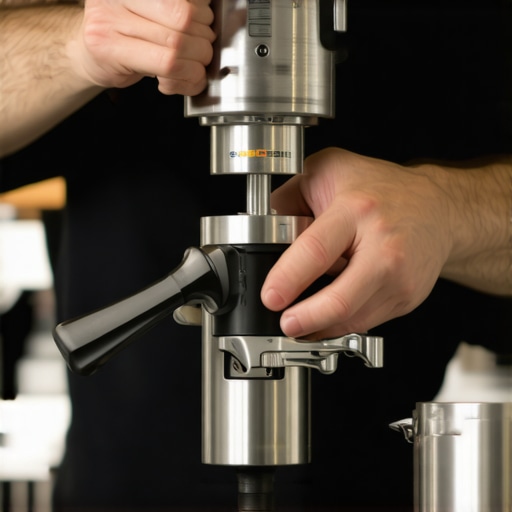
The Easiest Way to Calibrate Your Burr Grinder for Consistent Extractions
Grind size is not a suggestion. It is a matter of physics where the micron-level distance between two pieces of hardened steel dictates the chemical yield of your coffee. After fifteen years of diagnosing hardware failures in high-end kitchens, I can state with absolute certainty: your factory-set grinder is lying to you. A grinder straight out of the box is rarely set to its true zero point. This misalignment creates a chaotic distribution of particles, leading to shots that are simultaneously sour and bitter. The stake is simple. You are either controlling the extraction or you are at the mercy of mechanical variance. High-end espresso machines require predictability, and that starts with the calibration of the burrs.
The Engineering Reality
The mechanical heart of any premium burr grinder involves two surfaces—flat or conical—that must maintain perfectly parallel alignment under the torque of a high-speed motor. When you rotate the adjustment collar, you are moving these surfaces closer together. Most consumers trust the printed numbers on the dial, but these are arbitrary. True calibration requires finding the point where the burrs just barely touch, known in the industry as the chirp point. This is your absolute zero. From this point, every click or degree of rotation represents a specific, measurable change in the gap width. Without this reference, you are guessing. This lack of precision often explains the hidden culprit behind your watery home espresso shots, as the burrs are likely much further apart than the dial suggests. Precise calibration ensures that the motor’s power is translated into uniform fracturing of the bean rather than shattering it into a mess of dust and boulders.
Technical standards from organizations like the Specialty Coffee Association emphasize that particle size distribution is the most significant variable in brewing science. If your grinder produces too many fines, they clog the filter. If it produces boulders, the water bypasses them entirely. The cost-benefit of manual calibration is skewed heavily toward the user. It takes ten minutes but saves hundreds of dollars in wasted specialty beans. It transforms a mediocre grinder into a precision instrument that rivals commercial hardware. However, you must first ensure you know the proper way to clean a burr grinder without ruining the calibration, as old oils can create false resistance during the adjustment process.
Implementation Risks and Mechanical Failures
Real-world calibration is messy. It involves the smell of friction and the high-pitched whine of metal on metal. The risk? If you force the burrs together while the motor is spinning too slowly or if the burrs are dull, you risk chipping the teeth or burning out the start capacitor. I have seen countless owners attempt to adjust their grind while the chamber is full of beans. This is a recipe for disaster. The beans get wedged between the teeth, creating a mechanical block that can strip the adjustment threads. You must always run the motor when adjusting toward a finer setting. This clears the path. Failure to do so leads to the frustrating experience of a stuck collar. Furthermore, static electricity can mask a good calibration. You might have the distance right, but the discharge makes the grounds clump, which is why understanding why your coffee grinder makes so-much static is vital for a clean workflow. You can feel the vibration in the chassis when the burrs are aligned properly; it is a resonant, clean hum rather than a gritty rattle.
Market Corrections and Future Tech
The industry is shifting toward grind-by-weight systems and brushless DC motors that offer more torque at lower RPMs, reducing heat and maintaining calibration for longer periods. Within the next 24 months, expect to see more grinders using sensors to detect burr distance automatically, removing the human error of the chirp test. According to reports from the National Coffee Association, consumer demand for cafe-quality home setups is driving manufacturers to tighten tolerances in residential models. We are seeing a move away from plastic adjustment gears toward heavy-duty brass and stainless steel. This shift means that once you calibrate, the setting actually stays put. If you are working with specialty beans, you will also need to know how to adjust your grind size for oily coffee beans, as the increased friction changes the thermal expansion of the burrs themselves during a long grinding session.
The Executive Verdict
If you own a burr grinder and have never found the true zero point, your extractions are inconsistent by default. Buy a set of feeler gauges if you want to be extreme, but the chirp method is sufficient for 99% of home baristas. If you are using a grinder with significant play in the adjustment collar, sell it. Upgrade to a unit with a stepped or stepless adjustment that locks firmly. My strategy: Perform a deep clean and re-calibration every three months or every time you switch bean origins. This maintains the mechanical integrity of the unit and ensures your recipes remain repeatable. For those using advanced tools, remember why serious baristas use bottomless portafilters to diagnose extractions, as they are the only way to see if your calibration is actually resulting in an even flow across the puck.
Frequently Asked Questions
Does calibrating my grinder void the warranty?
Generally, no. Most manufacturers expect users to find the zero point and clean the burrs. However, disassembling the motor housing or the electronics will certainly void it. Stick to the burr chamber.
How do I know if my burrs are too dull to calibrate?
If you run your finger (carefully) across the edges and they feel like the back of a butter knife rather than a razor, they are shot. Dull burrs produce heat and fines, making calibration pointless.
Why does my zero point change over time?
Thermal expansion and the settling of the adjustment threads are common causes. As the grinder heats up during use, the metal expands, slightly closing the gap. This is why commercial shops calibrate several times a day.