
Most luxury kitchen owners treat their espresso machines like high-end appliances rather than precision instruments. They buy the chrome, the PID controllers, and the Italian branding, then hide the actual extraction process behind a spouted portafilter. It is a mistake. A massive one. After running this company for 15 years and witnessing thousands of failed home extractions, I can tell you that a spouted portafilter is a mask for incompetence. It hides the catastrophic failure of your puck preparation. If you cannot see the water interacting with the coffee, you are operating on guesswork, not data. The stake? Wasted specialty beans and a bitter, hollow shot that does a disservice to your five-figure equipment setup.
Why Serious Baristas Use Bottomless Portafilters to Diagnose Extractions
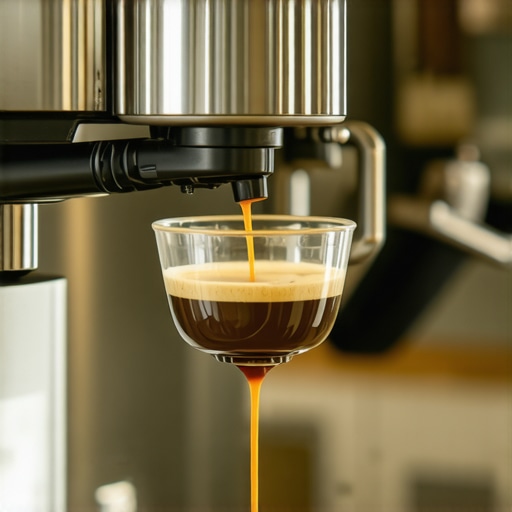
The bottomless, or naked, portafilter removes the floor of the basket. This simple engineering change exposes the entire underside of the filter screen. When the pump engages and hits those 9 bars of hydrostatic pressure, the water seeks the path of least resistance. In a perfect world, that resistance is uniform across the entire radius of the basket. In reality, your distribution is likely flawed. Without the metal spouts to funnel the liquid, you see the truth. You see the tiger striping. You see the golden-brown viscosity. Most importantly, you see the failures. High-end brewing is about managing the PID controllers and temperature stability, but even the best thermal management cannot save a puck with a hole in it.
The Mechanics of Hydraulic Resistance
Espresso is essentially a struggle between pressurized water and a compressed bed of coffee. If the bed is uneven, the water finds a weak point and drills through it. This is channeling. The result? A shot that is simultaneously over-extracted and under-extracted. The water flowing through the channel over-extracts that specific area, bringing out harsh, ashy flavors. The rest of the puck remains dry or under-saturated, contributing sourness. It is a flavor profile of contradictions. By using a naked portafilter, you can observe the ‘cone’ formation. A centered, stable cone indicates balanced resistance. If the flow is lopsided or multiple streams appear, your technique is the bottleneck. I often recommend that clients invest in better puck prep tactics to ensure the density of the coffee is identical from edge to center. This is not about aesthetics; it is about fluid dynamics.
When the Puck Fails
I have stood in many luxury kitchens and watched the ‘spurter.’ That is the industry term for a high-velocity jet of coffee that sprays out sideways, coating the machine’s mirror finish in brown droplets. It is the sensory anchor of a failed morning. The smell of scorched earth usually follows because that jet represents a complete collapse of the puck’s structural integrity. You feel the weight of the industrial-grade steel in your hand, you lock it in, and then—failure. It is humbling. This visual feedback is why bottomless portafilters reveal your worst tamping habits. If your tamp is even slightly off-kilter, the water will tell on you. It will migrate to the low side instantly. The naked portafilter provides a real-time audit that no electronic sensor can match. According to standards from the Specialty Coffee Association (SCA), uniformity in the coffee bed is the primary driver of extraction yield consistency. Without the visual evidence, you are just a hobbyist with expensive toys.
The Precision Manufacturing Shift
The industry is moving toward high-extraction baskets with laser-cut holes that reach the very edge of the metal. Traditional baskets have a dead zone around the perimeter. Modern baskets, like those from VST or IMS, demand even better technique. If you use these high-precision tools with a spouted portafilter, you are flying blind. The next 12 to 24 months will see an increase in ‘smart’ grinders that attempt to fix distribution, but the human element remains. You need to see the puck degradation at the 20-second mark. You need to see the ‘blonding’ when the soluble solids are exhausted. This level of detail is how you stop spitting espresso shots and start pulling cafe-quality liquid. The local market for luxury kitchen equipment is saturated with high-end machines, but the expertise to run them is rare. Precision manufacturing requires precision operation.
The Technical Verdict
Buy a bottomless portafilter today. Do not wait for your current setup to fail. If you are serious about the quality of your morning ritual, you must accept the transparency that a naked portafilter provides. It will be frustrating for the first week. You will spray coffee on your backsplash. You will realize your expensive grinder needs better calibration. But you will learn more in ten shots with a bottomless portafilter than in ten years with a spouted one. My recommendation is simple: use the naked portafilter as your primary tool. Only revert to spouts if you are pulling two separate single shots for guests and do not care about perfection. For your own consumption, demand the truth. For more technical insights, refer to reports from the National Coffee Association (NCA) regarding home brewing trends and equipment standards.
Frequently Asked Questions
Does a bottomless portafilter change the taste? Not directly, but it allows you to fix the errors that ruin the taste. It is a diagnostic tool, not a flavor enhancer. Why is my portafilter spraying? This is channeling. It means your coffee grounds have clumps or your tamping is uneven. Better distribution is the only fix. Can I use a bottomless portafilter with any machine? Most E61 group heads and major brands like Breville or La Marzocco have compatible naked portafilters available. Is it harder to clean? Actually, it is easier. There are no hidden spouts where old coffee oils can go rancid and impact flavor.