
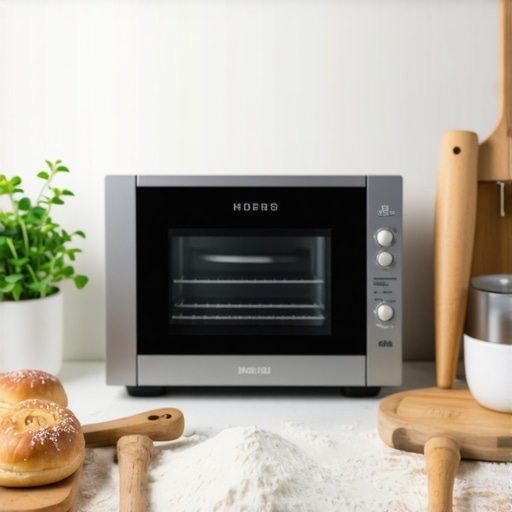
How to Calibrate Your Smart Oven for Precise Pastry Baking
Trusting a digital interface is the first step toward a collapsed souffle. Most owners of high-end appliances believe the number on the sleek glass panel represents absolute truth. It does not. After fifteen years of diagnosing thermal inconsistencies in luxury kitchen builds, I have seen that a smart oven is only as accurate as its last calibration. A five-degree drift might not ruin a roast. It will, however, destroy the structural integrity of a laminated pastry. Precision is not a luxury. It is a technical requirement for chemistry to occur. If you are investing in premium cookware and high-end ingredients, ignoring the thermal variance of your heat source is a strategic error.
Thermal Drift Realities
The engineering reality involves the hysteresis of the heating elements. Most ovens operate on a simple on-off cycle. High-end units utilize PID controllers to minimize these swings, similar to the technology found in high-end espresso machines. Even these systems fail when sensors are obstructed or when the internal thermistor loses its baseline. You must calibrate your oven temperature for consistent baking results to ensure the heating curves match the recipe requirements. Atmospheric pressure and local voltage stability play roles that manufacturers rarely discuss in the glossy brochures. I have seen voltage sags in residential neighborhoods cause a ten-percent drop in heat recovery times during heavy usage hours. The result? Flat croissants.
Bypass the Factory Presets
Smart ovens come pre-loaded with algorithms designed for the average user. You are not the average user. These presets often over-rely on convection fans which can prematurely set the crust on a loaf. When using stand mixers for high-hydration doughs, the oven needs to provide a massive initial heat burst without drying the surface. This requires manual offset adjustments. Use a multi-point thermocouple rather than a cheap hardware store thermometer. You should also recognize that your smart ovens probe is better than a handheld thermometer for internal crumb checks, provided the probe itself is verified against a known standard like boiling water. Precise data is the only way to combat the unpredictable nature of residential power grids and ambient kitchen temperatures.
The ROI of Thermal Accuracy
In the world of high-end builds, efficiency is the true currency. A properly calibrated oven reduces waste. It ensures that the time spent with your stand mixers and expensive flour results in a predictable product every time. The economics of a failed bake go beyond the cost of butter. It is about the lost opportunity of a perfect meal. Many clients now look toward the benefits of induction cooking for ultra-precise temp control on the stovetop, yet they neglect the box where the actual baking happens. Do not be that owner. Technical mastery of your tools is what separates a hobbyist from a home chef. The weight of industrial-grade steel in a professional range means nothing if the logic board thinks 350 degrees is actually 338.
Operational Risks and Messy Realities
Calibration is not a one-time event. The heating elements expand and contract, eventually shifting the sensor’s position. I recall a project where a client’s pastries were consistently burnt on the bottom despite a ‘perfect’ digital reading. The culprit was a shifted heat shield that redirected radiant energy toward the base of the pans. The smell of scorched sugar filled the air. It was a mess. We had to reset the entire thermal map of the unit. This is why precision scales are essential for both baking and brewing; you cannot diagnose an oven problem if your ingredient ratios are also fluctuating. Eliminate the variables one by one. Start with the heat.
Market Corrections and Future Tech
The industry is moving toward integrated humidity sensors. Within the next 24 months, we expect to see smart ovens that adjust for the moisture content of the dough in real-time. This mirrors the evolution of air fryers, which started as simple heating elements and evolved into sophisticated convection systems. However, until these sensors become standard, the burden of accuracy falls on you. Regulatory changes regarding energy consumption mean newer ovens may cycle heat more aggressively to meet green standards. This makes manual calibration even more vital. To maintain professional results, you might also consider why every luxury kitchen needs a dedicated warming drawer to handle the delicate proofing stages that modern ovens sometimes rush. According to reports from the Association of Home Appliance Manufacturers (AHAM), sensor drift is a top reason for service calls that aren’t actually hardware failures.
Executive Verdict
If your oven is more than twelve months old, it is likely lying to you. Perform a dry-run calibration test this week. If the variance is greater than five degrees, enter the service menu and apply a permanent offset. If you are serious about pastry, stop guessing. Buy a professional thermocouple and map your oven’s cold spots. Use the tech. Don’t let the tech use you. The National Association of Home Builders (NAHB) often points out that high-performance kitchens require high-performance maintenance. Adhere to that standard.
Frequent Questions
How often should I check my oven calibration? Check it every six months or whenever you notice a change in the browning patterns of your pastries. Can I use a standard sugar thermometer? No. You need a digital thermocouple with a high refresh rate to catch the peak and valley of the heating cycle. Does the altitude affect my smart oven? Yes. High-altitude environments require higher temperatures and different humidity levels; your smart oven logic may need a manual override for these conditions.