
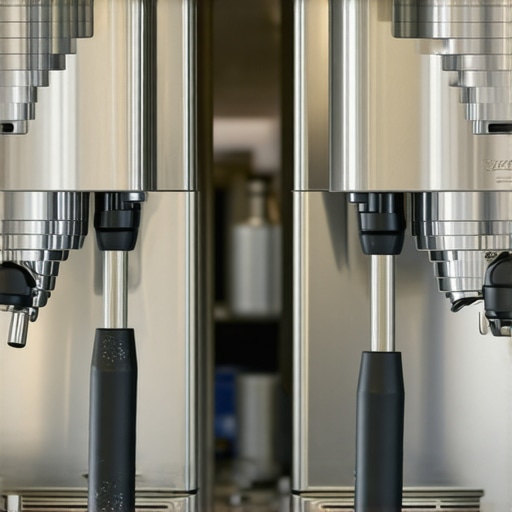
4 Reasons to Choose a Rotary Pump Over a Vibratory Pump for Espresso
Choosing an espresso machine based on aesthetics alone is a recipe for mechanical regret. In my fifteen years of tearing down boilers and recalibrating brew groups, I have seen hundreds of home baristas settle for vibratory pumps because of the lower entry price. It is a mistake. While a vibratory pump uses a piston and an electromagnetic coil to oscillate at 60 cycles per second, a rotary pump utilizes a motor-driven impeller. This isn’t just about noise. It is about the fundamental physics of fluid dynamics and pressure stability. If you want a machine that survives the next decade without a rebuild, the internal pump architecture is the most significant decision you will make.
Pressure Consistency and Flow Rate Precision
Vibratory pumps are notoriously inconsistent. They struggle to reach peak pressure instantly, often resulting in a slow ramp-up that can disrupt the puck’s structural integrity before the extraction truly begins. Rotary pumps are different. They deliver 9 bars of pressure almost immediately. This instantaneous response allows for a more controlled extraction. In high-end setups like a dual boiler espresso machine, the rotary pump maintains a steady flow rate even when the steam boiler is recovering. You won’t see the needle on your pressure gauge dancing like a nervous heartbeat. The engineering reality is simple: a rotary pump moves a larger volume of water with less effort, which translates to a more forgiving extraction window for those difficult light roasts. Many espresso machines with PID controllers benefit significantly from this mechanical stability.
The Silence of Industrial Engineering
The most visceral difference is the sound. A vibratory pump creates a high-pitched, rattling drone that can be heard three rooms away. It is the sound of plastic components vibrating against metal frames. Rotary pumps operate with a low, authoritative hum. This is a hallmark of luxury kitchen environments where conversation shouldn’t be drowned out by the prep work. When I install a machine with a rotary pump, clients often think the machine isn’t working because it is so quiet. That silence comes from the mass of the brass pump head and the decoupling of the motor from the chassis. If you value a peaceful morning ritual, the vibratory rattle is an annoyance you will eventually loathe.
Longevity and Serviceable Components
Vibratory pumps are disposable. They are built with plastic internals that degrade under heat and constant oscillation. They usually last three to five years before the internal spring weakens or the check valve fails. The result? Avoidable failure. Rotary pumps are industrial-grade components. They are designed for commercial environments where hundreds of shots are pulled daily. In a home setting, a well-maintained rotary pump can easily last fifteen years. You are trading a cheaper upfront cost for a cycle of constant replacement. Beyond the pump itself, the stability of a rotary system puts less stress on the solenoid valves and copper tubing, reducing the likelihood of leaks over time. To ensure this longevity, you must still understand how to de-scale your espresso machine properly, as scale is the only true enemy of these robust pumps.
Direct Plumbing and Workflow Freedom
Almost every rotary pump machine allows for a direct water line connection. This is the ultimate upgrade for a serious kitchen. No more refilling reservoirs or worrying about the pump running dry mid-shot. Vibratory pumps generally lack the suction power to reliably draw from a plumbed-in line without an external regulator. With a rotary pump, the line pressure from your home’s plumbing helps the pump work even more efficiently. This setup also allows for true pre-infusion, using the natural house pressure to soak the coffee puck before the pump even engages. It’s a level of control that vibratory machines simply cannot replicate without complex, failure-prone bypass valves. This is why a multi-boiler machine for home entertaining is almost always paired with a rotary system.
The Operational Risk of the Vibratory Choice
I’ve walked into luxury kitchens where a $3,000 vibratory machine was vibrating so violently it was slowly migrating across the marble countertop. The weight of industrial-grade steel in a rotary machine prevents this. The technical truth that most retailers hide is that vibratory pumps generate significant internal heat. If you are pulling back-to-back shots for a dinner party, the pump’s performance will degrade as it gets hotter. You’ll notice the extraction times getting longer and the flavor turning bitter. It’s a thermal bottleneck. Rotary pumps are externally cooled by the airflow within the larger chassis, meaning the tenth shot tastes exactly like the first. Failing to account for this duty cycle is why many enthusiasts find themselves upgrading within twenty-four months.
Strategic Foresight for the 2025 Market
As we move into 2025, the trend in high-end appliances is moving toward “stealth integration.” Consumers want professional power without the industrial noise. We are seeing a regulatory shift toward more energy-efficient motors, and the brushless DC motors often found in modern rotary setups are leading that charge. Expect to see vibratory pumps relegated strictly to the entry-level, budget market. If you are designing a kitchen today with the intent of increasing resale value, an integrated, plumbed-in rotary espresso station is a high-ROI feature. It signals a level of permanence and quality that a countertop vibratory machine lacks.
The Executive Verdict
My recommendation is decisive: Buy the rotary pump. If your budget allows for the step up, do it. If you are currently looking at a high-end vibratory machine, wait another three months, save the extra $500, and buy the rotary equivalent. The decrease in noise, the increase in shot quality, and the sheer durability of the hardware make it the only logical choice for a luxury kitchen. The minor price gap is irrelevant when amortized over the fifteen-year lifespan of a commercial-grade pump. If you are in a position to plumb the machine into your home’s water filtration system, the rotary pump becomes a non-negotiable requirement.
Frequently Asked Questions
Can I convert my vibratory pump machine to a rotary pump?
Technically yes, but practically no. It requires significant internal restructuring, a new motor mount, and often a different power supply. It is more cost-effective to sell your current machine and upgrade.
Does a rotary pump require more maintenance?
Actually, it requires less. While the initial setup is more involved if plumbing it in, the pump itself is much more resilient to heavy use. Just ensure your water is softened to prevent calcium buildup.
Will a rotary pump improve the taste of my coffee?
Yes, indirectly. By providing a more stable pressure curve and reducing thermal fluctuations, you get a more consistent extraction, which makes dialing in your beans significantly easier.
Is a rotary pump machine too heavy for standard cabinets?
Most rotary machines weigh between 60 and 90 pounds. While heavy, any standard kitchen cabinetry built to code will have no issue supporting the weight, but ensure your countertop material is rated for the load.