
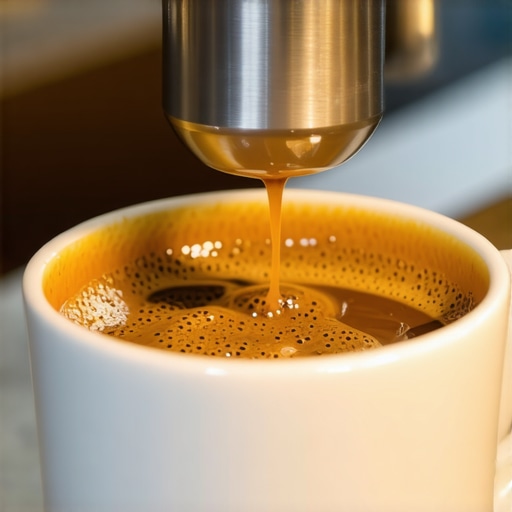
Why You Should Invest in a Weighted Precision Espresso Tamper
Standard espresso tampers provided by equipment manufacturers are often nothing more than aesthetic afterthoughts. Most lack the specific tolerances required to create a uniform hydraulic seal within the portafilter basket. After 15 years of diagnosing extraction failures in luxury kitchens, I have seen thousands of dollars in high-end beans wasted because of a two-millimeter gap. Physics does not negotiate. If your tamper does not fit the basket with surgical precision, the water will find the path of least resistance. This phenomenon, known as channeling, turns a potentially syrupy espresso shot into a watery, bitter disappointment. The investment in a weighted precision tool is not about vanity; it is about controlling the variables of resistance and density that define world-class coffee.
The Engineering Reality of Extraction
When you engage the pump on a professional-grade espresso machine, you are introducing nine bars of atmospheric pressure to a bed of finely ground coffee. If that bed is unevenly compressed, the pressurized water bypasses the tightly packed areas and blasts through the loose sections. A precision-weighted tamper typically utilizes a 58.5mm base rather than the standard 58mm. This half-millimeter difference sounds negligible until you realize it eliminates the ‘ring’ of loose grounds that frequently lead to sidewall channeling. These tools often feature a calibrated spring mechanism. This ensures that every single puck receives exactly 30 pounds of downward force, regardless of who is behind the machine. Using a bottomless portafilter will immediately expose the flaws of a cheap, lightweight tamper. The visual evidence of a high-pressure spray is a direct indictment of poor puck preparation.
The Mechanical Cost of Inconsistency
Operational risk in a home espresso setup usually manifests as erratic flavor profiles. One morning the shot is bright and floral; the next, it tastes like battery acid. The culprit is rarely the beans themselves. Instead, it is the lack of repeatability in the tamping process. A weighted tamper provides the tactile feedback necessary for a level bed. It feels cold and heavy, usually constructed from 304-grade stainless steel or aerospace-grade aluminum. This mass helps the user keep the tamper perfectly horizontal. A slanted tamp is a death sentence for extraction quality. When the water hits a lopsided puck, it extracts the shallow side too quickly while the dense side remains under-extracted. You end up with a muddy, confused cup. High-quality precision scales often highlight how even a 0.5-gram deviation in dose requires a perfectly executed tamp to maintain flow rate consistency.
The Puck Prep Risk Matrix
What breaks in this process? Usually, the barista’s confidence. Without a weighted tool, you are guessing the pressure. You are guessing the level. Most home baristas suffer from a puck prep mistake that results in micro-channeling. You cannot see micro-channeling from the top, but you can taste the lack of body and sweetness. The smell of fresh espresso should be intoxicating, not acrid. When I consult with clients on their luxury kitchen builds, I tell them the espresso machine is only as good as the weakest link in the chain. Often, that link is the plastic tamper that came in the box. Using a weighted precision model reduces the physical strain on the wrist and ensures that the coffee bed is compacted into a solid, impenetrable disk that forces the water to work for its passage.
The Macro Market Shift Toward Volumetric Precision
The industry is moving away from the ‘art’ of the barista and toward the ‘science’ of the extraction engineer. In the next 12 to 24 months, we expect to see more integration between grinders and tamping stations. We are already seeing the rise of automatic tampers in high-volume environments, but for the luxury home market, the manual weighted tamper remains the gold standard. Regulatory standards for kitchen appliances are increasingly focusing on energy efficiency, but in the world of espresso, efficiency is measured by extraction yield. If you are not hitting a 20% extraction yield, you are leaving flavor on the table. Furthermore, understanding your local environment is vital; for instance, water hardness can change the way the coffee oils interact with the puck, making a dense, uniform tamp even more critical for proper filtration.
The Executive Verdict
If you own an espresso machine costing more than one thousand dollars, using a stock tamper is a strategic error. You are effectively putting budget tires on a supercar. My recommendation is a ‘Buy’ on any 58.5mm calibrated weighted tamper with a stainless steel base. This tool provides the repeatability required for a consistent morning routine. Avoid the hollow, decorative models found in big-box stores. They lack the thermal mass and the tolerance needed for high-pressure extraction. The strategy is simple: stabilize your dose, stabilize your grind, and use the weight of the tamper to eliminate the human variable of pressure. This is the only way to achieve the syrupy, heavy-bodied shots that define the premium espresso experience.
Frequently Asked Questions
Does the shape of the tamper base (flat vs. ripple) matter?
While some argue that ripple bases increase surface area, the consensus among technical purists is that a flat, precision-fit base is superior for maintaining a level bed and preventing vacuum suction when lifting the tamper.
Is 30 pounds of pressure actually necessary?
The specific number is less important than the point of full compression. Once the air is squeezed out of the grounds, additional pressure does not significantly change the puck density. A weighted tamper helps you reach that point of full compression consistently.
Why is a 58.5mm base better than 58mm?
Most ’58mm’ baskets actually have an internal diameter closer to 58.7mm. A 58mm tamper leaves a gap. A 58.5mm tamper fits the sidewalls of the basket snugly, ensuring the edges of the puck are as compressed as the center.
Will a heavier tamper improve the taste of my coffee?
Indirectly, yes. It improves the consistency of the extraction. By eliminating channeling, you ensure that the water extracts the desirable oils and sugars evenly, rather than burning through specific channels.