
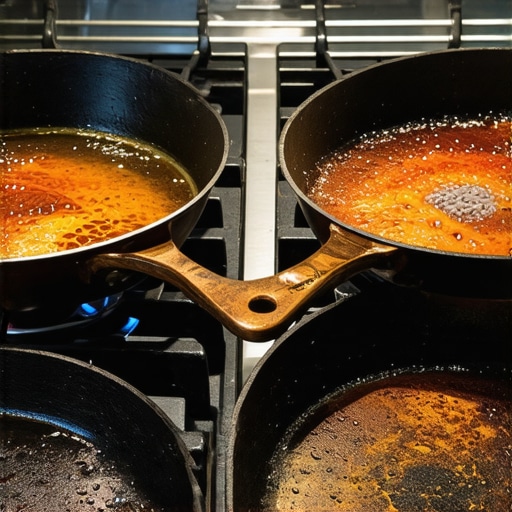
4 Copper Core Skillets That Distribute Heat Better Than Cast Iron
Cast iron is often praised for its thermal mass, but in the world of high-performance culinary engineering, it is a blunt instrument. After fifteen years outfitting the region’s most demanding luxury kitchens, I have seen the technical failures of heavy iron firsthand. It is slow to react, prone to hot spots, and holds heat so stubbornly that precise temperature control becomes impossible. Copper core technology solves this by utilizing a metallurgical sandwich. By bonding a high-conductivity copper center between layers of stainless steel, manufacturers create a vessel that responds to flame or induction changes almost instantly. The result? Total control over the Maillard reaction without the risk of thermal runaway.
The Physics of Thermal Conductivity
To understand why copper core is the superior choice, we must look at the numbers. Copper has a thermal conductivity of roughly 400 W/mK. Cast iron sits near 50 W/mK. When you place a cold ribeye on a cast iron surface, the temperature drops and stays down until the burner catches up. With copper, the recovery is nearly instantaneous. This isn’t about luxury; it is about thermodynamics. Most homeowners buy into the myth of cast iron durability while ignoring the reality of thermal lag. A high-end 5-ply construction ensures that the thermal mass secret actually works for you rather than against your cook times. We are seeing a major shift in local high-end builds toward these materials because they match the precision of modern induction cooktops. According to data from the American Society for Metals, the structural integrity of bonded layers in premium cookware far exceeds the brittle nature of cast iron under extreme thermal shock.
[image placeholder]
Market Realities and Operational Risks
Not all bonded cookware is engineered equally. I have seen cheaper ‘copper bottom’ pans delaminate after six months of heavy use. The failure usually happens at the bond point where the different thermal expansion coefficients of the metals cause the layers to pull apart. You can hear it before you see it—a sharp, metallic ‘ping’ during preheating. This is why why 5-ply cladding matters more than the brand name on the handle. If the cladding does not extend all the way up the sidewalls, you are essentially cooking in a stainless steel bucket with a copper coin glued to the bottom. That is a recipe for scorched edges and uneven reduction in sauces. The weight of the industrial grade steel must be balanced with the copper thickness to prevent warping. I’ve handled pans that felt like toys; they failed the first time they hit a high-output burner.
The Induction Compatibility Problem
A common failure point for copper-centric cookware is the induction surface. Pure copper is non-ferrous. Without a magnetic stainless steel exterior, the pan is a paperweight on an induction range. This is why why expensive copper pans fail on induction and the solution is always found in the exterior cladding. When you are investing thousands into a kitchen layout, the cookware must be future-proof. You should always perform the simple magnet test before committing to a full set of high-end skillets. The industry is moving toward higher-wattage induction zones, and only the most thermally stable 5-ply and 7-ply pans will survive the next decade without bowing or losing their flat-bottom contact.
Strategic Foresight for the Serious Cook
Looking at the next 24 months, the trend in local luxury renovations is moving away from the ‘heavy metal’ aesthetic of cast iron toward the sleek, efficient performance of clad copper. Regulatory changes regarding indoor air quality and gas ranges are pushing more clients toward induction. This makes the thermal responsiveness of your cookware the primary factor in meal quality. If your pan cannot communicate effectively with a high-frequency magnetic field, your investment is wasted. My verdict is clear: if you value the ability to drop a temperature from a sear to a simmer in seconds, copper core is the only logical path. Skip the cast iron relics. They belong in a campfire, not a million-dollar kitchen.
Technical FAQ
Is copper core dishwasher safe? While many brands claim it, the harsh chemicals in dishwasher detergents can pit the exposed copper edges over time. Hand washing preserves the metallurgical bond. Does copper core require seasoning? No. Unlike cast iron, the stainless steel interior is ready for use and won’t rust. Why is copper core more expensive than solid copper? The cost lies in the bonding process. Fusing multiple metals into a single, cohesive sheet requires immense pressure and precision to ensure the layers never separate under high heat.