
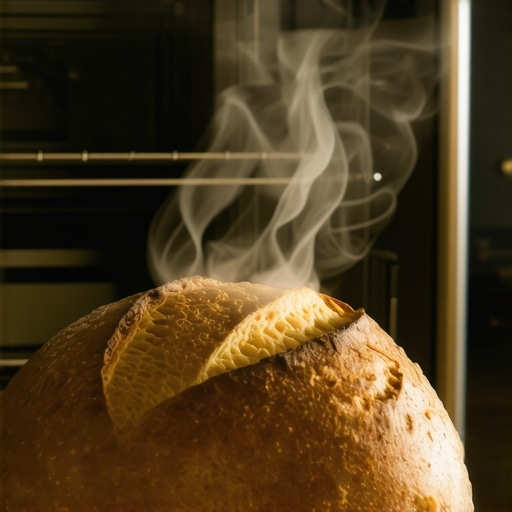
Why Your Steam Oven Is Making Your Bread Crust Soggy Instead of Crisp
Steam is a double-edged sword in the high-stakes environment of a luxury kitchen. After fifteen years of diagnosing engineering failures in high-end appliances, I have identified a recurring technical paradox: the very tool designed to emulate a professional boulangerie often produces a crust as limp as wet cardboard. This failure costs you time, high-grade flour, and the tactile satisfaction of a perfect sourdough shatter. The mistake isn’t your recipe. The error lies in your oven’s humidity management and your misunderstanding of latent heat. Most home bakers treat steam as a constant. Professionals treat it as a timed intervention. If your oven is still pumping moisture into the cavity after the first twelve minutes, you aren’t baking; you are effectively poaching your bread.
The Thermodynamics of a Ruined Crust
To understand why your premium cookware is failing to deliver, we must look at the Maillard reaction. This chemical process requires the surface of the dough to reach temperatures exceeding 285 degrees Fahrenheit. Water, however, turns to steam at 212 degrees. If the relative humidity (RH) in your oven remains at 100%, the surface temperature of your loaf cannot rise above the boiling point of water. The result? A pale, chewy exterior. During the initial stage of baking, steam is vital. It keeps the dough surface supple, allowing for ‘oven spring’—that dramatic expansion before the proteins set. However, once the yeast has exhausted its fuel and the structure is established, that moisture becomes an insulator against heat. You must evacuate the humidity to allow the dry convection air to dehydrate the surface and caramelize the sugars.
Many homeowners also forget that the hydration of the dough itself interacts with the oven’s sensors. If you are using a high-hydration dough, often prepared using advanced high-torque stand mixers, the internal moisture being released contributes to the cavity’s RH levels. A smart steam oven should technically detect this. Most don’t. They continue their programmed steam injection, ignoring the cumulative moisture profile inside the box.
The Engineering Reality of Faulty Evacuation
The mechanical culprit is frequently a failing solenoid valve or a clogged drainage port. In my years of field repairs, I’ve seen countless luxury units where the ‘Dry Heat’ cycle fails because the exhaust fan cannot overcome the density of the saturated air. You hear the hum. You see the light. But the air is stagnant. This is where the physics of air fryers and convection systems intersect. True crisping requires rapid air exchange. If your oven doesn’t have an active venting system to purge the steam, you are trapped in a humid microclimate. The smell of damp, fermented flour—cloying and heavy—is the first sign of a failed evacuation cycle. Check your drip tray. If it’s dry after a steam cycle, your plumbing is likely compromised, and that water is staying in your bread.
Technical competence in the kitchen extends beyond the oven. For instance, knowing why some stand mixers overheat can prevent the initial friction-induced heat that makes dough too sticky before it even hits the steam. If your dough enters the oven too warm, its surface tension is already weak. The steam just accelerates the collapse. It is a cascade of thermal mismanagement.
The Messy Reality of Humidity Sensors
I remember a client in a high-altitude zip code who spent thirty thousand dollars on a bespoke French suite. Every baguette came out grey. We pulled the control board and found the humidity sensor was calibrated for sea level, causing the steam injectors to fire for twenty minutes straight. The sensory experience was dismal: the clank of the heavy industrial rack sliding out to reveal a soggy mess. No amount of high-wattage mixer power or premium flour can fix a thermodynamic calibration error. The implementation risk here is high; if you don’t manually override the ‘Auto’ settings, the machine’s logic will prioritize moisture over texture every single time.
Market Corrections and Future Tech
The industry is moving toward dual-sensor arrays that measure both oxygen and moisture levels. Over the next 24 months, expect to see ‘smart venting’ become the standard in the luxury tier. These systems will mimic the professional ‘damper’ found in commercial hearth ovens. We are also seeing a shift toward decoupled steam generators. Unlike older models that simply dripped water onto a hot plate, new systems use external boilers for precision control. According to the ASHRAE standards for residential ventilation, the move toward tighter home envelopes means your oven’s exhaust is more important than ever. If your kitchen doesn’t have the CFM capacity to handle the steam purge, the moisture will eventually ruin your cabinetry and dampen your crust.
The Executive Verdict
If you want a crisp crust, you must control the exit. My recommendation: use steam only for the first 10-12 minutes. At that point, manually switch to a pure convection mode or physically crack the door for ten seconds to let the ‘white cloud’ escape. If your dough is still climbing the hook of your mixer, ensure you are using the correct attachment to prevent over-oxidation, which can also affect how the crust browns. The technical truth is simple: steam creates the shape, but dry heat creates the sound of a perfect loaf. If you can’t hear the ‘crackle’ as it cools, you’ve failed the moisture management test.
FAQ
Q: Should I use a pizza stone in a steam oven?
A: No. Porous stones absorb moisture during the steam phase and release it back into the crust during the drying phase, prolonging the sogginess. Use a heavy steel plate for better thermal transfer.
Q: Does the water quality affect the crust?
A: Highly. Mineral-heavy water can clog the fine-mist injectors, leading to uneven steam distribution and ‘spotty’ browning on the dough surface.
Q: Can I use an air fryer to ‘finish’ the crust?
A: It is an effective workaround. If your steam oven fails to crisp, a five-minute blast in a high-velocity air fryer at 400 degrees can rescue the texture through sheer convective force.
Q: Why is my bread dark on the bottom but soft on top?
A: This indicates poor air circulation. The steam is pooling at the top of the cavity while the bottom heating element is overworking to compensate for the humidity.