
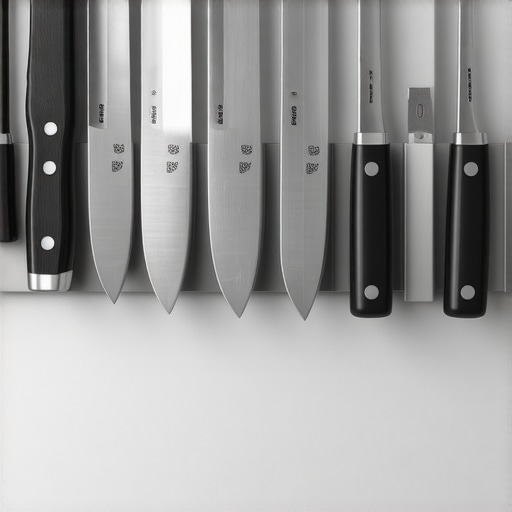
Why You Should Ditch the Knife Block for a Magnetic Strip
The standard wooden knife block is a relic of inefficient kitchen design. It occupies premium counter real estate while actively degrading the tools you rely on for precision work. After fifteen years in high-end kitchen fit-outs, I have seen thousands of dollars in high-carbon steel ruined by the simple act of sliding a blade into a dark, moisture-trapping slot. The stake is clear: a knife block is a petri dish for microbial growth and a grinding stone for your edges. If you care about the Rockwell hardness of your Japanese steel or the edge geometry of your German blades, the magnetic strip is the only logical engineering choice.
The Engineering Reality of Edge Degradation
Every time a blade enters or exits a wooden block, the cutting edge experiences friction against the grain. This repetitive contact induces micro-rolling of the edge, forcing more frequent honing and shortening the overall lifespan of the steel. Magnetic strips eliminate this mechanical wear. By utilizing a high-gauss neodymium core shielded by 304-grade stainless steel or finished hardwood, these strips secure the blade by the flat—not the edge. This preserves the specific grind angle necessary for clean protein transitions. Furthermore, the open-air environment prevents the ‘micro-corrosion’ that occurs when moisture is trapped in a narrow wooden slot after a rushed cleaning. Professional culinary environments prioritize visibility and accessibility; the magnetic strip provides both without the structural risks of friction-based storage.
The Hygiene Failure of Enclosed Slots
From a technical standpoint, the interior of a knife block is impossible to sanitize. Dust, food particles, and residual moisture settle at the bottom of the deep, narrow cavities. This creates an ideal environment for mold. While most home cooks assume their knives are clean, the act of inserting them into a block often re-contaminates the blade before it ever touches an onion. The National Sanitation Foundation (NSF) highlights that food-contact surfaces must be easily cleanable and visible for inspection. A magnetic strip satisfies these criteria. You can wipe down the entire mounting surface in seconds. For those concerned with maintaining a sterile prep area, this transition is non-negotiable, much like why your kitchen needs more than one cutting board to prevent cross-contamination.
Structural Limitations and Installation Risks
The messy reality of magnetic strips involves two specific failure points: magnet strength and mounting hardware. A common industry mistake is choosing a strip with a weak magnetic field, leading to ‘blade slip.’ The weight of a heavy industrial-grade cleaver or a 10-inch chef’s knife requires a significant pull force to prevent the tool from pivoting. This is why most magnetic knife strips fall off the wall or drop tools during high-vibration activities like heavy chopping nearby. You must also account for the surface tension of the wall material. Mounting a strip directly into drywall without hitting studs or using high-quality toggle bolts is a recipe for catastrophic failure. The result? Broken tips and damaged countertops. I’ve walked into kitchens where a thousand-dollar set of knives hit the floor because the owner trusted a double-sided adhesive strip over mechanical fasteners. Do not cut corners on the anchors.
The Economics of Counter Real Estate
In a modern luxury kitchen, every square inch of the ‘work triangle’ is a strategic asset. A knife block is a bulky footprint that offers zero ROI. Moving storage to the vertical plane—the backsplash—frees up space for high-output appliances like air fryer accessories or dedicated prep zones. This is not just about aesthetics; it is about cognitive load. When every tool is visible and positioned according to your workflow, the speed of execution increases. We see a direct correlation between vertical organization and reduced kitchen fatigue in professional designs. The same logic applies to organizing heavy cast iron; keep the weight off the primary work surface to maximize efficiency.
Strategic Market Shifts and Future Integration
Looking ahead into 2025, we are seeing a shift toward ‘integrated tool walls.’ The era of the standalone block is ending as homeowners demand the same hygiene standards found in Michelin-starred kitchens. We are also seeing a rise in high-end cabinetry modifications, such as fixing uneven cabinet door gaps to install recessed magnetic panels inside pantry doors. Regulatory bodies are beginning to scrutinize residential kitchen ‘dead zones’ where bacteria can hide, and the knife block is high on that list. Investing in a permanent, high-quality magnetic solution is a value-add for your property, signaling a professional-grade commitment to kitchen maintenance.
The Executive Verdict
If you own high-performance cutlery, sell the block and buy a wall-mounted magnetic strip. If you are a renter and cannot drill, look for a heavy-duty freestanding magnetic board. The strategy is simple: keep the blades visible, keep the edges dry, and keep the counter clear. Prioritize 18-inch strips over 12-inch versions to allow for future expansion of your collection. Stop treating your blades like disposable tools and start treating them like the precision instruments they are.
Common Questions About Magnetic Storage
Will magnets magnetize my knives and make them hard to use? No. While a slight residual magnetism can occur over years, it does not affect the cutting performance or the steel’s molecular structure. It certainly won’t impact your ability to slice a tomato.
Are magnetic strips safe if I have children in the house? Safety is about height. Mount the strip high enough that it is out of reach of children but still within your comfortable ‘strike zone’ for reach. A block is actually more dangerous as it sits on the counter where small hands can reach the handles.
Can I store ceramic knives on a magnetic strip? No. Ceramic blades are non-ferrous and will not stick to a magnet. If you use ceramic tools, you will need a separate storage solution, though I recommend transitioning to high-carbon steel for better edge retention anyway.
Will the magnet scratch the finish of my blades? Not if you use a wood-faced magnetic strip. The wood acts as a soft buffer between the magnet and the steel. If using a stainless steel strip, always roll the blade onto the strip spine-first to avoid any metal-on-metal impact on the edge.