
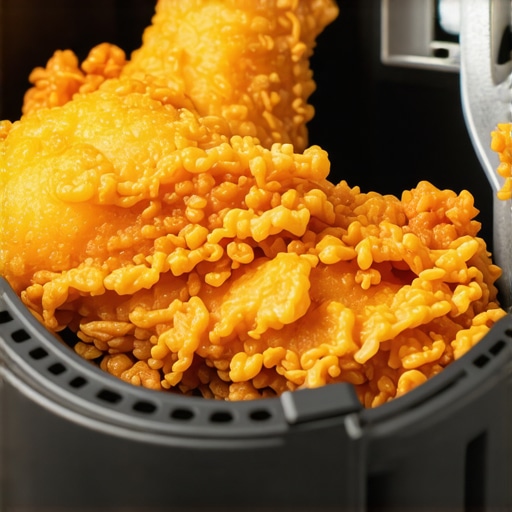
The Only Way to Get Truly Crispy Skin in a Basket Air Fryer
Crispy skin in a basket air fryer remains the white whale of the modern luxury kitchen. Most users treat these devices like miniature ovens, yet they are structurally closer to industrial blow-dryers. After 15 years in the premium cookware industry, I have seen every failure point imaginable. The core issue is not temperature; it is the management of the boundary layer—that thin film of stagnant air and steam that clings to the surface of the food. If you do not disrupt this layer, you are merely steaming your protein in a very loud box. The stake is simple. Either you master the thermodynamics of high-velocity air, or you continue eating rubbery, flaccid chicken skin that lacks the satisfying snap of a professional-grade preparation.
The Physics of Boundary Layer Displacement
Air fryers function via high-flux convection. To achieve the crunch associated with deep frying without the oil bath, the appliance must remove surface moisture faster than it can be replaced by internal juices. This requires an aggressive thermal gradient. In high-end models, the fan speed can reach 2,500 RPM, creating a vortex meant to strip moisture away. However, most basket designs create dead zones where air stagnates. The result? Uneven dehydration. To combat this, you must prioritize the surface-to-air ratio. Overcrowding the basket is the primary cause of soggy results because it blocks the laminar flow, turning the air fryer into a low-efficiency steamer. For more details on why this fails, see why air fryer chicken wings get soggy and the cornstarch fix. The technical truth is that air needs 360-degree access to the protein to facilitate the Maillard reaction effectively.
Thermal Conductivity and Basket Geometry
Not all baskets are created equal. In the realm of premium cookware, the material of the basket dictates the heat retention. Aluminum baskets with ceramic coatings offer fast heat-up times but poor heat retention when the cold protein hits the surface. Stainless steel or heavy-gauge carbon steel baskets provide better thermal mass, preventing the temperature from plummeting during the initial contact. If your unit has a cheap, thin basket, the heating element has to work twice as hard to recover the lost BTU, leading to a scorched exterior and a raw interior. One must also account for the evaporative cooling effect. As water turns to steam, it sucks heat away from the skin. If the air velocity is too low, this cooling effect prevents the skin from reaching the 300-degree threshold required for crisping. This is why high-wattage units are superior; they maintain the energy density required to overcome the cooling effect of steam. Beware of using certain lubricants that can damage these surfaces, as discussed in the dangers of using aerosol sprays in your air fryer.
The Chemical Reality of the Maillard Reaction
The Maillard reaction is the chemical dance between amino acids and reducing sugars. It requires heat, but more importantly, it requires a specific pH environment. To get truly glass-like skin, you need to slightly raise the pH level on the surface of the meat. A light dusting of baking powder (not baking soda) reacts with the skin’s proteins to create tiny micro-bubbles. These bubbles increase the surface area, allowing the high-velocity air to crisp the skin more efficiently. The tactile crunch you experience is the result of these dehydrated protein structures hardening. This technique is often overlooked by home cooks who rely on heavy oils. Oil, while a great heat conductor, can sometimes act as an insulator in a convection environment, trapping moisture against the skin. Instead, a dry brine for 12 hours in the refrigerator is the standard for professional results. This allows the refrigerator’s compressor to pull moisture out of the skin before the air fryer ever turns on.
Operational Risks of High Velocity Heat
Operating these machines at peak output introduces maintenance challenges. High-fat proteins like duck or chicken wings release significant amounts of lipids that atomize and coat the heating element. This lead to the acrid smell of burnt fat and, eventually, mechanical failure of the fan motor. Many owners fail to address the carbon buildup on the upper element, which acts as an insulator and reduces the efficiency of the infrared heat component. Cleaning these high-end machines requires a delicate touch to avoid stripping the specialized coatings. I suggest reviewing the only way to clean a burnt air fryer basket without scrubbing to maintain the integrity of your equipment. Furthermore, the longevity of these units is often tied to the quality of the non-stick interface. We are seeing a market-wide shift away from traditional PTFE toward ceramic, though this comes with its own set of trade-offs regarding durability. You can read more about why ceramic coatings fail faster than traditional non-stick to make an informed purchasing decision.
Strategic Foresight for Luxury Kitchens
The next 24 months will see a massive shift in how air frying is integrated into the luxury kitchen. We are moving away from standalone plastic pods toward built-in, high-capacity convection units with integrated steam-extraction systems. Regulatory bodies, such as the Association of Home Appliance Manufacturers (AHAM), are beginning to standardize air-velocity ratings, which will allow consumers to distinguish between a glorified toaster oven and a true high-flux air fryer. We also anticipate a push toward all-stainless steel interiors as consumers become more wary of chemical coatings at high temperatures. The smart money is on investing in units that prioritize serviceability and high-torque motors over digital gimmicks and touchscreens. The mechanical durability of the fan assembly remains the primary failure point in 90% of the units I service.
The Executive Verdict
If you want the best results, stop treating your air fryer as a set-it-and-forget-it appliance. Treat it like a high-performance engine. Use a dry brine, avoid aerosol oils, and never fill the basket more than halfway. If you are cooking for a crowd, do multiple small batches rather than one large, soggy one. The math of airflow simply does not support large-scale crowding. For those seeking the ultimate crunch, use a baking powder brine and ensure your unit is preheated for at least ten minutes to stabilize the thermal mass of the basket. This is the only way to achieve professional-grade results that justify the counter space. According to reports by the National Institute of Standards and Technology (NIST), convection heat transfer is significantly more efficient when the air is allowed to move in a non-turbulent, consistent path. Follow the physics, and the flavor will follow.
Frequently Asked Questions
Why is my air fryer making a rattling noise?
This is often caused by a loose fan blade or carbon deposits on the motor shaft. It is a sign of impending mechanical failure and should be addressed immediately to avoid a fire hazard.
Can I use parchment paper to keep the basket clean?
You can, but it is an efficiency killer. Parchment paper blocks the very holes designed to provide 360-degree airflow. If you must use it, ensure it is perforated and does not cover the entire bottom of the basket.
Why does my air fryer smell like burning plastic?
New units often have a break-in period for the protective oils used during manufacturing. However, if the smell persists, it likely indicates that the internal wiring is being exposed to heat beyond its rated capacity, often due to a blocked exhaust vent.
Does the wattage actually matter for crispiness?
Absolutely. Higher wattage allows the heating element to recover faster after the thermostat cycles. This maintains a more consistent thermal gradient, which is vital for the Maillard reaction to occur without overcooking the center of the food.