
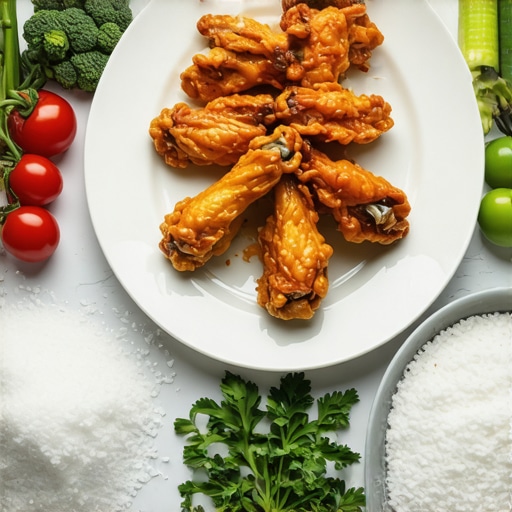
Why Air Fryer Chicken Wings Get Soggy and the Cornstarch Fix
Soggy wings are a thermodynamic failure, not a culinary one. After fifteen years of diagnosing high-end kitchen appliances and testing the airflow dynamics of luxury air fryers, I have seen every possible way a batch of poultry can go wrong. The problem is moisture. Specifically, it is the latent heat of vaporization that your machine cannot overcome when the environment is saturated. If the water on the skin does not evaporate immediately, it boils. Boiling skin results in a rubbery, grey texture that no amount of heat can save once the collagen has set in that state. The result? Avoidable failure.
The Engineering of the Crispy Barrier
To achieve a crunch that rivals deep frying, you must manipulate the surface pH and the moisture-wicking properties of the wing. This is where the cornstarch fix enters the technical equation. Cornstarch is a pure starch with a high amylose content. When it hits the moisture on the chicken skin, it creates a gel-like layer that dries out much faster than the skin alone. Think of it as a sacrificial layer of protection. This starch matrix increases the surface area exposed to the high-velocity air, allowing for rapid dehydration. For those looking for alternatives, there is also the simple trick for crispy air fryer wings without extra flour, but the cornstarch method remains the industry standard for technical precision.
The Physics of Airflow and Heat Transfer
Luxury air fryers operate on the principle of high convection. The fan speed is just as important as the temperature. When you crowd the basket, you create a micro-climate of humidity. The steam rising from one wing traps the moisture on the wing next to it. In my experience, even the most expensive high-end air fryers cannot compensate for a lack of spacing. The air must circulate around the entire circumference of the protein to trigger the Maillard reaction effectively. If the air is stagnant, you are simply steaming your food in a very expensive metal box. I have seen countless homeowners blame their equipment when the real culprit was simply the physics of volume.
The Grease Rain and Operational Risks
There is a messy reality to this process. As the fat renders from the wings, it drips onto the bottom of the basket or the tray. If your machine is not clean, this fat smokes. I have seen many people reach for a spray bottle to prevent sticking, but you should be aware of the dangers of using aerosol sprays in your air fryer as they can degrade the non-stick coating over time. The sensory markers of a perfect batch are unmistakable: the sharp, staccato crackle as the skin pulls away from the meat and the intense aroma of rendered schmaltz. If you smell burning oil, your workflow is compromised. If you find yourself with a disaster at the bottom of your machine, knowing how to clean a burnt air fryer basket is the only way to maintain the hygiene of your luxury kitchen setup.
Strategic Foresight for Home Cooks
The industry is moving toward higher static pressure fans and more responsive thermal sensors. Within the next 24 months, we will see air fryers that use infrared sensors to detect surface moisture levels in real-time, adjusting fan speed to prevent the very sogginess we are discussing. Regulatory changes regarding non-stick coatings like PFAS are also forcing manufacturers to pivot toward ceramic or stainless steel interiors, which change how heat is reflected within the chamber. This shift means that the cornstarch fix will become even more vital, as these new surfaces do not always provide the same radiant heat intensity as older, darker coatings.
The Executive Verdict
If your wings are soggy, stop blaming the wattage. Dry your wings with a paper towel until they are bone dry. Dust them with a thin, even layer of cornstarch—never a thick batter. Space them out so no wing touches another. This is the only way to ensure the convection cycle completes its task. If you are in a situation where the skin feels like rubber, increase the temp to 400°F for the final three minutes, but do not walk away. Precision is the difference between a luxury meal and a wasted bird.
Technical FAQ
Q: Can I use baking powder instead of cornstarch?
A: Yes, but only in small amounts. Baking powder raises the pH level of the skin, which breaks down the peptide bonds and promotes browning, but cornstarch provides a superior physical crunch.
Q: Why does the wing skin feel tough rather than crispy?
A: This usually happens when the wings are cooked too long at a low temperature. The skin loses all moisture and turns into leather before the fat can properly render and crisp the surface.
Q: Does the size of the wing matter?
A: Absolutely. Larger wings have more subcutaneous fat. They require a longer initial cook at a lower temperature to render that fat before the final high-heat blast for the skin.