
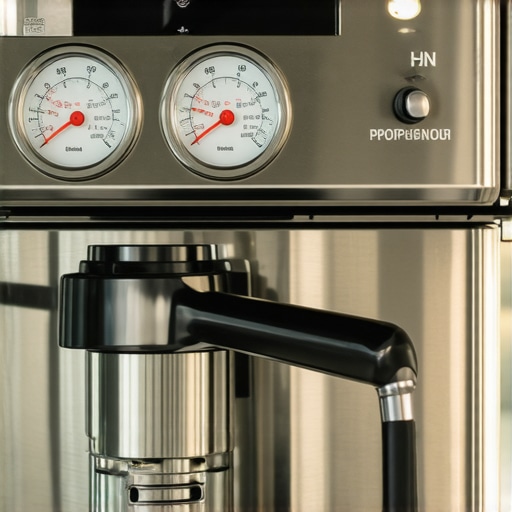
The Simple Boiler Trick That Stabilizes Your Espresso Temperature
Inconsistency is the tax paid by the impatient barista. You spend thousands on high-end grinders and specialty beans, yet your morning shots oscillate between sour battery acid and bitter charcoal. The culprit isn’t your grind size or your puck prep; it is thermal drift. Most home enthusiasts believe that when the ‘ready’ light glows or the PID hits 200 degrees, the machine is ready. It is a lie. The water in the boiler might be at temperature, but the eight pounds of chrome-plated brass in your group head are still cold. After fifteen years diagnosing scale buildup and pump failures in high-end machines, I can tell you that the metal always wins. If the metal is cold, the water temperature crashes the moment it leaves the boiler.
To fix this, you must master the Blank Shot Flush. This isn’t just about rinsing the screen; it is about thermal synchronization. Run a full four-ounce cycle of hot water through your empty portafilter before you ever engage the grinder. This forces heat into the group head and the basket, creating a steady-state environment. You will notice the hiss of the pump changes and the weight of the portafilter handle feels different as it absorbs the energy. This is a vital step because why your espresso machine takes so long to heat up is fundamentally a matter of heat transfer physics, not just a heating element’s power rating.
The Engineering Reality of Thermal Sinks
The cost of ignoring this trick is high: wasted beans, erratic extractions, and a shortened lifespan for your gaskets. When you pull a shot through cold metal, the thermal shock causes the coffee oils to coagulate unevenly. From a strategic perspective, the blank shot is your highest ROI activity. It costs pennies in water and electricity but saves dollars in wasted specialty coffee. Beyond the boiler, you must consider the equipment interface. For instance, the best way to store your portafilter between shots is locked firmly in the group head. This maintains the temperature of the basket, preventing the ‘cold plate’ effect that ruins the bottom of your espresso puck.
The Messy Reality of Pressure and Steam
I’ve walked into kitchens where the owner is frantic because their shots are spraying everywhere. They think the machine is broken. The truth? They didn’t pre-heat, the metal contracted, and the seal failed. I remember the smell of scorched rubber from a client who tried to compensate for a cold group by cranking his boiler to 215 degrees. He ended up with steam pockets and a blown gasket. If you find yourself in a similar situation, knowing how to fix a leaking steam wand on a prosumer machine becomes essential when you start pushing the limits of your hardware to solve a thermal problem that a simple flush would have fixed. The vibration of the pump should be a steady hum, not a frantic rattle caused by cavitation in an overheated boiler.
Market Shifts and Technical Truths
The industry is moving toward low-mass thermoblocks and ‘instant-on’ technology, but the laws of thermodynamics remain stubborn. High-end manufacturers like La Marzocco or Slayer still rely on saturated groups for a reason: thermal inertia. As you experiment with different roasts, remember that knowing the best temperature for brewing light roast beans is useless if your hardware is fluctuating by ten degrees mid-shot. Within the next 24 months, I expect more residential machines to integrate group-head heaters to solve this, but for now, the blank shot is your only defense against mediocrity. Per the Specialty Coffee Association (SCA) water standards and equipment guidelines, maintaining a stable temperature within 1.0 degree Celsius is the benchmark for professional-grade extraction.
The Executive Verdict
Stop chasing the newest gadgets and start respect the physics of your machine. My recommendation is simple: buy a machine with a PID, but treat it as a suggestion, not a fact. Always perform a four-ounce blank flush before your first shot of the day. If you are using a single-boiler machine, do this twice. The strategy is clear: stabilize the metal to stabilize the coffee. Avoid ‘power-on’ shortcuts. The result of impatience is always a bad cup.
Frequent Questions
Q: Does this waste too much water?
A: It uses less water than a single botched shot. Think of it as an investment in extraction quality.
Q: Should I do this for every shot?
A: No, only the first shot or if the machine has sat idle for more than twenty minutes. The metal holds heat well once it is saturated.
Q: Will this damage my pump?
A: No. Pumps are rated for continuous cycles far longer than a four-ounce flush. In fact, it helps keep the internal lines clear of mineral settle.