
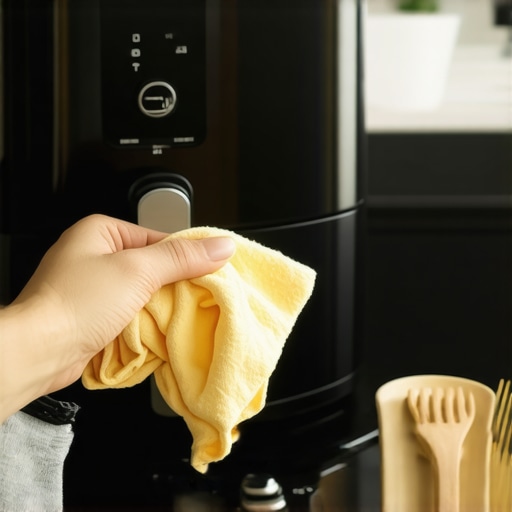
How to Stop Your Air Fryer From Smearing the Kitchen With Grease
Grease smearing is not a cleaning failure. It is a fundamental conflict between high-velocity convective airflow and the thermal instability of lipids. After 15 years managing high-end appliance performance, I can tell you that most owners treat their air fryers like miniature ovens. They aren’t. They are high-speed wind tunnels. When you introduce fats into a 400-degree vortex, those fats don’t just sit there. They atomize. They become a fine yellow mist that coats your backsplash, your cabinets, and the internal housing of the machine itself. The cost of ignoring this? A sticky, rancid film that damages wood finishes and presents a genuine fire risk when it reaches the heating coils. The result? Avoidable failure.
The Physics of Aerosolized Lipids
To stop the smear, you must understand the mechanics of the machine. Air fryers rely on a high-RPM fan located directly above a heating element. When you cook fatty foods, the rapid air movement pulls liquid grease off the surface of the food. This grease hits the red-hot element and vaporizes. This is why you see white smoke. This vapor then escapes through the rear vent and settles on the coolest surfaces it can find—usually your luxury kitchen walls or under-cabinet lighting. It is a matter of vapor pressure. If the grease is contained, it stays liquid. If it is exposed to 70 mph air at high temperatures, it becomes airborne. You are essentially running a paint sprayer filled with canola oil in the middle of your counter.
Standard methods fail because they focus on scrubbing after the fact. The real solution lies in managing the oil’s state of matter. Using a parchment liner might seem like a fix, but air fryer parchment paper can be a fire hazard if it blocks the very airflow the machine needs to function. Instead, you need to use a sacrificial layer in the bottom of the drawer. A small amount of water or a slice of bread in the drip tray can catch falling oil before it has the chance to smoke and atomize. It is about heat sinks. The water keeps the drippings below the smoke point, preventing the transition from liquid to gas.
The Component Failure Trap
The most overlooked risk is the internal buildup you cannot see. While you are busy wiping down the exterior, the grease is migrating into the motor housing. Over time, this grease oxidizes and hardens, creating a lacquer-like substance that increases friction on the fan bearings. This is the reason your air fryer fan is rattling. If you hear a high-pitched whine or a rhythmic clicking, the damage is already underway. You need to intervene before the thermal fuse blows. I have seen countless $300 units scrapped because the owner didn’t realize the grease was nesting in the electronics. It’s the same principle as why deep cleaning the top heating element is non-negotiable for longevity.
Future of Kitchen Ventilation Standards
Looking ahead 12 to 24 months, we are seeing a shift in building codes regarding small appliance stations. High-output air fryers and prosumer espresso machines are pushing the limits of standard residential ventilation. We are moving toward a reality where every luxury kitchen will require a dedicated high-CFM (cubic feet per minute) extraction zone specifically for countertop appliances. If your current setup relies on a microwave vent, you are already behind the curve. Those vents lack the static pressure to handle heavy grease loads. This leads to the clank of a struggling motor and the lingering smell of old fish in your curtains. You might also find your kitchen hood is making too much noise because it is clogged with the very grease your air fryer is pumping out.
The Executive Verdict
If you want to maintain a pristine kitchen while using high-performance appliances, you must adopt a preventative posture. My recommendation: Sell the idea that “no-oil” means “no-mess.” It’s a myth. Buy high-smoke-point oils, use physical barriers to catch drips before they atomize, and never place the unit directly under a wooden cabinet. For those in a high-use environment, integrate a dedicated exhaust solution. It is a strategic investment in your property’s value. To keep the machine itself running, learn the only way to clean a burnt air fryer basket without destroying the non-stick coating.
Frequently Asked Questions
Why does grease always end up on my cabinets?
The rear exhaust vent of the air fryer directs hot, grease-laden air upward. Because wood and paint are cooler than the exhaust, the oil condenses instantly on contact.
Can I use aerosol sprays to prevent sticking?
No. Aerosol propellants contain lecithin which creates a gummy residue that is nearly impossible to remove without damaging the finish. Use a pump sprayer with pure oil instead.
How often should I clean the internal heating element?
Every 10 to 15 uses. If you see smoke during preheating, grease has already coated the coil and is carbonizing. Clean it immediately to prevent flavor transfer and fire risks.