
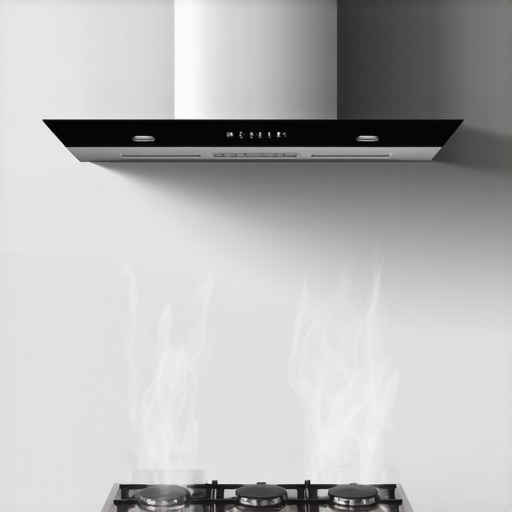
Why Your Kitchen Hood is Making Too Much Noise
Noise in a high-end kitchen is more than a nuisance; it is an engineering red flag. Most homeowners assume a roaring vent hood signifies powerful suction. In reality, excessive decibels usually indicate fluid dynamic failure or mechanical inefficiency. After 15 years of diagnosing high-performance luxury kitchen ventilation systems, I have found that sound is the primary diagnostic tool for identifying a system on the brink of failure. When your ventilation sounds like a jet engine but fails to clear smoke from a searing ribeye, you are dealing with a mismatch between motor capacity and duct architecture. The stakes are high. Poor ventilation leads to grease atomization, which settles on your premium cookware and cabinetry, causing long-term degradation of expensive finishes.
The Engineering Reality of Static Pressure
To understand why your hood screams, you must understand static pressure. A fan motor is designed to move a specific volume of air, measured in Cubic Feet per Minute (CFM). However, that air must overcome the resistance of the filters, the ductwork, and the exterior wall cap. When the ducting is too narrow—often a 6-inch pipe used where an 8-inch or 10-inch is required—the air becomes turbulent. This turbulence creates a high-pitched whistling or a deep, vibrating drone. In luxury kitchen environments, we use baffle filters instead of mesh because they manage airflow better, though they require precise angling to prevent resonant frequencies. A well-designed system should operate under 6 Sones at maximum tilt. If you are hitting 8 or 9 Sones, your motor is fighting a losing battle against friction. This is often why the design rule for placing your kitchen sink and stove must account for the shortest possible duct path to the exterior wall.
The Friction of Inferior Ducting Materials
One of the most common operational scars I see involves the use of flexible foil ducting. It is cheap. It is easy to install. It is also a disaster for acoustics. The ridges in flexible ducting create micro-vortices that catch air and spin it, doubling the perceived noise level. I always insist on rigid, galvanized steel with sealed seams. The difference is tactile. You can feel the weight of the industrial grade steel and notice the lack of vibration when the squirrel cage fan ramps up to 1200 CFM. If your installer used a transition collar that wasn’t properly tapered, the air hits a ‘wall,’ creating a thumping sound that resonates through the cabinetry. This mechanical stress doesn’t just annoy you; it quietly destroys the motor bearings over time. Much like how hard water quietly destroys your multi-boiler espresso machine, poor airflow kills your ventilation motor through heat buildup.
Mechanical Imbalance and the Clank of the Manifold
If the noise is a rhythmic clanking or a heavy vibration, the issue is likely the impeller. Over time, grease accumulates unevenly on the fan blades. Even a few grams of carbonized oil can throw a high-speed fan out of balance. The result? A wobbling shaft that eventually shears the housing screws. I’ve walked into kitchens where the hood was literally vibrating the backsplash. In these cases, the fix isn’t a new motor—it is a deep chemical degreasing of the internal housing. This is a maintenance step that many ‘general’ contractors skip, but it is vital for preserving the integrity of premium kitchen materials that can be damaged by excessive vibration or heat. If you hear a grinding sound, the bearings have likely lost their factory-sealed lubrication, often due to being exposed to temperatures exceeding their rating because the hood was mounted too low over a high-BTU professional range.
The Macro View on Ventilation Standards
The industry is shifting toward ‘Makeup Air’ requirements as local building codes become stricter regarding airtight modern homes. In many jurisdictions, if your hood exceeds 400 CFM, you are legally required to have a system that pumps fresh air back into the house to prevent backdrafting. This secondary system often introduces its own noise profile. Within the next 18 months, I expect more luxury brands to move away from AC motors entirely, favoring DC brushless motors that offer infinitely variable speeds and significantly lower acoustic footprints. These motors are more efficient but require specialized digital controllers that don’t play well with old-school analog switches. We are also seeing a rise in remote blower installations, where the actual motor sits on the roof or an exterior wall, leaving the kitchen with nothing but the sound of rushing air. It is a more expensive installation, but for those sensitive to acoustics, it is the only viable path forward.
The Executive Verdict
If your hood is making too much noise, do not simply replace the unit with a higher CFM model. You will likely make the problem worse by increasing the air velocity through the same restrictive ducts. First, inspect the ducting for obstructions or bird nests. Second, verify the duct diameter against the manufacturer’s spec sheet. Third, replace mesh filters with high-quality stainless steel baffles. If you are in the middle of a renovation, demand rigid ductwork and a remote blower. The investment in quiet, efficient air movement is just as important as the rinse fix for cloudy glasses—it’s about the long-term performance of the heart of your home. End of story. Buy for the decibel rating, but install for the static pressure.
Common Questions Regarding Hood Noise
Can I quiet a noisy hood by adding insulation? No. Wrapping the hood in insulation only masks the symptom; it doesn’t fix the turbulent air or mechanical imbalance causing the sound. What is a ‘Sone’ rating? A Sone is an internationally recognized unit of loudness. One Sone is roughly equal to the sound of a quiet refrigerator in a quiet room. Why does my hood whistle on windy days? This usually indicates a failing backdraft damper at the wall cap. It’s a $20 part that requires a ladder to fix but will stop the whistling immediately. Does filter type affect noise? Yes. Clogged mesh filters force the motor to work harder, increasing the pitch of the motor whine. Clean your filters every 30 days.