
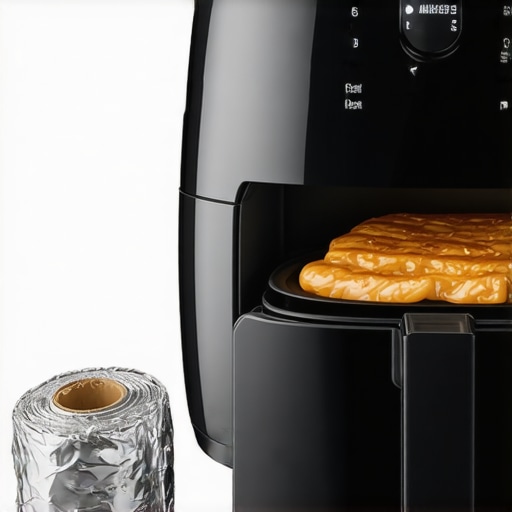
Why Some Air Fryers Cook Unevenly and the Foil Solution
Uneven cooking in high-end air fryers isn’t a manufacturing defect; it is a fundamental misunderstanding of fluid dynamics. After fifteen years of diagnosing thermal inconsistencies in luxury kitchen equipment, I have seen the same pattern. Users expect the machine to think for them. It won’t. The air fryer is a high-velocity convection cell. When you pack the basket, you disrupt the laminar flow, creating stagnant air pockets that leave the center raw while the edges char. The result? Avoidable failure.
The mechanics of the air fryer rely on a heating element paired with a powerful fan. This creates a focused wind tunnel. If your food is too dense, the air hits the top layer and deflects, never reaching the bottom. This is where the ‘foil solution’ becomes a precision tool rather than a crutch. By strategically placing aluminum foil, we are essentially building a thermal baffle. We aren’t just shielding the food from heat; we are redirecting the airflow to penetrate deeper into the basket’s dead zones. It’s about managing the convection boundary layer. If you find your house filling with haze, you should investigate how to stop your air fryer from making your house smoke because that indicates oil is hitting the heating element, often caused by poor foil placement.
The Engineering Reality
When we look at the internal thermal mapping of a standard 5.8-quart basket, the temperature variance can be as high as 15% from the center to the perimeter. This delta is why your fries are soggy in the middle. Most owners simply crank the temperature. Wrong move. This only accelerates the exterior charring. Instead, use a small piece of foil to cover the fastest-cooking sections. This forces the hot air to navigate around the foil, increasing the static pressure underneath it. This pressure jump pushes heat into the center of the food pile. However, never cover the entire basket. Doing so creates a back-pressure that can burn out the fan motor over time. I’ve seen enough melted plastic housings to know that airflow is life. You also need to be careful with what you spray; using aerosol sprays in your air fryer can degrade the non-stick surface, making the uneven cooking even harder to manage as food sticks and tears.
The Risk of Thermal Choke
The messy reality of kitchen experimentation is the ‘foil flight’ risk. I remember a call-out where a client’s machine was screaming. A loose piece of foil had been sucked into the heating coil. The smell of ionizing metal was unmistakable. The foil had fused to the element. Always weigh down your foil with the food itself. If the foil can move, it will move. Beyond mechanical failure, there is the issue of moisture trap. If you wrap food completely in foil, you are steaming it, not air frying it. You lose that Maillard reaction crispness. This is a common culprit when air fryer chicken wings get soggy. The fix is to use foil as a shield for the tips, not an envelope for the meat.
Strategic Market Forecast
Looking at the next 24 months, the luxury kitchen market is moving toward dual-fan systems and built-in sensors that detect air pressure drops. Until these become the standard, the foil solution remains the most cost-effective way to achieve professional-grade results. We are also seeing a shift in local safety regulations regarding PFAS in non-stick coatings, which may change how these baskets are manufactured. Owners who master these manual thermal adjustments now will be better prepared for the next generation of ‘smart’ ovens that require precise loading patterns. If you’ve already scorched your equipment, you need to know how to clean a burnt air fryer basket to restore the airflow efficiency.
The Executive Verdict
If you are experiencing inconsistent results, do not replace the unit. Calibrate your technique. Buy heavy-duty foil. Cut it into 4-inch squares. Use them to shield the top of the food halfway through the cycle. This simple intervention balances the thermal load and protects your investment. For more technical data on kitchen standards, consult the Association of Home Appliance Manufacturers (AHAM) or the National Kitchen & Bath Association (NKBA).
Frequently Asked Questions
Will foil damage the heating element?
Only if it makes direct contact. Ensure foil is weighted down by food to prevent it from being sucked into the fan assembly.
Can I use parchment paper instead?
Yes, but it lacks the reflective heat-shielding properties of foil. Parchment is for sticking; foil is for thermal management.
Why does the foil make the food take longer to cook?
It doesn’t slow the cooking; it evens it out. You are preventing the exterior from burning before the interior is safe to eat.
Is it safe to use foil with acidic foods?
Avoid it. Tomatoes or lemon juice can react with the aluminum, leaving a metallic taste and degrading the foil.