
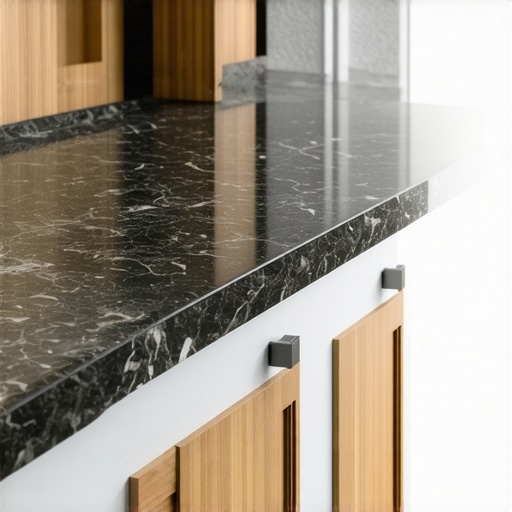
Why Your Granite Countertops Need Resealing Every Year
Granite is a geological sponge. While the industry markets it as an indestructible slab, the physics of natural stone tell a different story. It is a network of microscopic vents and inter-crystalline spaces. Every time you fire up your premium cookware, the heat transfer from the burner to the surface creates subtle thermal expansion. This expansion opens those pores further. If you neglect the annual seal, you are effectively leaving the windows open in a rainstorm. I have seen countless $20,000 installations ruined because a homeowner thought the ‘factory seal’ was a lifetime warranty. It isn’t. It’s a temporary barrier against the inevitable. You must understand that moisture penetration leads to internal mineral oxidation. The result? Irreversible discoloration.
The Mechanics of Capillary Action
Sealants are not physical skins like polyurethane on wood. They are impregnators. These molecules, often fluorocarbon aliphatic resins, settle into the stone’s pores to repel liquids. Over twelve months, acidic cleaners and mechanical friction from sliding heavy stand mixers across the counter strip these resins away. When the sealer fails, capillary action pulls oils and pigments deep into the granite. This isn’t just a surface stain. It is a molecular bond. According to standards set by the Natural Stone Institute, different minerals within the granite have varying absorption rates. High-biotite stones will soak up a spilled espresso faster than a quartz-dense slab. If you don’t refresh that barrier, even a simple splash of water can create permanent darkening.
The Messy Reality of Stone Failure
I remember a client in the local hills who had a beautiful White Bordeaux slab. They used their air fryers directly on the stone without a trivet. The heat, combined with a lack of fresh sealer, caused a grease stain to migrate four millimeters deep. The smell of rancid oil actually permeated the kitchen. It was an avoidable failure. You can’t just wipe that away. We had to use a chemical poultice for three days just to draw out the surface layers. Many homeowners also ignore the etch marks that appear when acidic citrus hits unsealed stone. If you want to prevent water spots or ghosting, the seal must be intact. The weight of industrial-grade steel appliances creates micro-fissures over time, and a fresh resin coat is the only thing keeping the structure hydrated and resilient.
The Industry Trajectory and Market Corrections
The market is shifting toward ‘pre-sealed’ stones that claim twenty-year protection. My professional take? It’s largely marketing fluff. These treatments are often applied at the quarry, but the fabrication process—the cutting, polishing, and grinding—strips that protection at the edges. Local environmental factors like hard water minerals can also degrade these industrial seals faster than the manufacturer admits. You must be proactive. We are seeing a rise in quartzite-related issues as well, where people confuse stone types. Understanding the thermal shock error is vital for anyone with a luxury kitchen. In the next 24 months, I expect more stringent regulations on the VOC content of solvent-based sealers. This means the water-based alternatives you’ll be forced to use will require even more frequent applications to maintain the same level of protection.
The Executive Verdict
Don’t gamble with your property’s equity. If water no longer beads on your surface, your kitchen is at risk. Buy a high-quality solvent-based impregnator. Apply it annually. It takes twenty minutes and costs less than a single bottle of decent wine. If you value your brass hardware and luxury stone, this is the most critical maintenance task on your calendar. Protect the lattice, or prepare for the replacement costs.
Common Stone Maintenance Questions
How do I know if my sealer has failed?
Perform the ‘water drop test.’ Pour a tablespoon of water on several areas of the counter. If the water has not soaked in and darkened the stone after 15 minutes, your seal is still functional. If it vanishes, seal it today.
Can I use dish soap to clean my granite?
No. Most dish soaps contain surfactants that eventually build up a film, dulling the stone’s natural luster. Use a pH-neutral stone cleaner to ensure you don’t strip the sealer prematurely.
Does darker granite need less sealing?
Technically, yes. Absolute Black or Uba Tuba are incredibly dense and have low porosity. However, they are still prone to oil spots. Even dense stones benefit from a thin application to provide a uniform finish.
Will sealing my granite stop it from scratching?
No. Sealing only prevents liquid absorption. Scratches are a mechanical issue related to the Mohs hardness of the minerals. Always use cutting boards to protect the surface from steel knives.
“