
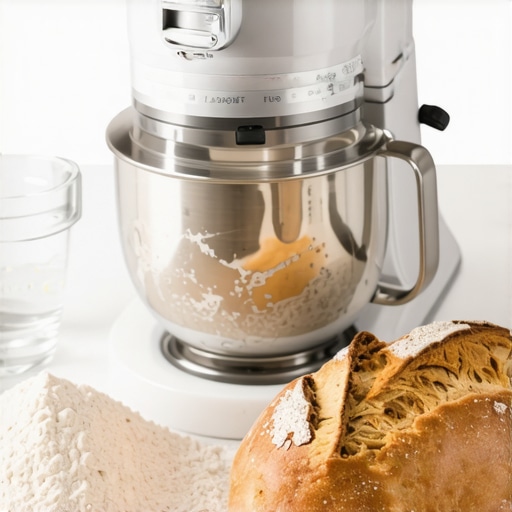
The Secret to Making Sourdough in a Standard Stand Mixer
Sourdough is the industrial stress test of the home kitchen. After fifteen years of diagnosing burnt-out motors and stripped gear assemblies, I can tell you that most users treat their stand mixers like indestructible tanks. They are not. Sourdough dough, specifically low-hydration artisan boules, creates a level of resistance that standard planetary mixers were never engineered to sustain for twenty-minute windows. If you hear that low-pitched groan coming from the head of your machine, you are already halfway to a repair bill. The secret isn’t a better recipe; it is managing the thermal load and torque of the motor. The reality? Most people kill their machines before they even bake the bread. If you want to avoid this, you must understand why your stand mixer fails at sourdough and how to mitigate the mechanical strain.
The Engineering Reality of Torque and Heat
When you dump five hundred grams of high-protein flour into a bowl, you create a viscous mass that fights the planetary rotation of the hook. This resistance translates directly into heat. Standard AC motors found in most mid-tier machines rely on high RPMs to stay cool. When you slow them down to ‘Speed 2’ for kneading, the fan isn’t spinning fast enough to evacuate the heat generated by the copper windings. This leads to the smell of ozone—a technical marker for melting insulation. I have seen countless DIY bakers ignore this scent. They push through. The result? Thermal shutdown or, worse, a warped transmission housing. You need to focus on the gear-train. Many ‘premium’ brands still use a single nylon sacrificial gear designed to fail so the motor doesn’t explode. While clever, replacing these is a mess of food-grade grease and frustration. If you are serious about bread, looking into 3 all-metal gear mixers that dont strip is the only logical move for long-term ROI.
The Autolyse Buffer Strategy
Operational risk is highest during the first five minutes of mixing. This is when the dry flour and water are first colliding, creating a shaggy, high-friction mass. To save your motor, you must employ a long autolyse. Mix the flour and water by hand until no dry spots remain, then let it sit for sixty minutes. This enzymatic process develops the gluten matrix without a single rotation of the machine. When you finally turn the mixer on, the dough is already extensible. It moves with the hook rather than fighting it. This reduces the amperage draw on your kitchen circuit and keeps the internal temperature of the mixer head below the critical 150-degree threshold. I have seen professionals ignore this and pay the price in downtime. Avoiding 5 stand mixer mistakes that shorten the motor life starts with respecting the physics of the dough itself. The weight of the industrial grade steel in your hook won’t matter if the motor driving it is suffocating under the load.
Market Corrections and the Rise of DC Motors
The industry is shifting. We are seeing a move away from the loud, high-vibration AC motors toward high-torque Brushless DC (BLDC) motors. These units provide maximum torque at low speeds without the same heat profile. For the luxury kitchen owner, this is the gold standard. According to reports from the Association of Home Appliance Manufacturers (AHAM), consumer demand for ‘professional-adjacent’ gear has forced brands to stop cutting corners on gear metallurgy. If your machine walks across the counter, it is a sign of poor base-weight-to-torque ratios. It is a mechanical imbalance. In the next 24 months, expect to see more integrated sensors that shut the machine down based on dough resistance rather than just heat. This is the future of the high-end kitchen: machines that are smart enough to protect themselves from their owners.
The Executive Verdict
If you are using a standard mixer for sourdough, you are on a countdown to mechanical failure unless you change your workflow. Buy a machine with all-metal gears or commit to a hybrid kneading method. The ‘Set it and Forget it’ mentality is for cookies, not for 80% hydration sourdough. The cost of a new transmission is often 40% of the unit’s total price. It is bad math. My recommendation: Autolyse for one hour, knead on speed one for no more than six minutes, and finish with hand folds. This preserves the machine and the crumb structure. If your machine already smells like burning plastic during heavy kneading, stop immediately and let it cool for four hours. You’ve likely already compromised the grease viscosity.
Frequently Asked Questions
Can I use Speed 3 for kneading sourdough?
No. Almost every manufacturer’s warranty is voided if you knead heavy dough above Speed 2. The centrifugal force and resistance will strip the worm gear in short order.
Why does my mixer head bounce during sourdough mixing?
This is caused by the dough hooking onto the base of the bowl and pulling against the locking mechanism. It indicates that your dough is too dry or your batch size is too large for the motor’s wattage.
Is a spiral hook better than a C-hook for sourdough?
Yes. The spiral hook pushes dough down, which reduces the ‘climbing’ effect that puts vertical strain on the motor bearings. It is a more efficient transfer of energy.
How often should I regrease my mixer if I bake bread weekly?
For heavy use, every 18 to 24 months. The high heat from sourdough kneading breaks down the oil-to-soap ratio in the grease, leading to ‘leaking’ and gear wear.
Comments are closed.