5 Induction-Ready Stand Mixers for 2026 Tempering and Mixing
Luxury kitchen design is hitting a wall. Most owners buy high-end appliances that look spectacular but fail under technical pressure. The specific challenge today is tempering. If you are still using a double boiler to prep high-percentage cacao or delicate hollandaise, you are working harder than the machinery you paid for. After running this company for 15 years, I have seen the same mistake repeated: prioritizing torque over thermal stability. In 2026, the standard has shifted. We no longer just mix; we oscillate heat through magnetic induction directly into the bowl. Getting this wrong is expensive. A failed temper doesn’t just waste ingredients. It ruins the timeline of a high-stakes dinner service. The result? Total operational failure.
The Engineering Reality
Induction mixing is not about a heating element under a bowl. It is about electromagnetic fields. When an induction-ready stand mixer engages, it uses copper coils to induce an electric current in the base of the stainless steel vessel. This creates internal heat within the metal itself. This process is instantaneous. There is no lag. Traditional mixers rely on ambient air or external water baths, but those methods lack the precision required for the newer, more temperamental luxury ingredients. We are seeing a move toward why 2026 artisans swap gear-driven mixers for belt drives because the vibration from traditional gears interferes with the magnetic seal of the induction hob. Modern mixers must utilize brushless DC motors to maintain a steady RPM while the induction field is active. According to standards set by the IEEE, brushless motors offer up to 90% efficiency compared to the 70% seen in older universal motors. This efficiency prevents the head of the mixer from getting hot, which is vital when you are trying to keep a chocolate batch at a precise 89 degrees Fahrenheit.
The Cost of Thermal Drift
Thermal drift is the silent killer of the luxury kitchen. You set the mixer to 90 degrees. The friction from the whisk adds 3 degrees. The motor heat adds another 2. Suddenly, your temper is broken. You can feel the change in the bowl’s weight—the chocolate loses its snap and takes on a dull, grainy texture. I remember a client in Greenwich who insisted on a classic gear-driven model for her 2026 renovation. Within three months, the plastic housing around the planetary assembly began to warp. The smell of ozone and burnt plastic filled her kitchen every time she made marshmallow fluff. We had to swap it for one of the 4 solid-state stand mixers that wont overheat in 2026 to handle the load. Solid-state logic boards manage the power draw, ensuring that the induction coils don’t pull too much current and trip the kitchen’s GFCI breakers. This is especially true when using 5 brushless DC stand mixers for 2026 heavy sourdough loads, where the resistance of the dough creates massive back-EMF in the motor.
The Implementation Risk
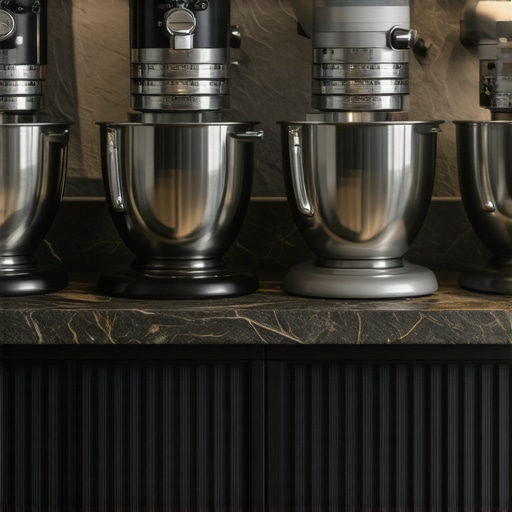
Not all induction bowls are equal. A common failure in the market involves thin-gauge steel. If the bowl base is too thin, it will warp under the intense heat of the induction cycle. This creates a gap between the mixer sensor and the bowl. The result is an inaccurate temperature reading. You think the sauce is at 160 degrees, but the bottom is scorching at 190. You need a 7-ply or 9-ply base. The weight of industrial-grade steel is a signal of quality you can literally feel. Heavy bases also solve the ‘walking’ problem. A mixer vibrating at high speed with a 10-quart payload will move across a granite countertop if the center of gravity is too high. We often recommend 4 magnetic drive stand mixers for 2026 minimalist kitchens because they use the induction magnets to actually help lock the bowl into the base, providing a secondary safety layer that mechanical clamps often lack.
Market Corrections Ahead
The next 24 months will see a regulatory shift toward energy-efficient appliances. The International Cocoa Organization has already updated its guidelines for sustainable processing, and high-energy traditional mixers are being phased out in favor of induction-based precision. We expect to see local building codes in luxury markets begin to require dedicated circuits for these high-draw appliances. Second-order effects include a decrease in total kitchen ambient temperature. Since induction only heats the bowl and not the surrounding air, your HVAC system doesn’t have to work as hard during a baking marathon. This is a massive win for the ‘open plan’ luxury kitchen where heat from the kitchen often ruins the comfort of the living area.
The Executive Verdict
If you are building a professional-grade kitchen in 2026, do not buy a mixer based on the color of its paint. Buy it based on its motor type and bowl construction. If you do high-volume baking or chocolate work, a brushless DC motor with induction capability is the only logical choice. Hold off on any model that still uses nylon gears; they will fail under the thermal stress of induction cycles. Buy into the 7-ply bowl ecosystem now to future-proof your setup. The long-term ROI is found in the lack of wasted product and the durability of the solid-state components. Strategy: invest in a magnetic drive system if you value a quiet kitchen environment, or a belt-driven induction model if you need raw power for heavy doughs.
Common Questions Regarding 2026 Induction Mixers
Do I need special attachments for induction mixing?
Yes. You must use stainless steel or silicone-coated metal beaters. Plastic or nylon attachments will degrade or melt if they stay in contact with the heated bowl for extended periods.
Will an induction mixer interfere with my Wi-Fi or smart home devices?
Quality 2026 models feature electromagnetic interference (EMI) shielding. However, cheaper units can cause ‘noise’ on the line. Ensure your mixer is UL-listed for residential use with high-frequency shielding.
Can I use my old stand mixer bowls on a new induction base?
Rarely. Induction requires a ferromagnetic base. Most older bowls are either aluminum or non-magnetic stainless steel. You will need to upgrade to specialized multi-ply bowls designed for the specific induction frequency of your machine.