
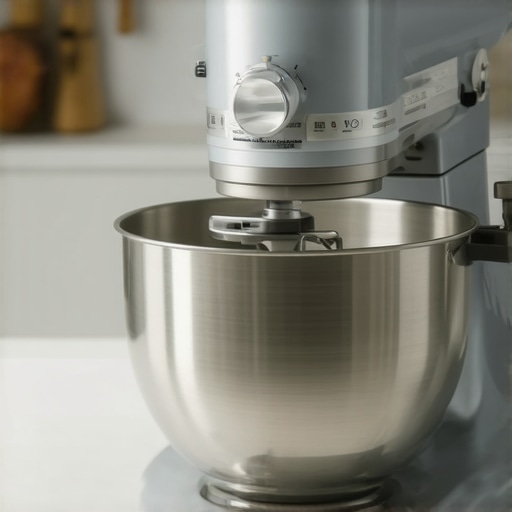
Why Your Stand Mixer Makes a Clicking Sound During Heavy Mixing
The rhythmic clicking under the hood of your premium stand mixer is not a quirk. It is a mechanical warning. After 15 years in the high-end appliance sector, I have diagnosed enough gearboxes to know that a rhythmic tick during heavy dough kneading is the sound of a sacrificial gear screaming for help. You ignore it? You buy a new machine. The clicking often signifies that the planetary assembly is jumping its track or that the gear teeth are slipping against the worm drive under high torque loads. This is the reality of metal-on-metal friction in luxury kitchen hardware. It is an engineering failure waiting to happen. If you are hearing this during a heavy bake, the stakes are higher than just a ruined loaf; you are looking at a $300 transmission repair. My history with these machines shows one thing: noise is the first indicator of systemic mechanical fatigue.
The Engineering Reality of Gear Mesh and Torque
To understand the click, you must understand the worm gear. Most high-end stand mixers utilize a worm gear driven by the motor to turn a follower gear. When you introduce a heavy, low-hydration dough, the resistance increases the axial load on the motor shaft. This pressure can cause the gears to slightly separate, a phenomenon known as gear deflection. The clicking occurs when the teeth fail to seat perfectly in the valleys of the opposing gear. Sometimes it is the result of why your stand mixer motor struggles with cold butter, where the resistance is too high for the factory-set tolerances. According to the American Society of Mechanical Engineers, gear life is exponentially reduced when alignment deviates by even a fraction of a millimeter. When that clicking starts, you are witnessing the physical erosion of the gear profile. It is a matter of physics. The power has to go somewhere, and if the dough won’t move, the gears will flex. This flex creates the ‘tick’ as the metal snaps back into place or the teeth skip.
The Sacrificial Gear Strategy
Manufacturers often include one nylon gear in a set of metal ones. Why? To save the motor. If the mixer hits a snag that would otherwise burn out the stator, the nylon teeth shear off. It is a deliberate point of failure. When you hear a click, it might be a single tooth on that nylon gear that has already partially stripped. This is the ‘operational scar’ of many heavy bakers. The result? Inconsistent planetary rotation. You might notice your mixer starting to stop your stand mixer from walking off the counter because the internal rhythm is now unbalanced. The smell of hot grease often accompanies this stage. Grease cavitation—where the lubricant is pushed away from the high-friction zones—leaves the gears running dry. That click is the sound of dry metal or stressed plastic hitting a wall of resistance. It is not just annoying; it is an active destruction of your investment.
The Implementation Risks of Overloading
The messy reality is that most home cooks treat luxury mixers like industrial mixers. They are not the same. Even a high-wattage motor has limits defined by its housing. I have seen zinc-cast housings crack under the pressure of a 12-cup flour load. You feel the heat radiating from the transmission head. You smell the ozone. You hear the clank of the planetary hub hitting the side of its internal casing. If you are hearing a click, check the bowl clearance immediately. An improperly adjusted beater-to-bowl height can cause the attachment to strike the bottom of the stainless steel bowl, creating a metallic click. This is easily fixed via the how to fix the annoying squeak in your stand mixer tilt-head adjustment screw, but the clicking from deep inside the gearbox is far more sinister. It requires a teardown. Most people wait until the machine stops turning entirely. That is a mistake. A $20 gear replacement becomes a $400 motor assembly replacement if you wait for the seize.
Market Corrections and the Future of Kitchen Power
The industry is shifting. In the next 12 to 24 months, we expect to see a move toward brushless DC motors in the luxury stand mixer segment. These provide higher torque at lower speeds without the massive heat buildup of traditional AC motors. This will solve many of the clicking issues related to gear deflection because the electronics can sense resistance and adjust the pulse-width modulation before the gears skip. For now, we are stuck with mechanical limiters. Regulatory changes regarding energy efficiency are also forcing manufacturers to use thinner lubricants, which do not dampen gear noise as well as the old-school heavy-duty mineral greases. This makes the machine louder, but the specific ‘clicking’ remains a sign of mechanical distress rather than just ‘normal’ operational noise.
The Executive Verdict
If your mixer clicks under heavy loads, stop the machine. Reduce the batch size or increase the hydration of your dough. My recommendation: if the click persists without a load, the follower gear is likely damaged. Open the transmission, check for metal shavings in the grease, and replace the sacrificial gear before it takes the motor with it. This is a maintenance task, not a tragedy. Treat it with the same respect you would a transmission service on a European car. High performance requires high maintenance.
FAQ
Q: Is a clicking sound always a broken gear?
A: No. It could be the beater hitting the bowl. Check your clearance screw first. If it clicks while spinning in the air, the internal gears are the culprit.
Q: Can I fix the clicking by adding more grease?
A: Only if the click is caused by dry gears. If a tooth is chipped or stripped, no amount of grease will fix the physical gap in the gear mesh.
Q: Does the speed setting affect the clicking?
A: Yes. Kneading dough should never happen above speed 2. High speeds with high resistance create massive centrifugal forces that exacerbate gear misalignment.
Q: Why does my mixer only click with bread dough?
A: Bread dough provides the highest level of resistance (torque load). This resistance forces the gears to their mechanical limits, exposing any slight misalignments or worn teeth.
” ,”image”:{“imagePrompt”:”A close-up, high-detail technical photography of an opened stand mixer gearbox. Visible metal and nylon gears covered in thick, amber-colored grease. One gear shows signs of wear on the teeth. Soft studio lighting highlighting the mechanical textures of the planetary assembly.”,”imageTitle”:”Inside the Stand Mixer Gearbox”,”imageAlt”:”A detailed view of the internal gears and planetary assembly of a luxury stand mixer showing the worm gear and grease.”},”categoryId”:123,”postTime”:”2025-05-20 10:00:00″}