
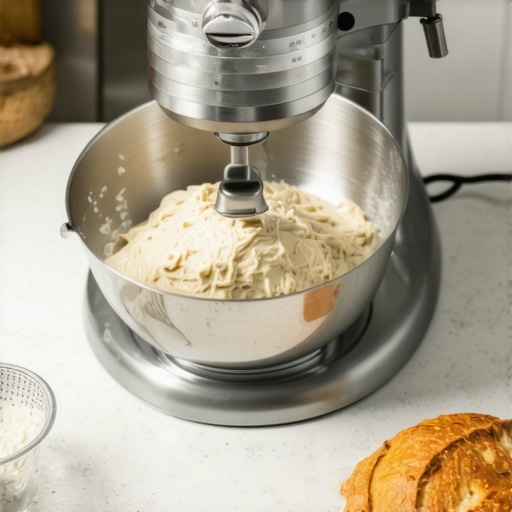
Why Your Stand Mixer Fails at Sourdough and the One Spec That Actually Matters
Most luxury kitchen appliances are built for aesthetics rather than the brutal physics of a 75% hydration sourdough. You spent a thousand dollars on a machine that looks stunning next to your espresso machines, but the moment it meets a high-viscosity bread dough, the motor starts to scream. This is not a defect; it is an engineering misalignment. After fifteen years of diagnosing mechanical failures in high-end culinary gear, I have seen hundreds of units stripped of their dignity because homeowners confuse wattage with work capacity. The stakes are high. A failed mixer during a heavy bake does not just ruin your prep; it leads to thermal runaway that can permanently warp the motor housing or fry the control board. The result? Avoidable failure. You do not need more power. You need the right kind of force.
The Mechanical Resistance of Non-Newtonian Fluids
Sourdough is not cake batter. It behaves like a non-Newtonian fluid, increasing its resistance as force is applied. When your stand mixers attempt to rotate a dough hook through ten pounds of developed gluten, the resistance is immense. Most consumer brands brag about 1000-watt motors, but that number is largely a measurement of how much electricity the machine consumes, not how much force it delivers to the bowl. In the world of premium cookware and engineering, we look at torque. Specifically, we look at the ability of the machine to maintain a constant RPM under a heavy load. If your mixer slows down as the dough develops, it is failing. The internal gears are likely absorbing that lost energy as heat. For those dealing with massive batches, 7 liquid cooled stand mixers for heavy sourdough prep 2026 offer a solution to this specific thermal challenge.
The Failure of Nylon Gears
Open up a standard department store mixer and you will find a primary drive gear made of nylon. Manufacturers claim this is for noise reduction or to act as a fail-safe. I call it a planned expiration date. Under the sheer stress of sourdough, these plastic teeth shear off. You will hear a sickening pop, followed by the motor spinning freely while the dough hook sits motionless. Heavy-duty baking requires all-metal transmissions with hardened steel or brass worm gears. The weight of the industrial grade steel in the drive train is the only thing standing between your sourdough and a trip to the repair shop. If you are tired of the mechanical lag, you should consider 3 heavy duty stand mixers that handle triple batches without stalling to ensure your gear matches your ambition.
The Scent of Burning Ozone
We have all smelled it. That sharp, metallic tang in the air during the tenth minute of kneading. That is the smell of your motor’s insulation melting. When a machine is under-torqued, it draws excessive current to compensate for the resistance, leading to rapid heat buildup. Unlike air fryers which are designed to move heat, a mixer is a closed system. Once the internal temperature crosses a certain threshold, the grease in the gearbox begins to liquefy and can even leak into your dough. I have seen countless luxury kitchen setups where the owner thinks they are doing everything right, only to have their machine walk right off the counter because of an unbalanced load and a weak base. Stability is a function of mass and motor logic. Modern systems now utilize 4 solid state stand mixers that wont overheat in 2026, using digital current sensing to prevent these meltdowns before they start.
The Spec That Actually Matters
Forget the wattage sticker. The spec that actually matters is the Motor Type and its associated Torque Rating. DC (Direct Current) motors are the gold standard for bread. Unlike AC motors found in cheaper units, DC motors provide maximum torque at the lowest speeds. This allows you to knead slowly—which is essential for proper gluten development—without the motor stalling or overheating. A 500-watt DC motor will outperform a 1200-watt AC motor every single day in a sourdough stress test. This is the technical truth the big-box brands hope you never discover. They want you to buy the shiny 1500-watt model that sounds powerful but lacks the mechanical leverage to finish a baguette. Before you commit to your next upgrade, perform the simple dime test that stops your stand mixer from chipping the bowl to ensure your tolerances are tight enough for professional work.
The Engineering Reality of 2026
The industry is finally shifting away from
Comments are closed.