
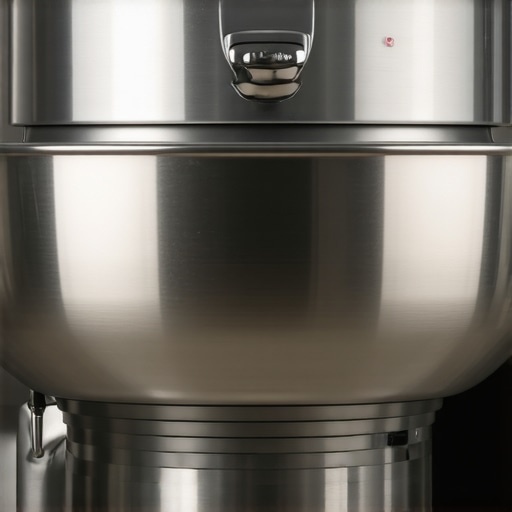
A stand mixer that fails to secure its bowl is not just a nuisance; it is an operational hazard. If you are mixing five pounds of high-gluten bagel dough and that bowl breaks loose, you are not just losing ingredients. You are risking a catastrophic failure of the internal transmission. After 15 years in the luxury kitchen appliance sector, my operational scars tell a clear story: mechanical precision is non-negotiable. When the bowl does not lock, the planetary motion becomes an eccentric force that wears down the gear teeth. The result? Avoidable failure. This structural integrity issue often stems from metal fatigue or improper calibration of the base assembly.
Why Your Stand Mixer Bowl Won’t Lock into the Base
Most owners overlook the wobbly bowl dynamics inherent in older or heavily used models. The locking mechanism typically utilizes a bayonet-style mount where tabs on the bowl slide into notches on the base. If these notches are worn by even half a millimeter, the bowl shifts during operation. This shift allows the beater to strike the side, creating a feedback loop of vibration. It is basic physics. Every revolution of the motor exerts lateral pressure. If the screw adjustment height is incorrect, the bowl will not seat deep enough to engage the spring-loaded lock. According to standards set by the Association of Home Appliance Manufacturers (AHAM), consistent clearance is necessary for motor longevity.
The Engineering Reality of Base Misalignment
The base plate relies on a specific tension to keep the bowl seated. Over time, the vibration from high torque motors can back out the mounting screws under the trim band. This creates a minute tilt. Even a one-degree deviation prevents the tabs from clearing the locking lip. You might feel the bowl ‘catch,’ but it will not ‘lock.’ This is a precision issue, not a strength issue. Forcing the bowl only leads to galling—the process where metal surfaces cold-weld together under pressure and friction. You will know it is happening when you see fine, silver-colored dust at the base of the machine. That is the sound and sight of your machine eating itself.
I have stood in kitchens where the sharp smell of ozone and hot metal filled the air because a bowl was not seated correctly. The owner thought they could just hold it down by hand. Bad move. The weight of industrial-grade steel does not matter when the motor is outputting hundreds of watts of power. I once saw a cast-iron base crack because the bowl was forced into a misaligned position. The sound? A sharp, sickening crack like a gunshot. That is the reality of high-end equipment. It does not forgive ‘close enough’ maintenance. High-carbon steel components require the exact tolerances specified by organizations like ASTM International for structural fasteners.
Market Corrections and Future Durability
The industry is shifting. In the next 12 to 24 months, expect luxury manufacturers to move away from stamped steel base plates toward heavier, solid-cast components. This change is driven by the rise of heavy-duty home baking. If your current mixer uses a thin, lightweight plate, it is prone to warping under the heat generated by the motor. We are also seeing a move toward electronic sensors that disable the motor if the bowl is not detected in the locked position. For now, the responsibility of inspection remains with the user. If you see signs of ’rounding’ on the bowl lugs, the structural integrity of the attachment is compromised.
The executive verdict is simple: stop using the machine the moment the locking snap disappears. My actionable strategy for you? Inspect the base notches for debris or metal shavings twice a year. If the bowl does not click into place with a definitive, metallic snap, replace the base plate immediately. A $30 part saves a $600 motor. Do not shim the bowl. Do not use adhesives. Precision parts require precision replacements.
Frequently Asked Questions
Can I use a bowl from a different model? No. Even if the capacity is the same, the lug spacing and tab thickness vary between model years. Using an incompatible bowl will permanently damage the base notches.
Why does my bowl get stuck after mixing bread? This is often caused by the high torque of dough kneading forcing the bowl deeper into the locking tabs. Applying a tiny amount of food-grade mineral oil to the tabs can prevent this binding.
Is a wobbly bowl always a sign of a bad base? Not always. It could be that the neck pin of the tilt-head is loose, changing the angle at which the beater enters the bowl. Check the pin before replacing the base.
How do I know if my base plate is warped? Remove the plate and place it on a flat granite countertop. If it rocks even slightly when you press the edges, it is warped and needs replacement.