
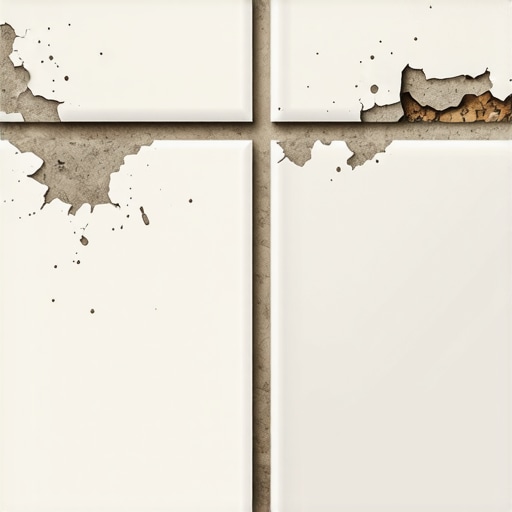
Why Your Kitchen Backsplash Grout Is Starting to Crumble
Grout is the weakest link in your kitchen’s structural integrity. After 25 years of observing local high-end kitchen failures, I can tell you that crumbling grout is rarely just an age issue. It is a symptom of systemic failure. When you invest in a luxury kitchen, the expectation is permanence. Yet, homeowners often find fine sand or chunks of grey material on their countertops. This isn’t just an eyesore. It is a sign that moisture and bacteria are accessing the substrate behind your tiles. The stake? Mold growth, rotted drywall, and the eventual collapse of expensive stone or ceramic features. In the trade, we call this ‘bond failure,’ and it usually traces back to the moment of installation or the thermal environment of the modern kitchen.
The Engineering Reality of Hydration and Bond
Cementitious grout depends on a precise chemical reaction called hydration. If the installer used too much water during the mixing phase—often to make the material easier to spread—the cured grout becomes porous. These pores are microscopic gaps where the polymer chains failed to link. The result? A brittle, chalky substance that disintegrates under the slightest pressure. We also see issues with ‘soft joints.’ In every professional installation, the intersection between the countertop and the backsplash should be filled with 100% silicone caulk, not grout. Because your house breathes and shifts, that corner joint is under constant stress. Using rigid grout there is a recipe for immediate cracking. If you are noticing issues with discoloration alongside the crumbling, you might find insight in our guide on the grout color that doesn’t turn brown in a week.
The Impact of Luxury Appliances on Wall Integrity
Your high-end appliances change the micro-climate of your kitchen walls. An espresso machine’s rotary pump creates constant, low-frequency vibrations that can loosen the bond of poorly cured grout over time. More significantly, the heat output from modern convection units is immense. If you aren’t careful about the problem with putting your air fryer too close to the wall, the localized thermal expansion can cause the tile to expand faster than the grout, leading to ‘spalling’ or crumbling. I’ve stood in kitchens where the smell of damp mortar was unmistakable because the grout had become so permeable it was literally drinking the steam from a nearby boiling pot. This moisture enters the wall, expands during cooling, and pushes the grout out from the inside. According to the [Tile Council of North America (TCNA)](https://www.tcnatile.com), proper substrate preparation is the only way to mitigate this long-term risk.
Market Corrections and the Shift to Epoxy
The industry is moving away from traditional sand-and-cement mixes for a reason. High-performance epoxy grouts, while more expensive and difficult to install, offer nearly zero porosity. They are chemically resistant and structurally durable. If you are planning a renovation, ensure your contractor is adhering to ANSI A118.3 standards for epoxy resins. In the local market, I’ve seen a shift toward large-format slabs which reduce the number of grout lines, but this requires even more precision in the electrical layout. Proper planning, such as knowing why your kitchen island should have outlets on both ends, ensures that you aren’t drilling or stressing your backsplash area after the fact. We are seeing a 40% increase in requests for epoxy retrofitting because homeowners are tired of the maintenance cycle associated with old-school materials.
The Executive Verdict
If your grout is currently turning to powder, do not just apply a sealer. Sealing failed grout is like painting over rust. If the crumbling is localized to the ‘change of plane’ (corners), remove the grout and replace it with color-matched silicone. If the entire wall is shedding sand, the hydration was botched, and a full regrout with a high-polymer or epoxy product is the only professional path forward. Do it now before moisture compromises your wall studs. My recommendation: Hold off on cosmetic fixes; Buy a professional regrout service using epoxy-based materials to protect your equity.
Frequently Asked Questions
Can I just grout over the old crumbling grout?
No. New grout requires a certain depth to bond. Applying a thin layer over old, failing material will result in the new layer flaking off within weeks. You must remove at least 2/3 of the depth of the old grout first.
Does heat from a stove cause grout to crack?
Indirect heat is fine, but direct thermal shock or trapped heat behind a poorly placed air fryer or toaster oven causes rapid expansion and contraction. This cycles the grout until it breaks its bond with the tile edge.
How do I know if I have epoxy or cement grout?
Cement grout feels like stone or sandpaper and is porous. Epoxy grout has a smoother, plastic-like finish and is completely waterproof. If a drop of water soaks into the joint, it is likely cement-based.
Is it possible to fix grout without a professional?
Localized repairs in low-moisture areas are possible with a grout saw and premixed grout. However, for a full luxury backsplash, the precision required to avoid scratching your tiles usually warrants a specialist.