
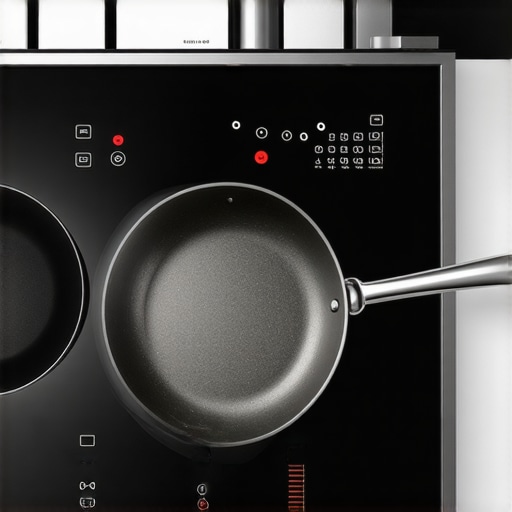
Why Your Induction Cooktop Refuses to Detect Small Pans
The frustration is visceral. You place a high-end butter warmer or a small moka pot on a four-thousand-dollar induction surface, and nothing happens. No hum, no heat, just a flashing error light. This is not a defect. It is a calculated engineering constraint known as the Minimum Detection Threshold. After fifteen years of designing and installing high-performance kitchens, I have seen clients swap out entire sets of premium cookware because they misunderstood the physics of magnetic flux. Getting this wrong means you are essentially locked out of using ten percent of your kitchen’s functional capacity. The stake is simple: if the coil cannot establish a stable resonant circuit with the vessel, the energy remains trapped in the inverter, and your cooktop remains an expensive piece of glass.
The Engineering Reality of Magnetic Flux
Induction cooking relies on a high-frequency alternating current passing through a copper coil, creating a dynamic magnetic field. This field must penetrate the ferrous base of your pan to induce eddy currents. However, sensors within the appliance monitor the impedance change when a pan is present. If the pan diameter is significantly smaller than the copper coil underneath the ceramic glass, the magnetic coupling is too weak. The system fails to hit the required threshold to trigger the power stage. It is a safety mechanism designed to prevent the coil from energizing small metallic objects like wedding rings or stray forks. The hardware is literally blind to your small pan because the surface area lacks the mass to disrupt the field sufficiently. Most luxury hobs require at least sixty to seventy percent coverage of the burner zone to initiate the handshake.
Technical precision matters here. We often see homeowners buy massive 12-inch zones thinking they are future-proofing their kitchen, only to realize those zones are useless for a 4-inch saucepan. The frequency of the oscillator must match the load. When the load is too small, the internal inverter detects a ‘no-load’ condition. You can sometimes bypass this by slightly offsetting the pan from the center, but this often leads to uneven heating and potential hot spots in the copper windings of the cooktop itself.
The ROI of Quality Cookware Matching
Efficiency in a luxury kitchen is not just about raw power; it is about the synergy between the power source and the vessel. If you are struggling with detection, the first thing to inspect is the base of your pan. A 3-ply construction with a thin magnetic plate is often inferior to a heavy-gauge disc-bottom pan for small diameters. You might find that why 3-ply cookware is better for most home cooks than 7-ply depends entirely on whether the magnetic layer extends to the very edge of the base. A smaller pan with a high-density ferrous core will trigger a sensor more reliably than a larger pan with a weak alloy mix. We recommend testing your pans with a high-strength neodymium magnet; if the pull is weak, the induction coil will struggle to ‘see’ it.
Implementation Risks and Operational Failure
I recall a project where a client installed a seamless full-surface induction zone. They expected it to work like magic. The reality? Their vintage espresso pots and small specialized pans were invisible to the sensors. The result? Avoidable failure. They ended up using a steel interface disk, which is a terrible solution. These disks act as a thermal bridge that gets incredibly hot, often exceeding the temperature limits of the glass and leading to permanent clouding or micro-fractures. It is better to invest in the right gear than to use a workaround that destroys your appliance. You also need to learn how to stop your induction hob from scratching so easily when sliding these smaller, lighter pans across the surface. The lighter the pan, the more it tends to vibrate or ‘walk’ across the glass due to the magnetic oscillation, which can lead to fine abrasions if the base isn’t pristine.
Market Corrections and Future Tech
The industry is moving toward ‘Zoneless’ induction or ‘FlexZones’ where dozens of small, hexagonal coils replace the traditional large circular ones. In the next 18 months, we expect a total market shift where software-defined induction will allow for ‘Object Recognition,’ enabling the use of even the smallest vessels without manual zone selection. This tech will eventually trickle down from professional-grade German brands to the wider consumer market. For now, the regulatory standards set by organizations like the International Electrotechnical Commission (IEC) ensure these safety cut-offs remain strict to prevent accidental ignition of small kitchen tools. To maintain your equipment, you should know how to get rid of scratches on your induction cooktop so that the sensor’s optical path remains clear, though most detection is magnetic rather than visual.
The Executive Verdict
If you are in a situation where your favorite small pans aren’t working, do not replace the cooktop. Instead, inventory your cookware and prioritize pans with a ‘Full-Surface’ magnetic base. Hold onto your smaller vessels but use them on the smallest dedicated burner available. If you are currently designing a kitchen, specify a hob with at least one ‘Combi-Zone’ or a small 4.5-inch burner specifically for butter warmers and moka pots. Buy heavy-duty, high-ferrous content cookware to ensure the handshake happens every time. For daily use, consider the most durable non-toxic coating for daily fry pans that also features a thick induction-ready plate. This is a technical game of mass and magnetism. Play by the rules of physics, and your kitchen will perform flawlessly.
Frequently Asked Questions
Q: Can I use a magnet to trick the sensor?
A: No. The sensor detects the impedance of the pan itself. Adding a separate magnet will likely interfere with the magnetic field and could cause the inverter to overheat or shut down.
Q: Why does my pan work on one burner but not the other?
A: Burners have different coil diameters. A small pan may meet the 60% coverage requirement on a 5-inch burner but fail on an 8-inch or 10-inch burner.
Q: Does the shape of the pan matter for detection?
A: Yes. Perfectly flat bases provide the best magnetic coupling. Ridged bases or warped pans increase the ‘air gap,’ which significantly reduces the signal the cooktop receives.
Q: Is there a way to override the safety sensor?
A: No, and you should not attempt to. The detection threshold is a fire safety standard regulated by the Association of Home Appliance Manufacturers (AHAM) to prevent accidental heating of non-cookware items.