
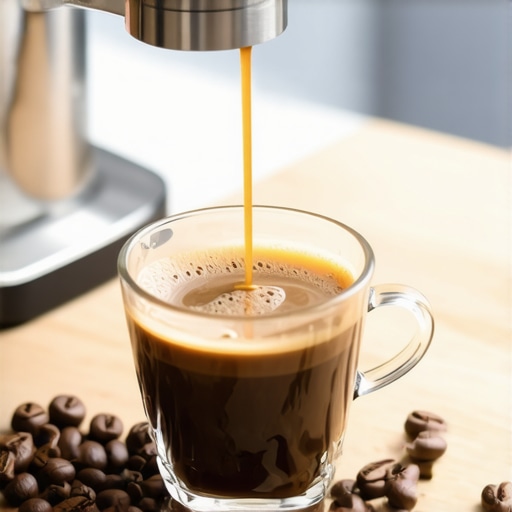
Why Your Espresso Shot Is Extracting Too Quickly with New Beans
Consistency is a lie told by manufacturers of entry-level gear to sell plastic components. After fifteen years in the high-end espresso machine trade, I have seen thousands of home baristas crumble when a fresh bag of beans fails to behave. You bought the premium, nitrogen-flushed, single-origin roast. You expect perfection. Instead, you get a fifteen-second gusher that tastes like battery acid. This failure costs you more than just wasted beans; it puts unnecessary strain on your rotary pump and ruins the thermal stability of your group head. The culprit is not your machine. It is the physics of degassing and the deceptive nature of bean density.
The Physics of Freshness
New beans are pressurized vessels of carbon dioxide. During the roasting process, the cellular structure of the coffee bean breaks down, trapping CO2 inside. When you grind these beans, that gas is looking for an escape. In the basket, this gas creates a turbulent environment. As water hits the puck, the CO2 expands, creating microscopic voids. This is the paradox: you would think more gas would provide more resistance, but it actually causes internal channeling. The water finds the path of least resistance through these gas-filled gaps. The result? A fast, thin, underextracted mess. Professional setups often struggle with coffee scale latency when trying to catch these high-speed shots before they blond.
[IMAGE_PLACEHOLDER]
The Porosity Trap
Darker roasts are more brittle and porous. Lighter roasts are dense and stone-like. When you switch beans, you are changing the structural integrity of your puck. If you move from an older, stale bean to a fresh one, the oils have not yet migrated to the surface. These internal oils act as a lubricant for the water. Without them, the water bypasses the grinds too quickly if the grind size is not sufficiently fine. Most home chefs fail to realize that the difference between boiler and thermoblock espresso systems impacts how these fresh beans react to initial pre-infusion. A boiler system provides a massive thermal hit that can actually accelerate the gas release, leading to even faster flow rates than expected.
The Technical Truth of Grind Hysteresis
Grinders have memory. Not digital memory, but physical retention and thermal expansion. If you are using a high-torque grinder for your luxury kitchen, the burrs expand as they heat up. When you introduce new, denser beans, the resistance against the motor changes the friction coefficient. You might think you are at the same setting, but the physical gap between the burrs has shifted by microns. This shift is enough to turn a 30-second honey-like pour into a watery sprint. Furthermore, the Specialty Coffee Association (SCA) notes that water chemistry interacts with fresh CO2 to form carbonic acid, which further alters the viscosity of the extraction. You aren’t just brewing; you are managing a volatile chemical reaction under nine bars of pressure.
Implementation Risks and The Messy Reality
I remember a client in a high-rise who called me because his $7,000 Italian machine was ‘broken.’ The counter was covered in brown spray. The smell of scorched citrus filled the air. He was using beans roasted forty-eight hours prior and hadn’t adjusted his burrs. The puck was a disaster—spongy and falling apart. If you ignore the signs of a fast extraction, you end up with why your espresso puck is always soupy and wet, which leads to mold growth in the knock box and a bitter aftertaste in every subsequent cup. The mechanical stress of high-flow extraction can also cause premature wear on the shower screen and the group gasket. The Journal of Food Engineering has documented that erratic pressure spikes from channeling can actually pit the surface of stainless steel components over time.
Market Corrections and Future Tech
The industry is moving toward ‘grind-by-weight’ and real-time flow control. In the next 24 months, expect to see more consumer-grade machines integrating AI-driven sensors that detect flow rate and automatically adjust the pump speed to compensate for gas-heavy beans. For now, the burden is on the operator. If you are in a high-humidity area, your beans will hydrate and expand, requiring even more frequent adjustments. We are seeing a trend where ‘subscription’ coffee services provide beans so fresh that they are essentially unbrewable for the first five days without professional-grade hardware.
The Executive Verdict
Buy your beans with a ‘roasted on’ date, not a ‘best by’ date. Wait at least seven days for the beans to degas naturally. If you must use them early, grind finer than you think is rational. If the shot is still fast, increase your dose by one gram to increase the puck height and resistance. Do not blame the machine. Blame the biology of the bean. My recommendation: Hold your grind setting for the first half of the bag, then tighten it every two days as the beans age and lose internal pressure. Effective espresso is about constant micro-adjustments, not a ‘set it and forget it’ mentality.
Technical FAQ
Q: Does bean temperature affect extraction speed?
A: Absolutely. Cold beans are more brittle and produce more fines, which can actually slow the shot down, whereas warm beans might grind more uniformly and flow faster.
Q: Should I use a puck screen with fresh beans?
A: Yes. A puck screen helps distribute water more evenly, which can mitigate some of the channeling caused by CO2 release.
Q: Why does my shot start slow and then suddenly speed up?
A: This is classic channeling. The water has finally bored a hole through the puck, bypassing the coffee and rushing through the gap.