
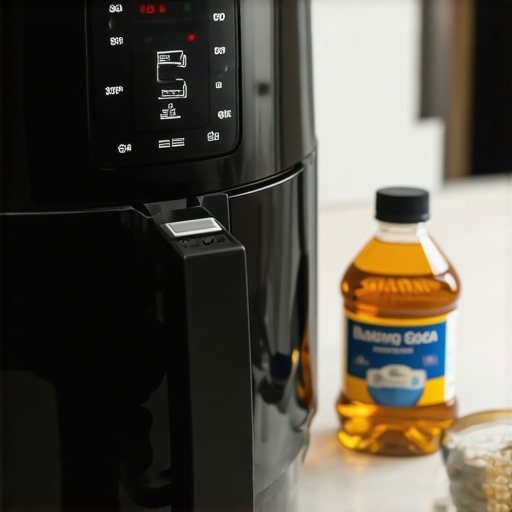
Why Your Air Fryer Smells Like Plastic and How to Neutralize It
That acrid, nose-stinging scent wafting from your brand-new air fryer isn’t just a minor annoyance; it is a technical failure of the manufacturing finish. Most consumers assume the odor is a natural byproduct of a new machine. It isn’t. As an engineer who has spent fifteen years deconstructing luxury kitchen appliances, I can tell you that the smell is typically the result of unvented VOCs (volatile organic compounds) and protective oils trapped in the heating element’s housing. If you ignore it, you aren’t just enduring a bad smell—you are allowing those fumes to permeate your food. The stakes are high for your palate and your health. Buying a premium appliance only to have it output chemical-laced chicken is an unacceptable ROI.
The Engineering Reality of Thermal Off-Gassing
The core of the problem lies in the thermal expansion of the internal plastics and the protective coatings applied to the heating coil. When that coil hits 400 degrees Fahrenheit for the first time, those coatings undergo a phase change. The heat isn’t just cooking your wings; it is baking the factory residue. In high-end models, the tolerances are tighter, which sometimes means there is less airflow to dissipate these initial fumes. You aren’t just dealing with a basket issue. Often, the odor originates from the fan shroud or the underside of the heating unit where grease-fighting chemicals were applied during assembly. Understanding how to clean a burnt air fryer basket without scrubbing is helpful for maintenance, but neutralizing the factory ‘burn-off’ requires a more aggressive, controlled approach to thermal management.
The High-Heat Vinegar Displacement Strategy
To eliminate the stench, you must force a complete off-gassing under controlled conditions. I call this the ‘Initial Burn-In.’ Place the air fryer under your range hood, set it to its highest possible temperature, and run it empty for 20 minutes. The goal is to maximize the thermal stress on the coil. After the first cycle, place a small oven-safe bowl inside containing a mixture of lemon juice and white vinegar. The steam generated will act as a neutralizing agent, binding to the airborne plastic particles and pulling them out of the porous surfaces of the basket. Be careful: using the wrong chemicals here can be as damaging as aerosol sprays in your air fryer, which often contain propellants that degrade the non-stick coating over time. The acid in the lemon juice is the secret. It breaks down the molecular bond of the factory oils better than any soap.
Technical Failures and Implementation Risks
The smell of fresh adhesive. The heat of the heating element. Sometimes, the smell isn’t residue; it’s a structural defect. I’ve seen units where the internal wiring was routed too close to the exhaust vent, causing the insulation to melt. If the smell changes from ‘new plastic’ to ‘burning electronics,’ you have a hardware failure. This is an operational risk that no amount of vinegar can fix. Stop the unit immediately. I once saw a client try to ‘power through’ a smell only to have the fan shroud warp and seize the motor. The result? Avoidable failure. If you don’t address the root cause, you might find yourself needing to know how to stop your air fryer from making your house smoke, which is a far more dangerous scenario than a simple bad smell. Check the vents. Ensure the distance from the wall is at least six inches to allow for proper heat dissipation.
Market Corrections and the Future of Kitchen Tech
The industry is shifting. We are seeing a move away from PFAS-heavy coatings toward ceramic and stainless steel interiors, driven by both consumer demand and tighter EPA regulations on ‘forever chemicals.’ In the next 24 months, I expect more luxury brands to implement a pre-shipment ‘burn-off’ at the factory level, but for now, the burden remains on the owner. According to the Association of Home Appliance Manufacturers (AHAM), proper ventilation during the first five hours of use is the standard recommendation for all high-heat kitchen electronics. The Consumer Product Safety Commission (CPSC) also notes that persistent plastic odors can sometimes indicate a mismatch between the motor’s power draw and the internal wiring gauge. This isn’t just about smell; it’s about electrical integrity.
The Executive Verdict
If your air fryer smells like a tire fire, do not cook in it. Perform the high-heat vinegar cycle twice. If the odor persists after 60 total minutes of high-heat operation, the unit is defective. Return it. Do not accept a ‘it will go away eventually’ excuse from customer service. For those in high-use environments, my recommendation is a ‘Buy’ on units with all-metal interiors and a ‘Hold’ on cheap plastic-clad models. A quality air fryer should be an asset, not a source of indoor air pollution.
Frequently Asked Questions
Is the plastic smell toxic?
While brief exposure to off-gassing during a burn-in is common, prolonged inhalation of these fumes can cause headaches and nausea. Always perform the initial cleaning in a well-ventilated area.
Will the smell affect the taste of my food?
Yes. Plastic VOCs are highly lipophilic, meaning they bond easily to fats. Your bacon will literally absorb the smell of the machine.
How many times should I run the burn-off cycle?
Usually, two 20-minute cycles at 400°F are sufficient. If it takes more than four, the plastic quality is likely sub-standard.
Can I use dish soap to remove the smell?
Dish soap removes surface oils but won’t stop the internal components from off-gassing. You need heat and acidity for that.