
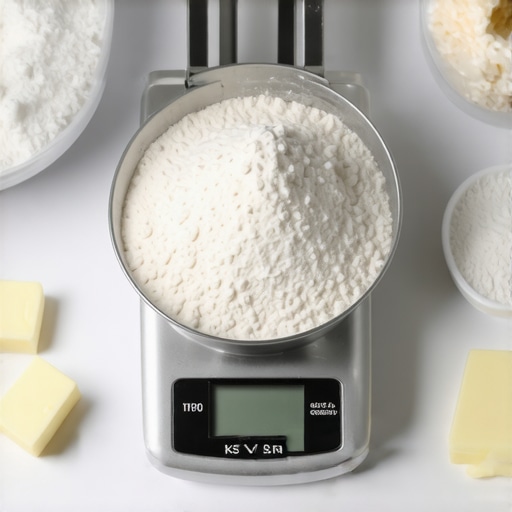
Why You Should Use a Scale Instead of Measuring Cups for Baking
Volume is a variable masquerading as a constant. When you scoop flour with a cup, you are not just measuring grain; you are measuring air, humidity, and the physical force of your own hand. After fifteen years consulting on high-end culinary installs and managing the logistics of high-output residential kitchens, I have seen hundreds of failed bakes. The common denominator? Measuring cups. In a luxury kitchen equipped with professional-grade stand mixers and premium cookware, relying on volumetric measurements is a technical insult to your equipment. Precision is the baseline. Anything less is just expensive guesswork.
The Physics of Bulk Density Failure
Wheat flour is highly compressible. A cup of flour can weigh anywhere from 120 to 160 grams depending on how it was settled in the bag. That is a 30% margin of error. Imagine applying that variance to the structural load of a building or the pressure settings on espresso machines. The result? Avoidable failure. Professional bakers speak in percentages, specifically hydration. If your flour weight fluctuates by 40 grams, your hydration ratio is shattered. Your dough becomes a dense, gluey mess that strains your hardware. This isn’t just about taste. It is about mechanical longevity. I have personally seen $1,000 machines smoking because a user added too much ‘volume’ of flour, spiking the torque demand beyond the motor’s safety rating. It is a costly mistake. For a deeper look at hardware risks, see why cheap flour ruins your high-torque stand mixer.
The Economic Impact of Poor Hydration
The cost of a failed bake in a luxury environment extends beyond wasted ingredients. It is about time and the wear on your premium cookware. High-hydration doughs require specific gluten development cycles. When you miscalculate the water-to-flour ratio because your ‘cup’ was packed too tight, the dough resists the hook. You end up running your mixer longer, generating excess heat in the transmission. If you are serious about your craft, you understand that why every serious home cook needs a digital scale is not a suggestion—it is a requirement for operational stability. You wouldn’t guess the temperature in your air fryers; why guess the mass of your bread?
The Sensory Reality of Mechanical Stress
I remember a client in a multimillion-dollar build who couldn’t understand why his brioche was always dry. We stood in his kitchen, the smell of expensive French butter filling the air, and I watched him scoop flour. The sound of the plastic cup scraping the bottom of the bin was the sound of inconsistency. I had him weigh that same ‘cup.’ It was 155 grams. The recipe called for 125. He was essentially adding an extra 25% of flour every time. His high-end mixer was whining, a sharp, metallic protest that indicated the gears were struggling. By switching to a gram-scale, we dropped the motor temperature and perfected the crumb. To keep your gear in top shape, it is also worth learning how to adjust your stand mixer bowl clearance for small batches. Precision prep yields professional results.
The Strategic Shift Toward Smart Kitchens
The industry is moving toward integrated mass-measurement. We are seeing a rise in smart countertops with built-in weighing sensors. Why? Because the market is correcting for human error. In the next 12 to 24 months, expect to see stand mixers that communicate directly with scales to auto-stop when the correct mass is detected. This isn’t just a trend. It is a fundamental shift toward the laboratory standards of the National Institute of Standards and Technology (NIST). Reliability is the ultimate luxury. If you are investing in a luxury kitchen, the most important tool isn’t the most expensive one—it’s the one that ensures the others work correctly. That tool is a digital scale.
The Executive Verdict
Stop using cups for anything that isn’t liquid. Even then, weigh the water. If you are currently using volumetric sets, relegate them to decor. Transition to a scale that offers 0.1g increments for leavening agents and 1g increments for bulk flour. This is the only way to protect your investment in high-end appliances and ensure the ROI of your time. If you want to take your technical setup further, look into why every baker needs a heavy duty steel dough hook to complement your new precision workflow.
FAQ
Does altitude affect weight measurements?
No. Weight (mass) remains constant regardless of altitude, whereas volume is influenced by atmospheric pressure and humidity. This is why weighing is superior for high-altitude baking.
Can I convert my old recipes easily?
Yes. Most professional culinary databases, like those at the American National Standards Institute related to food safety and metrics, recommend using 120g to 125g as the standard for one cup of all-purpose flour.
Is a scale necessary for air fryers and espresso?
For espresso machines, a scale is non-negotiable for timing shots. For air fryers, it helps in portioning proteins for consistent thermal penetration.