
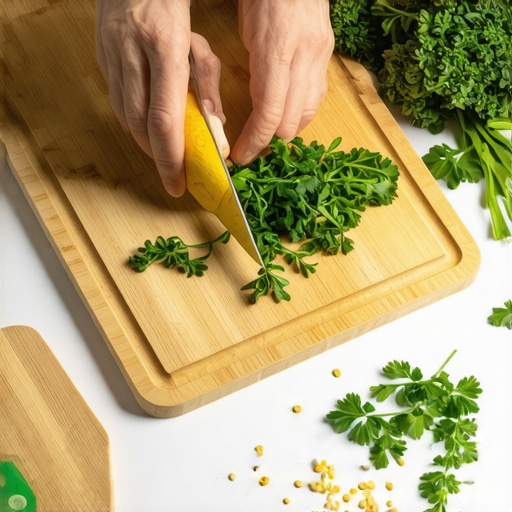
Plastic cutting boards are an industrial deception marketed as a sanitary convenience. After two decades of specifying premium cookware and high-performance kitchen layouts, I have seen the same cycle repeat: a homeowner buys a set of professional-grade Japanese knives, only to destroy their edges and introduce microplastics into their diet by using a $20 polyethylene slab. The stake is not just the lifespan of your cutlery; it is a fundamental misunderstanding of surface hygiene and material physics. If you are serious about a luxury kitchen, the plastic board has no place on your counter.
Why You Should Ditch the Plastic Cutting Board for End-Grain Wood
The core of the argument rests on the structural integrity of the material. When a knife strikes a plastic board, the blade creates a microscopic canyon. These serrations cannot be fully sanitized. Even high-temperature dishwashers often fail to reach the depths of these jagged grooves where bacteria like Salmonella and E. coli reside. In contrast, end-grain wood behaves like a dense brush. The wood fibers stand vertically. As the knife descends, the fibers part, allowing the edge to slip between them rather than colliding with a solid wall. Once the blade is lifted, the fibers spring back. This is the ‘self-healing’ mechanism that prevents the deep, permanent scarring seen on synthetic surfaces. High-end kitchens deserve better than disposable plastic that ends up in a landfill every six months.
The Engineering Reality of Knife Edge Preservation
Your knife edge is a microscopic alignment of steel atoms. Impacting a hard, non-yielding surface like plastic or glass causes ‘rolling’ or chipping. In my experience, clients who complain that their blades dull within a week are almost always using plastic. By switching to an end-grain block, you significantly reduce the frequency of sharpening. This matters because the knife sharpening angle that keeps your edge longer is only effective if the substrate doesn’t actively fight the steel. Wood provides a cushioning effect. The result? A sharper knife for months instead of days. Furthermore, the weight of a thick end-grain block provides a stable anchors for heavy-duty tasks, unlike lightweight plastic that slides under the pressure of a cleaver.
The Hygiene Paradox
Research from the University of Wisconsin-Madison has historically shown that wood possesses natural antimicrobial properties. Capillary action draws moisture and bacteria deep into the wood’s heartwood where they are trapped and die as the wood dries out. Plastic lacks this biological defense. Once the surface is scratched, the hygiene battle is lost. I have walked into kitchens where the plastic boards were stained orange and grey—clear indicators of bacterial colonization. Owners often think the dishwasher is the solution, but why you should never put your high-end chef knife in the dishwasher applies to the board logic too; high heat warps plastic and creates even more fissures. The only way to maintain a truly sterile environment is through the use of natural wood and proper maintenance.
Maintenance Risks and the Messy Reality
Wood is not maintenance-free. It requires an investment of time. A common failure point I see is the use of the wrong treatments. Applying vegetable oils that go rancid is a rookie error. You must use food-grade mineral oil or a beeswax blend to keep the fibers hydrated. Failure to do so leads to the wood drying out and cracking. I remember a project in a luxury penthouse where the client ignored the oiling schedule; within a year, their $500 walnut block had split down the center. Also, be aware of the cutting board oil mistake that leads to mold which usually stems from over-saturating a board that hasn’t dried properly after washing. It is a tactile, sensory process—the smell of the oil, the darkening of the grain, the weight of the timber. If you aren’t willing to touch your equipment, you aren’t cooking; you’re just heating things up.
Market Corrections and Sustainable Luxury
The industry is moving away from the ‘throwaway culture’ of the early 2000s. We are seeing a massive return to heirloom-quality tools. End-grain boards sourced from sustainable American hardwoods like Maple, Cherry, or Walnut are becoming the standard in high-end residential design. This shift is driven by a realization that quality saves money over time. A single $300 end-grain board can last 30 years if cared for. In that same time, a household might burn through 50 plastic boards. The economic and environmental math simply doesn’t favor the synthetic option anymore. Regulatory bodies like the USDA have long recognized wood’s safety, and professional chefs are reclaiming it as the gold standard for prep work.
The Executive Verdict
My recommendation is decisive: Buy a 2-inch thick end-grain maple or walnut block immediately. If you have spent thousands on premium cookware for 2025, do not bottleneck your performance with a cheap plastic surface. The end-grain block is an investment in your knives, your health, and the aesthetics of your workspace. If you currently own plastic boards, relegate them to messy tasks like breaking down raw poultry where they can be bleached, but for everything else, make the switch.
FAQ
Is wood harder to clean than plastic? No. It simply requires a hand-wash with mild soap and immediate towel drying. Never soak it. Does wood hold smells? Only if it is poorly maintained. A well-oiled board is hydrophobic and resists odors. What is the best wood for a board? Hard maple is the industry standard for durability and neutral flavor. Can I use a serrated knife on wood? It is not recommended. Serrated blades will tear the fibers of any board, wood or plastic. Use a straight-edged blade for 95% of tasks.