
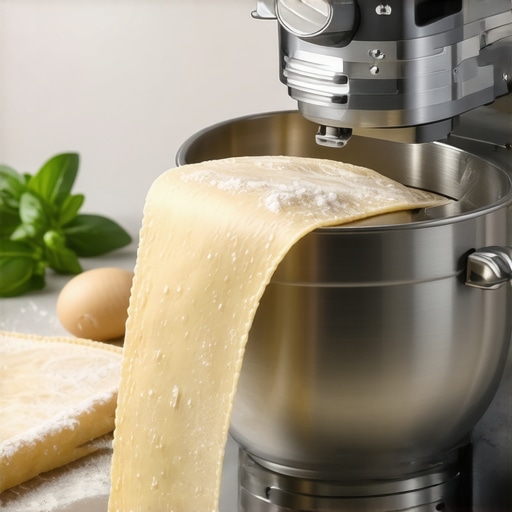
Standardizing the production of high-hydration pasta dough requires more than just manual dexterity. It demands mechanical precision that the human hand simply cannot replicate over a two-hour production window. After fifteen years of diagnosing burnt-out motors and warped rollers in high-end residential kitchens, I can state with absolute certainty: trying to roll pasta by hand or using inferior, universal tools is a recipe for mechanical and culinary failure. The stake is not just a ruined dinner; it is the structural integrity of your $800 stand mixer. Using the wrong tool creates uneven resistance that forces the drive shaft to compensate, leading to the exact type of internal wear found in the heavy duty gear secret inside premium stand mixers.
Why You Need a Specialized Attachment for Pasta Dough
Engineering constant velocity is the silent requirement of a perfect fettuccine. When you use a hand-cranked machine, your speed fluctuates. Every minor hesitation in your arm movement creates a microscopic thickness variation in the dough. These variations lead to uneven cooking times. Some parts of the noodle reach al dente while others remain raw or turn to mush. Specialized attachments, specifically those engineered from high-grade stainless steel, maintain a steady RPM regardless of the dough’s resistance. This mechanical consistency is what separates a luxury kitchen output from a hobbyist’s struggle.
The Engineering Reality of Torque and Tension
Most home cooks ignore the friction coefficient of semolina. As the dough passes through the rollers, it generates heat. Cheap, chrome-plated rollers often expand at different rates than their internal bearings, causing the rollers to seize or slip. A specialized attachment uses heavy-duty steel that acts as a heat sink, keeping the dough cool and preventing the gluten from prematurely relaxing. This is similar to how the bread kneading speed that actually saves your motor works; it is about managing the load rather than just brute-forcing the rotation. If you feel the attachment housing getting hot, you are already losing the battle against thermal expansion.
The Economic Cost of Plastic Components
I have seen countless ‘universal’ attachments fail because they utilize nylon or plastic gears inside a metal shell. Under the pressure of a low-hydration dough, these teeth shear off. It is a catastrophic failure. You aren’t just replacing a $50 part; you are potentially sending metal shavings back into the power hub of the mixer. The result? Total transmission failure. High-end pasta rollers use hardened steel worm gears that can handle the sheer force of a dense dough without complaining. This mirrors the findings in the real reason your sourdough keeps breaking your mixer gears. It is a question of material science, not just brand name.
The Stress Test of Real World Use
The smell of ozone. That sharp, metallic scent is the first sign that your equipment is failing. I remember a client in the local hills who insisted on using a generic extruder for a 100-person gala. By the fortieth pound of dough, the mixer was whining in a high-pitched register that signaled the end of its life. The specialized attachment he had rejected would have distributed that load across a wider surface area of the drive pin. Instead, he ended up with a dead appliance and a kitchen full of half-processed flour. The grain of the pasta was wrong, too—jagged edges instead of the smooth, translucent finish you see in professional kitchens. It was an avoidable failure. High-density doughs, like those tested in the flour test why some mixers cant handle 100 rye, require specialized geometry to pass through the rollers without tearing.
Market Corrections and Future Trends
The industry is moving toward ‘commercial-residential’ hybrids. In the next 18 months, expect to see more attachments featuring independent cooling fans and digital torque sensors that talk back to your mixer’s control board. Regulatory shifts in energy efficiency are also forcing manufacturers to produce more efficient gearboxes, meaning the attachments of 2025 will be lighter but significantly stronger. If you are still using a manual crank or a budget-tier plastic extruder, you are working against the technological curve of the modern luxury kitchen.
The Executive Verdict
My recommendation is clear: invest in a three-piece stainless steel roller and cutter set. Avoid plastic housings at all costs. If your primary goal is production speed and texture consistency, a dedicated motor-driven attachment is the only viable path. If you are dealing with a high-volume kitchen or specialized grains, buy the heavy-duty variants. Stop treating your pasta process like an afterthought. Buy the steel. Respect the motor. The quality of the plate depends on the engineering of the tool.
Frequently Asked Questions
Can I use a pasta attachment for fondant?
Yes, but the sugar crystals in fondant can be abrasive. You must clean the rollers immediately to prevent pitting in the steel surface.
Why does my attachment shake during use?
This usually indicates an alignment issue in the power hub or that the dough is too cold and hard. Soften the dough or check the mounting screw for tightness.
Do I need to oil the rollers?
Never. Specialized attachments use sealed bearings. Adding oil to the rollers will only contaminate your dough and attract flour gunk that will eventually seize the mechanism.
How long should a specialized pasta attachment last?
With proper dry cleaning and dry storage, a stainless steel set should outlast the mixer itself, typically 20 to 30 years of regular home use.