
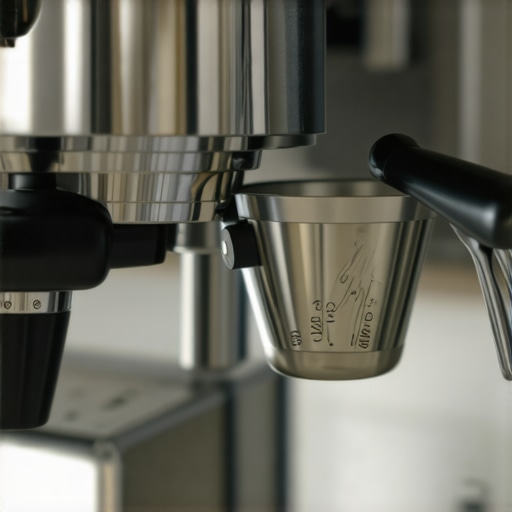
Why We Use a Bottomless Portafilter for Better Coffee Skills
Hiding behind a spouted portafilter is the fastest way to stagnate as a barista. If you cannot see the extraction, you are merely guessing at the fluid dynamics happening under nine bars of pressure. After fifteen years in the high-end espresso machine industry, I have seen every shortcut imaginable. None of them work. The reality remains: a bottomless portafilter is a brutal, honest mirror of your puck preparation. It doesn’t care about your expensive machine or your boutique beans. If your distribution is off by a millimeter, the naked portafilter will tell you by spraying hot espresso across your kitchen backsplash. This immediate feedback loop is why we insist on it for anyone serious about mastering the craft. It transforms a mechanical process into a visible data set.
The engineering truth of espresso is that water is lazy. It seeks the path of least resistance. When you lock in a spouted portafilter, you are blind to channeling—those microscopic tunnels where water rushes through the coffee bed too quickly, leading to an uneven and bitter extraction. You might notice the real reason your espresso tastes sour every morning, but without seeing the flow, you won’t know if it’s a temperature issue or a physical failure in the puck. A naked portafilter reveals the ‘tiger stripes’ and the convergence of the stream, confirming that the hydraulic resistance is uniform across the entire surface of the basket. This level of precision is non-negotiable for luxury kitchen standards where every variable must be accounted for.
The Engineering Reality of Fluid Dynamics
Espresso is a game of resistance. You have a pump pushing water at 130 PSI into a compressed bed of organic material. If that bed is not perfectly level and aerated, the water will find a weak point. I often tell my clients that why your espresso shots are channeling no matter the grind usually comes down to poor distribution technique rather than the equipment itself. Using a bottomless tool allows you to observe the ‘beading’ process. You want to see small droplets forming evenly across the bottom of the basket before they coalesce into a single, syrupy stream. If one side beads before the other, your tamp was uneven. The result? Avoidable failure. We look for that deep, reddish-brown viscosity that signals a high concentration of solubles, a feat only achievable when the water interacts with every single coffee particle equally.
Consider the cost-benefit of your accessories. Many people spend thousands on a machine but use a five-dollar basket. This is a strategic error. High-precision baskets, which are best utilized with a bottomless setup, ensure that every hole is laser-cut to the same diameter. This uniformity is essential. You can read more about why some espresso baskets cost 30 dollars and others cost 5 to understand the manufacturing tolerances involved. When you pair a precision basket with a naked portafilter, you are no longer fighting your equipment; you are refining your skill. The weight of the industrial grade steel in a high-quality portafilter also provides better thermal stability, ensuring the temperature doesn’t dip the moment the water hits the metal.
Operational Risks of the Naked Pour
Let’s talk about the mess. A bottomless portafilter is not for the faint of heart or the poorly prepared. If your technique is flawed, you will experience ‘spritzers’—thin, high-velocity streams of coffee that shoot out at odd angles. This is the sensory anchor of a bad morning: the hiss of the pump followed by the sharp scent of scorched coffee as a stray jet hits the group head. It is frustrating, but it is necessary. It forces you to revisit your maintenance. Perhaps you’ve been neglecting your equipment. Every professional should have a the grinder maintenance routine most baristas ignore, because old coffee oils and static buildup in the chute are the primary causes of the clumping that leads to channeling. A naked portafilter doesn’t just show you that you’re bad at tamping; it shows you that your grinder is failing you.
Market Corrections and Future Trends
The industry is moving toward total transparency. In the next 24 months, I expect to see more prosumer machines shipping with bottomless portafilters as the default option rather than an after-market upgrade. We are seeing a shift in the local luxury market where owners prioritize ‘skill-based’ appliances over ‘button-push’ convenience. This is a response to the Second-Order Effect of the specialty coffee movement: consumers now understand that a machine is only as good as the person operating it. According to reports from the Specialty Coffee Association (SCA), the demand for home-user education has tripled since 2020. This indicates a broader move toward technical mastery in the domestic sphere. We aren’t just making coffee; we are performing kitchen-scale fluid engineering.
The Executive Verdict
If you are content with ‘good enough’ coffee and don’t want to spend time cleaning your machine, stick with your spouted portafilter. It hides your sins. However, if you are an enthusiast who demands the highest possible extraction yield and a flavor profile that matches the investment you’ve made in your luxury kitchen, the bottomless portafilter is mandatory. My recommendation: Buy a high-quality naked portafilter and a WDT (Weiss Distribution Technique) tool today. Use them exclusively for one month. Your skills will improve more in those thirty days than they have in the last three years. The feedback is instant, the results are visible, and the coffee is undeniably superior.
Frequently Asked Questions
Does a bottomless portafilter change the taste of the coffee? Indirectly, yes. It doesn’t change the flavor itself, but it allows you to identify and fix extraction errors like channeling, which directly cause bitterness and sourness.
Why is my naked portafilter spraying everywhere? This is almost always caused by ‘channeling.’ It means there are gaps or weak spots in your coffee puck. Improve your distribution and ensure you are tamping level.
Will a bottomless portafilter fit any machine? No. You must match the portafilter to your specific group head size, usually 58mm for prosumer machines, and ensure the ear-locking mechanism matches your brand.
Is it harder to get a good crema with a bottomless portafilter? No, it actually helps you see the crema formation better. If your crema looks thin, it’s likely a bean freshness or temperature issue, which the naked view helps you diagnose faster.