
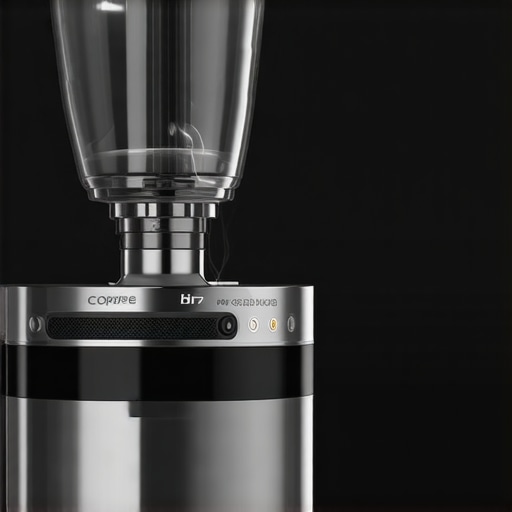
Static electricity in a high-end grinder isn’t just a minor annoyance. It is a fundamental physics failure that compromises dose accuracy and extraction quality. After fifteen years of calibrating burrs that cost more than most home appliances, I have seen every type of triboelectric disaster imaginable. When your grinder starts throwing sparks or sticking grounds to every surface, you aren’t just dealing with a mess. You are witnessing a breakdown in the kinetic management of your coffee beans.
Why Some Coffee Grinders Create Too Many Static Sparks
The primary driver of static in coffee grinding is triboelectric charging. This occurs when two materials—in this case, the coffee bean and the hardened steel or ceramic burrs—rub together at high speeds. This friction strips electrons, creating a charge imbalance. While some believe it is just the beans, the reality is the internal chute design often exacerbates the problem. Many manufacturers use non-conductive plastics for the exit path. These materials act as insulators, trapping the charge rather than dissipating it. The result? Avoidable failure. The coffee particles begin to repel each other and cling to the chute, leading to massive retention issues. To fix the consistency of your output, you must understand the grinder hack for perfectly even espresso extractions that many professionals use to mitigate this turbulence.
The Physics of Particle Distribution
Static charges do more than make a mess on your marble countertop. They actually change the way coffee settles in the basket. In a high-static environment, fines—the tiny dust-like particles—get pulled toward the walls of the portafilter. This leaves the center of the puck with a different density than the edges. This uneven distribution leads to channeling. You can have a five-thousand-dollar machine, but if your grinder is shooting sparks, your shot will be sour. This is why the grinder static problem and the RDT water drop solution have become standard protocol in the specialty industry. According to reports from the Specialty Coffee Association (SCA), managing particle size distribution is the single most important factor in repeatability. When electricity is jumping through your grounds, that distribution is impossible to control.
Environmental Factors and Material Mismatch
Humidity is the silent killer of grind quality. In a dry luxury kitchen, the air lacks the conductivity needed to bleed off the static charge from the grinding process. I have seen clients in desert climates struggle with ‘volcanic’ grinders that spray powder everywhere. The issue is often the RPM of the motor. High-speed grinders generate more heat and more friction, which scales the static charge exponentially. Lower RPM motors, often found in ‘gear-reduction’ grinders, produce less charge but require more torque. If you are crafting perfect coffee in your luxury kitchen, you need a machine that balances burr speed with thermal management. Some modern grinders now include ‘ionizing’ needles at the exit point—a technology borrowed from industrial electronics manufacturing—to neutralize the charge as the coffee passes through. This isn’t a luxury feature; it’s an engineering necessity.
The Maintenance Reality and Hidden Risks
A dirty grinder is a static-prone grinder. Over time, coffee oils oxidize and form a sticky residue on the internal chute. This residue creates even more friction for the incoming dry grounds. This buildup also hides the grounding pins that some manufacturers build into the burr carriers. If those pins are covered in old oil, the grounding path is severed. You should follow the maintenance routine most baristas ignore to ensure your paths remain conductive. There is also the ‘Operational Risk’ of motor strain. When static causes a ‘choke’ in the chute, the motor has to work harder to push the grounds out. I’ve smelled the ozone and the burning rubber of a motor on its last legs because a owner didn’t address a static-clogged exit path. It’s a cascade of failure that starts with a simple electron imbalance.
The Executive Verdict on Grinder Selection
In the next 12 to 24 months, the industry will pivot toward integrated active de-ionizers as standard in anything over the thousand-dollar mark. For now, the strategy is simple. If you are buying new, prioritize grinders with metal chutes or those that explicitly mention anti-static tech. If you already own a ‘sparky’ grinder, implement the Ross Droplet Technique (RDT) immediately. My recommendation: Hold off on high-RPM ‘prosumer’ models that lack a grounding path. Buy machines that prioritize low-speed, high-torque grinding. If you are in a low-humidity area, an external ionizer or a simple humidifier in the coffee nook is the only way to save your workflow. Static is a sign of an incomplete system. Don’t let a few electrons ruin a premium bean.
Frequently Asked Questions
Can static actually damage the grinder’s electronics? While the sparks from the coffee grounds themselves are usually too low-amperage to fry a circuit board, the secondary buildup of dust inside the casing can cause overheating and short-circuits over time.
Does the type of roast affect the sparks? Yes. Darker roasts are more brittle and oily, which often creates more friction-based static than denser light roasts. The internal moisture content of the bean acts as a natural resistor.
Is RDT safe for my burrs? In moderation, yes. A single drop of water on the beans before grinding (as per IEEE standards for moisture in industrial grinding) is not enough to cause rust on stainless steel burrs, though you should avoid it with carbon steel.