
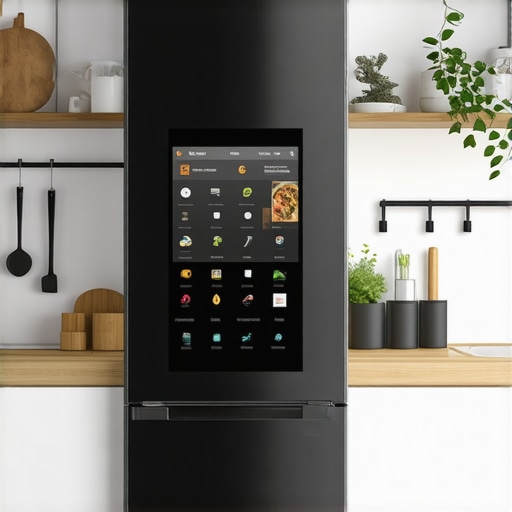
Why Most Smart Fridges Are Just Overpriced Tablets in Your Kitchen
Buying a refrigerator used to be a twenty-year commitment. You bought the heavy steel, the thick insulation, and a compressor that could survive a decade of humid summers. Today, the luxury kitchen market is being flooded by appliances that prioritize a 12-inch touchscreen over the actual thermodynamics of food preservation. After spending twenty-five years in the industry and seeing thousands of high-end builds, I can tell you the hard truth: adding a tablet to a fridge door is an engineering compromise masquerading as progress. The stake is simple. You are paying a 30% premium for technology that will be obsolete before the first filter change. This is a hardware debt that most homeowners don’t realize they are signing up for until the first firmware glitch prevents the ice maker from cycling.
The Mechanical Sacrifice Behind the Screen
Engineers face a zero-sum game when designing these units. Every watt of power diverted to a high-resolution display and a WiFi-enabled processor is heat that must be dissipated within the cabinet. In a true luxury kitchen, we look for thermal stability. Modern smart fridges often sacrifice insulation thickness in the door to accommodate the electronics and wiring harnesses. This leads to localized cold spots and increased compressor cycling. If you want real performance, you look at why 5-ply cladding matters more than the brand name on your pots; it is about the physical properties of the materials, not the gadgets attached to them. A fridge should be a vault, not a social media hub.
The economic reality is even more staggering. According to the Association of Home Appliance Manufacturers (AHAM), the average lifespan of a connected appliance is significantly lower than its mechanical counterpart. You are essentially buying a $10,000 product with a $500 tablet glued to it. When that tablet’s operating system stops receiving updates in five years, the entire unit feels like a relic. It is the same reason why most built-in microwaves fail after only five years. The control boards simply cannot handle the heat and moisture of a kitchen environment over long horizons.
The Reality of Component Failure
I’ve stood in enough kitchens to know the smell of a burnt-out capacitor on a smart fridge motherboard. It’s a bitter, metallic scent that signals a $1,200 repair bill. These units are plagued by parasitic power draws. While you are trying to find the best why integrated dishwashers are worth the extra installation cost to maintain your aesthetic, a smart fridge is ruining it with a glowing screen that attracts fingerprints like a magnet. The sensors—meant to track your milk’s expiration—frequently fail due to the high-humidity environment required for vegetable crisping. When a sensor fails in a smart unit, it often triggers a software lockout. The result? Avoidable failure. I have seen clients unable to adjust their freezer temp because the screen was stuck in a boot loop. That never happens with a mechanical dial.
Future Market Corrections and Strategic Foresight
The industry is already seeing a quiet pivot. We are moving toward ‘modular intelligence.’ Savvy homeowners are opting for pro-grade, ‘dumb’ refrigeration and using external smart home hubs. This allows you to upgrade your tech without ripping out 800 pounds of stainless steel. In the next 12 to 24 months, expect to see more luxury brands offering ‘connectivity-ready’ ports instead of built-in screens. This preserves the resale value of your home. A dated screen in a kitchen is the fastest way to make a $200,000 renovation look like it was done in 2018. We see similar trends in coffee; why your built-in espresso machine is a nightmare to repair often comes down to the same over-integration of electronics that could have been handled by a standalone unit.
The Executive Verdict
If you are building a legacy kitchen, buy for the build quality. Look for R600a refrigerants, dual compressors, and thick magnetic gaskets. Spend the money you saved by skipping the door-tablet on premium cookware or high-torque stand mixers that actually improve the food you eat. My recommendation is a ‘Buy’ on mechanical excellence and a ‘Sell’ on integrated kitchen screens. Your fridge should keep your steak at a precise 34 degrees, not tell you the weather. That is what your phone is for.
Frequently Asked Questions
Do smart fridges use more electricity?
Yes. The constant WiFi pinging and the heat generated by the LCD screen require the compressor to work slightly harder to maintain internal temperatures, according to Department of Energy (DOE) efficiency reports.
Can I disable the smart features?
Usually, but you cannot reclaim the space lost to the internal hardware or the extra cost paid at the point of sale.
Are there any smart features worth having?
Remote temperature alerts are useful for detecting a door left ajar, but these can be added to any fridge for $20 with a third-party sensor.
Will a smart fridge affect my home’s resale value?
Initially, it might look impressive, but after 3-4 years, it becomes a liability as the tech looks dated and buyers worry about repair costs.