Why Hidden Pantries Are the Only Way to Handle Small Appliance Overload
Countertop real estate is the most undervalued asset in a high-end home. After 15 years consulting on luxury kitchen renovations, I have seen the same error repeated: clients spend sixty thousand dollars on custom cabinetry only to bury it under a plastic graveyard of air fryers, stand mixers, and espresso machines. It is a strategic failure. High-performance kitchens require a decoupling of the ‘show’ zone and the ‘work’ zone. Without a hidden pantry or a dedicated scullery, your primary kitchen is not a culinary space. It is a storage locker with a sink. The result? Financial and functional stagnation.
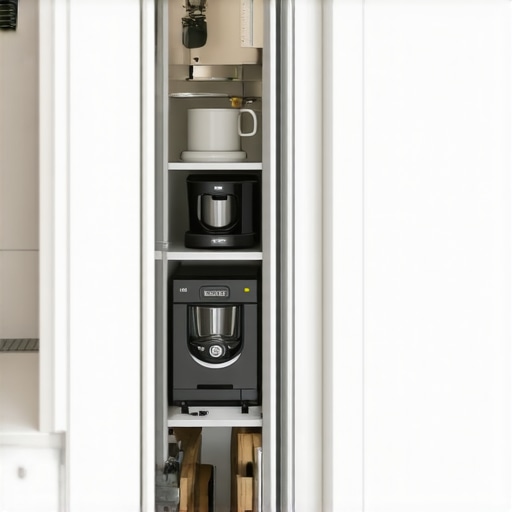
The shift toward high-wattage, specialized tools has outpaced traditional cabinet design. A standard kitchen island cannot host a 7-quart stand mixer, a dual-basket air fryer, and a premium 5-ply cookware set without looking like a retail clearance shelf. This is the real reason your new kitchen feels cluttered. The aesthetic debt accumulates quickly. A hidden pantry—specifically a walk-in scullery or a pocket-door appliance garage—is the only architectural solution that preserves the integrity of the design while maintaining the accessibility of these high-frequency tools.
The Spatial Economics of the Modern Kitchen
Let’s talk numbers. A luxury kitchen costs roughly $1,500 to $3,000 per linear foot. When you occupy four feet of that space with a permanent espresso station and a heavy-duty mixer, you are essentially paying five-figure storage costs for dead air. A hidden pantry shifts this load to lower-cost square footage. It allows for high-amperage circuits to be clustered in a zone where aesthetics are secondary to raw utility. Most homeowners underestimate the electrical load of modern luxury kitchens. Running a 1800-watt air fryer and a professional-grade espresso machine simultaneously on a single 15-amp circuit is a recipe for a tripped breaker. A hidden pantry allows for dedicated 20-amp circuits that handle the heavy lifting without ruining the backsplash with a dozen outlets.
Strategic placement matters. If you are building a beverage zone, it belongs in the transition between the pantry and the living area. This prevents the ‘bottleneck’ effect during morning routines. Many designers forget this. They put the coffee machine in the main prep triangle. That is the kitchen island mistake that makes your layout feel cramped. You want a clear separation of powers. The pantry handles the noise and the mess. The kitchen handles the assembly and the presentation.
Thermal Load and Ventilation Risks
Hidden pantries are not just about hiding the mess; they are about managing the environmental output of your appliances. Heat is the enemy of high-end cabinetry. An air fryer venting 400-degree air directly under a lacquered upper cabinet will cause the finish to peel within 24 months. Steam from a high-pressure espresso machine is worse. It introduces localized humidity that can warp solid wood doors. In a dedicated hidden pantry, we can install active ventilation—small, silent fans that pull moist air out of the cabinet before it can settle. This preserves the lifespan of your primary cabinetry.
We also need to consider the weight of the equipment. A professional stand mixer weighs upwards of 30 pounds. Dragging that across a marble countertop every time you need to knead dough is how you end up with deep scratches and etching. A hidden pantry with a heavy-duty pop-up lift or a reinforced stone shelf at counter height eliminates the need to move the machine. It stays plugged in. It stays ready. But most importantly, it stays out of sight. This is why every luxury kitchen needs a dedicated beverage station or appliance zone to maintain operational flow.
The Structural Shift in Luxury Assets
Real estate markets are currently undergoing a correction. Buyers no longer want ‘more’ space; they want ‘smarter’ space. A house with a hidden pantry sells faster than a house with a larger, unorganized kitchen. According to the National Kitchen & Bath Association (NKBA), the trend toward ‘concealed functional zones’ has seen a 40% increase in luxury project requests over the last two years. This is not a fad. It is a response to the fact that we have more ‘stuff’ than ever before. If you don’t build a place for that stuff, the stuff builds a place on your counters.
Think about the sensory experience. The smell of fresh adhesive in a new cabinet is great, but the sound of a rattling air fryer fan bouncing off hard marble surfaces is exhausting. A hidden pantry with acoustic dampening or even just a heavy pocket door creates a sound barrier. You can prep a three-course meal while guests sit five feet away at the island, and they won’t hear the hum of the vacuum sealer or the clatter of the food processor. It creates a ‘curated’ environment. It feels like a home, not a laboratory.
The Investment Verdict
If you are planning a renovation, my advice is a hard ‘Buy’ on the hidden pantry. Sacrifice the second dishwasher. Shrink the island by six inches. Do whatever is necessary to reclaim a six-by-four-foot footprint for a walk-in appliance zone. The ROI on this decision is high because it solves the two biggest complaints in modern homeownership: lack of counter space and visual noise. The hidden pantry is the backbone of the high-performance kitchen. Without it, you are just playing house with expensive toys.
Frequently Asked Questions
Does a hidden pantry require a separate sink? While not mandatory, a small prep sink in the pantry increases utility by 50%. It allows you to fill the espresso machine reservoir or the air fryer’s water tank without carrying dripping components across the kitchen floor.
How do I prevent the pantry from becoming a dark hole of forgotten gadgets? Lighting. Never use a single overhead bulb. Use 3000K LED strips under every shelf. Visibility is the only way to ensure the space remains functional rather than just being a graveyard for the bread maker you bought in 2019.
Is a pocket door better than a swing door? Always. A swing door occupies too much floor space when open and creates a barrier in high-traffic zones. Pocket doors or ‘flipper’ doors that slide back into the cabinetry are the gold standard for access.