Why a High-Quality End-Grain Cutting Board Protects Your Edge
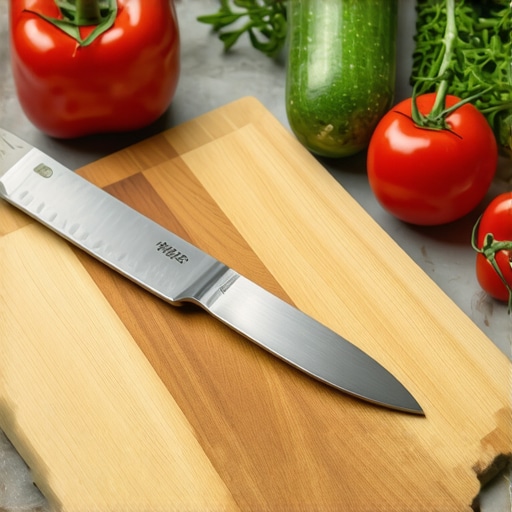
The microscopic apex of a high-carbon steel knife is a fragile thing. After fifteen years of analyzing kitchen workflows and the accelerated degradation of premium cutlery, I have identified the primary culprit: the work surface. Most homeowners spend thousands on a Japanese blade only to ruin it on a glass, bamboo, or cheap plastic board. It is a fundamental error in physics. The board must be sacrificial. If your cutting surface is harder than your steel, the steel loses. This reality makes the end-grain wood board a necessity for any serious culinary environment. [image_placeholder_1]
The Engineering Reality of Vertical Fibers
End-grain construction differs from edge-grain or face-grain boards through the orientation of the wood fibers. In an end-grain board, the wood fibers stand vertically, like the bristles of a brush. When the knife edge descends, it slips between these fibers rather than severing them. This interaction preserves the alignment of the blade’s edge for significantly longer periods. The wood essentially heals itself as the fibers spring back into place. Contrast this with the horizontal fibers of a standard board, which resist the blade and force the metal to roll or chip. This technical distinction is why premium cookware strategies must include the surface beneath the tool. The board acts as a shock absorber. Without this absorption, the energy of the strike reflects back into the steel. The result? Premature dulling and structural fatigue.
The Physics of Impact Absorption
Consider the Janka hardness scale. Maple, Cherry, and Walnut offer the ideal balance of density and resilience. Bamboo, often marketed as sustainable, contains high levels of silica. Cutting on bamboo is effectively like cutting on sandpaper. It wears down the edge through abrasion. A high-quality end-grain board uses the natural capillaries of the wood to create a hydraulic-like cushioning effect. This is particularly vital when using high carbon knives that are prone to micro-chipping. The weight of the board also matters. A thick, heavy block provides a stable platform that prevents the micro-vibrations that cause a blade to skip. This stability is as necessary for prep work as a high-quality tamping mat is for protecting stone counters during espresso preparation. You aren’t just buying a board; you are buying a lifespan extension for your cutlery.
Sanitation and Structural Integrity Risks
The common industry myth suggests that plastic is more sanitary than wood. Empirical data from the USDA and researchers at the University of California, Davis, contradicts this. Wood possesses natural antimicrobial properties. Bacteria drawn into the grain are trapped and desiccated as the wood dries. Plastic, once scarred by knives, creates deep grooves that harbor pathogens even after a dishwasher cycle. In a professional setting, we see cheap boards warp or split within months. A properly constructed end-grain board, bonded with food-safe waterproof adhesives, lasts decades. The operational risk of using inferior boards is clear: increased sharpening costs and a higher probability of slipping on a warped surface. We also see people making the mistake of keeping their best tools in a drawer where they bang against other metal; instead, you should ditch the knife block for a magnetic strip to pair with your professional-grade board.
Market Corrections and Future Trends
The luxury kitchen market is moving away from disposable culture. I see a shift toward heirloom-quality equipment that requires maintenance but offers superior performance. In the next 24 months, expect to see more integration of integrated prep stations featuring built-in, replaceable end-grain sections. This trend mirrors the professionalization of the home kitchen. Consumers are beginning to understand that the surface is half of the cutting equation. We are also seeing a resurgence in domestic hardwoods as global supply chains for exotic woods face tighter regulations. Choosing a domestic Maple or Walnut end-grain block is now both a performance choice and a savvy long-term investment.
The Executive Verdict
If you own knives that cost more than $100 each, an end-grain board is not optional. It is the only surface that respects the geometry of a fine edge. My recommendation: invest in a block at least 2 inches thick. Thinner boards lack the thermal and structural mass to stay flat over time. Treat it monthly with food-grade mineral oil to maintain the fiber’s elasticity. Avoid the dishwasher at all costs. This is a buy-once, use-forever asset. If your current board makes a loud ‘clack’ instead of a soft ‘thud’ when the knife hits, you are destroying your edge with every meal.
Frequently Asked Questions
Is an end-grain board harder to maintain than plastic?
Maintenance requires 30 seconds of oiling once a month. This small time investment prevents warping and maintains the board’s self-healing properties, which plastic lacks entirely.
Why are end-grain boards more expensive than edge-grain?
The manufacturing process is labor-intensive. It requires multiple stages of cutting, flipping, and re-gluing to ensure the grain faces upward. You are paying for the technical performance and the quantity of wood used.
Can I use a serrated bread knife on an end-grain board?
Serrated blades are aggressive and can tear the wood fibers over time. While the board can handle it occasionally, it is best to use a cheaper edge-grain board for heavy bread work to preserve the surface of your premium block.
How do I know if my board is actually end-grain?
Look at the surface. You should see the growth rings of the tree, similar to the top of a stump. If you see long grain lines, it is an edge-grain or face-grain board.