
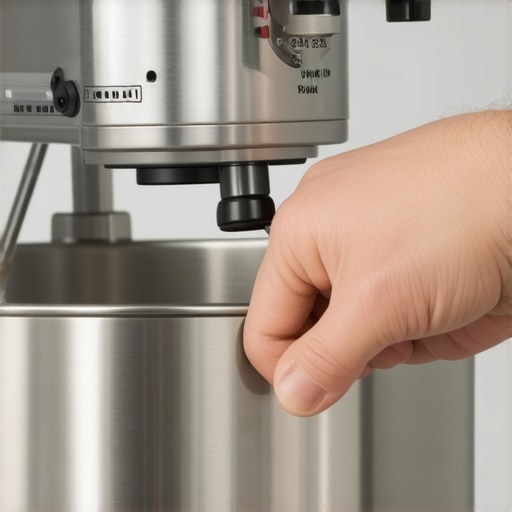
The Simple Fix for a Loose Stand Mixer Speed Control Lever
A stand mixer speed control lever that drifts while you are kneading heavy dough is not merely a nuisance; it is a mechanical failure that threatens the longevity of your motor. After maintaining professional kitchen equipment for over 15 years, I have seen hundreds of owners assume their machine is destined for the scrap heap when the lever starts to ‘creep.’ This movement, often called speed migration, occurs because the internal friction plate has lost its grip. Ignoring this leads to erratic RPM fluctuations, which can overheat the phase board. The fix is remarkably direct. It involves adjusting the tensioning spring or the friction screw—a ten-minute task that saves you a three-hundred-dollar repair bill.
The Engineering Reality of Planetary Vibration
Stand mixers operate on a planetary gear system. This design provides massive torque but generates specific harmonic frequencies. When you are processing heavy loads, these vibrations translate directly to the speed control linkage. If the internal tension is not set to precise specifications, the lever will naturally gravitate toward ‘Off’ or ‘High’ depending on the spring’s orientation. Most luxury kitchen stand mixers rely on a simple mechanical detent system. Over time, the lubricant from the gears can migrate onto the friction pads, reducing the coefficient of static friction. The result? A lever that feels ‘mushy’ and fails to lock into the speed notches. This is why how to stop your stand mixer from vibrating off the counter starts with ensuring your internal components are tight. According to standards set by the Association of Home Appliance Manufacturers (AHAM), consistent speed regulation is vital for safety, preventing the sudden surge of power that can eject attachments.
The Friction Plate Adjustment Strategy
To fix a loose lever, you must access the speed control plate located behind the rear housing cover. Unplug the unit. This is non-negotiable. Remove the single screw at the back of the mixer head and slide the decorative chrome band or the rear cover off. You will see a small square plate with two or three screws. One of these is the tension screw, usually located near the bottom of the assembly. Turning this screw clockwise increases the pressure on the speed control lever’s friction pad. The goal is a firm, tactile click when moving through speeds. While you are in there, check the screw adjustment that stops your mixer from hitting the bowl, as these two systems often work in tandem to keep the machine balanced. If the lever still feels loose after tightening, the friction spring itself may be fatigued. A replacement costs less than five dollars but requires removing the entire control plate assembly. You can feel the difference immediately. The lever should resist movement until intentional force is applied. This prevents the motor from hunting for a steady RPM, a condition that kills high-end appliances.
Market Corrections and the Durability Crisis
The industry is shifting. We are seeing a move away from these repairable mechanical linkages toward digital pulse-width modulation (PWM) controls. While digital boards offer precision, they lack the ‘field-repairability’ of the classic mechanical lever. For those using professional-grade equipment, particularly when high torque motors are essential for whole wheat doughs, the mechanical lever remains the gold standard for durability. Regulatory changes in the EU and North America regarding the ‘Right to Repair’ are forcing manufacturers to keep these parts accessible. In the next 24 months, expect to see a resurgence in modular motor designs that prioritize these simple mechanical adjustments over proprietary electronic modules. This shift favors the consumer who knows how to use a screwdriver. The smell of ozone or hot grease during a mix is often the first sign that your speed control is failing to maintain a clean electrical contact, leading to arcing on the governor points. Fix the lever tension, and you likely fix the arcing.
The Executive Verdict
If your mixer lever moves on its own, do not wait. Tighten the friction screw today. If you are operating a high-volume kitchen, perform this check every six months as part of your preventative maintenance schedule. For those in the market for new equipment, prioritize machines with accessible tension adjustments. This simple fix separates the lifelong tools from the disposable gadgets. Stop the drift, protect the motor, and keep your luxury kitchen performing at its peak.
Common Questions Regarding Stand Mixer Levers
Why does my lever move only when I am making bread?
Bread dough requires high torque, which increases the vibration frequency of the planetary gears. This vibration overcomes the weakened friction on the control plate. Tightening the internal tension screw solves this.
Do I need to grease the lever linkage?
No. Grease actually reduces the friction needed to hold the lever in place. If grease has leaked onto the friction plate, clean it with isopropyl alcohol before tightening the screw.
What if the lever is stuck and won’t move at all?
This is usually caused by a bent control rod or a seized speed control plate. Do not force it. Open the rear housing and check for obstructions or old, hardened grease blocking the mechanical path.